Business
Precursor Ventures’ Charles Hudson on why fundraising is harder now
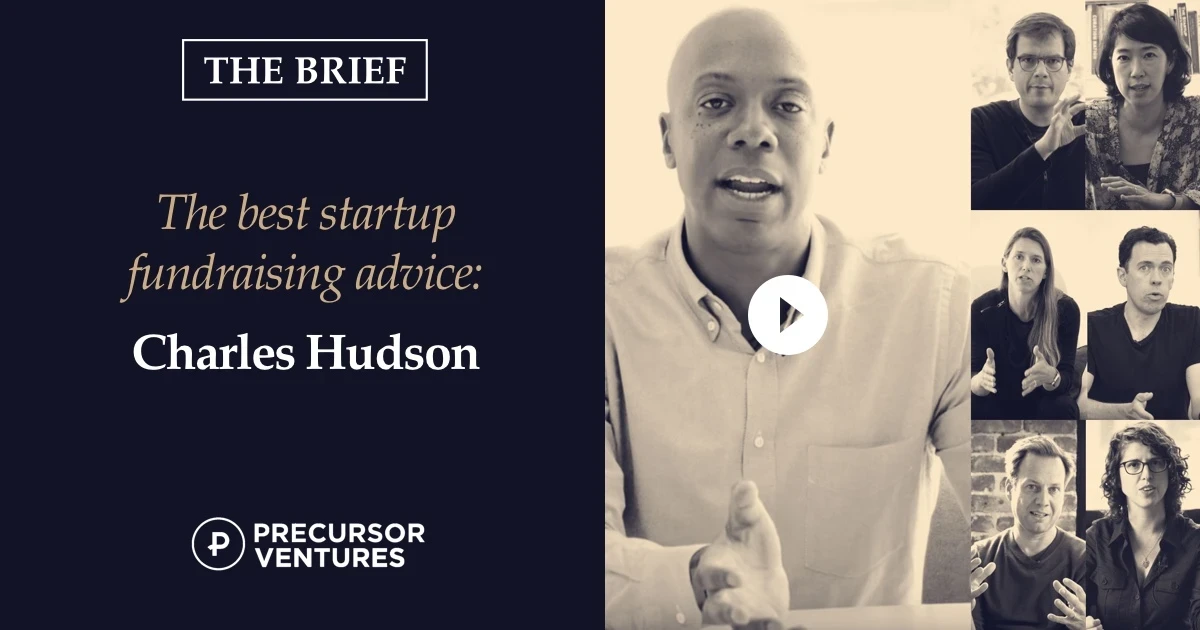
In a July 9, 2026 episode of Build Mode, Isabelle Johannessen presses Precursor Ventures founder Charles Hudson on why the first institutional round has become harder to win, why AI is changing what investors notice, and why founders can no longer treat valuation as the only score that matters. Hudson’s answer is blunt: the old startup playbook no longer gets founders as far as it used to.
The new rules of early-stage fundraising
The first institutional round, at the pre-seed and seed stages, has become more selective, not just more competitive, because investors are reading signals differently than they did in the cheap-money era, Hudson argues. That shift raises the bar for how founders explain the business, the market and the timing of the raise.
The pressure is especially sharp for companies that are still early enough to rely on a story more than a dataset. Precursor Ventures invests in people over product, typically putting up to $500,000 into pre-seed and seed rounds and making 30 to 40 new investments a year. The approach matches Hudson’s view that investors are moving back toward judgment, conviction and the ability to win trust before there is much traction to point to.
Why AI changes the pitch
AI is changing what investors pay attention to. In practical terms, that means founders are being judged not only on their product vision, but on whether the company can stand out in a market where automated filters, faster screening and a flood of similar pitches make weak narratives easier to dismiss.
That makes the short written pitch more important than ever. Hudson and Johannessen focus on storytelling and the strength of a blurb because the first impression often decides whether a founder gets a second look. In a tighter market, a clear explanation of the problem, the buyer and the wedge into the market can matter as much as an early usage graph.
Momentum now matters as much as metrics
Fundraises are won in motion. A founder needs to create momentum by compressing the process, keeping conversations moving and showing that other investors are paying attention. That logic fits a market where investors are less willing to spend time deciphering a vague opportunity and more willing to back what already looks like a functioning company trajectory.
This is also where false signals of product-market fit become dangerous. Hudson has already argued that founders should test their investors, and in a November 2024 TechCrunch discussion tied to AfroTech he said a company should have product-market fit and some form of traction. Together, those comments point to the same principle from both sides of the table: founders need evidence that the market wants the product, and investors need evidence that the founder understands which kind of capital actually fits the company.
Why the highest valuation is not always the best deal
A recurring mistake in overheated markets was treating the largest mark as proof of success. Hudson pushes back on that instinct. The highest valuation can create pressure to grow into a number before the company is ready, and it can make the next round harder if the business has not built the operating depth to justify the prior price.

That warning is part of a broader change in startup economics. When capital is abundant, founders can confuse investor enthusiasm with durable demand. When capital tightens, the market quickly reveals whether that enthusiasm was real, and a more modest round at a sustainable valuation can be better than a headline number that leaves the company exposed later.
The risk of raising too much too soon
Hudson also takes aim at another habit of the boom years: raising too much too early. In the current environment, oversized rounds can distort hiring plans, encourage premature expansion and create the illusion that the company has solved the hardest parts of the business before it has. That can leave founders with a bloated cost structure just as the market turns less forgiving.
The biggest threat may not be a down round but no round at all. For early-stage companies, the real problem is often not that the next price comes in lower, but that investors decide the company has not advanced enough to merit fresh capital. That is why timing now matters so much: a raise launched too early can stall, and a raise launched too late can force bad terms or no financing at all.
Hudson’s own funding environment tells the same story
Hudson’s view of the market is not theoretical. In June 2025, he said he was raising Precursor’s $66 million fifth fund in a difficult fundraising environment, and noted that limited partners were increasingly focused on longer liquidity timelines for seed-stage investments. The pressure is not confined to founders. Even the firms backing very early companies are facing more scrutiny over how long it will take to return cash.
He also said Precursor was exploring secondary liquidity strategies and the changing “taste” required to identify founders who do not fit algorithmic screens. As capital gets more cautious, investors are leaning harder on judgment calls that software cannot easily replace. The edge goes to founders who can communicate something real that does not yet show up in neat metrics or automated rankings.
What Hudson’s career path says about the kind of investor he is
Hudson’s perspective is shaped by a career that moved from operator to investor. He is the founder and managing partner of Precursor Ventures, previously a partner at Uncork Capital, co-founder and CEO of Bionic Panda Games, and a former senior leader at Google. His advice centers on fundamentals rather than fundraising theater.
Precursor says it has partnered with more than 500 teams since 2015, and its portfolio includes over 1,000 founders and 500-plus companies.