Technology
Primate Labs launches Geekbench 7 with new CPU and GPU tests

John Poole unveiled Geekbench 7 on July 23, adding video and audio encoding and decoding tests to Primate Labs’ cross-platform benchmark and widening the gap between a quick synthetic score and the work a phone or laptop actually has to do. The new version also brings a redesigned multi-core test and larger, more demanding datasets for CPUs and GPUs to process.
For buyers comparing devices in a market crowded with AI promises, the shift matters because Geekbench 7 is trying to mirror more familiar tasks than a single burst of raw speed. Encoding and decoding video and audio are the kinds of workloads that show up when a device exports a clip, plays back media, or converts files, while the larger CPU and GPU datasets are meant to put more sustained pressure on the chip instead of letting it coast through a narrow benchmark run. That makes the score harder to inflate with tuning that helps only a limited slice of performance.
Primate Labs said Geekbench 7 otherwise looks and acts like Geekbench 6, and the Pro license remains part of the offering. The company is also keeping its product lines separate: Geekbench 6 is still described on Primate Labs’ site as a cross-platform CPU and GPU benchmark, while Geekbench AI is positioned as a separate cross-platform AI benchmark. In a market where many devices are being sold with machine-learning branding attached, that distinction is important for shoppers who want to compare processing performance without confusing it with AI-specific claims.
Geekbench 7 also fits a pattern of steady refinement rather than a one-off overhaul. Geekbench 6 launched on February 14, 2023, followed by Geekbench 6.1 on June 7, 2023. Primate Labs then released Geekbench 6.4 on January 28, 2025 and Geekbench 6.7 on April 7, 2026, before moving to Geekbench 7. The Geekbench Blog archive shows the company has continued to update the benchmark after major launches, including incremental releases such as 6.5.0 and 6.7.0.
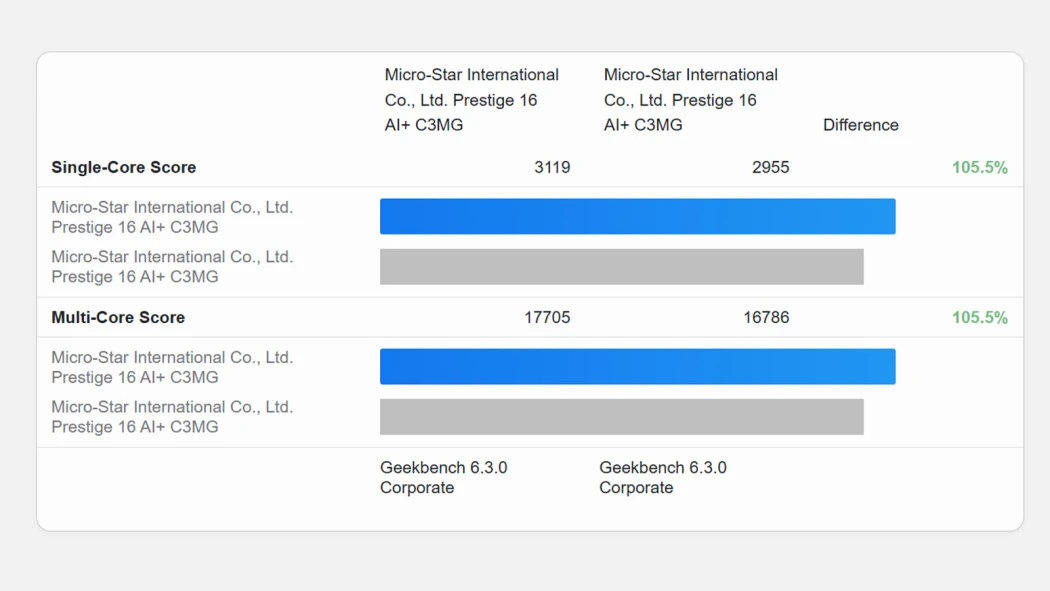
For consumers, that means the number on the screen should be read with more caution and more context. A benchmark that covers media encoding, decoding and heavier multi-core work gives a better picture of how a device will handle everyday computing, and it rewards chips that perform well across a broader set of tasks rather than gaming one narrow test.
Sources
- [1]theverge.com
- [2]geekbench.com
- [3]primatelabs.com