Business
Prime Day spending rises as inflation-conscious shoppers chase deals

Amazon’s Prime Day stretched the U.S. online retail market to more than $26.4 billion in spending from June 23 through June 26, but the bigger story was how households spent it: in smaller baskets, across multiple orders, and with a clear preference for discounted necessities and durable goods. Adobe Analytics said the four-day event produced a 9.3% increase from a year earlier, with shoppers leaning into deals on electronics, appliances, children’s items and everyday essentials.
That pattern points to a consumer still active, but far more selective than in a typical burst of discretionary buying. Adobe’s Prime Day analysis showed electronics and apparel were each discounted about 24%, while toys were about 20% off, a level of markdown that appears to have pushed shoppers toward higher-priced goods they may have been waiting to replace. Analysts tracking the event said those promotions likely helped lift demand for items such as electronics, toys, appliances and personal care products, while also signaling that retailers may need to stay aggressive on discounting through the holiday season to clear inventory.

The order data sharpened that picture. Numerator said the average Prime Day 2026 order size was $47.66, down from $53.34 last year. Nearly two-thirds of shopping households placed two or more separate orders, but average household spend still slipped to about $143.45 from $156.37 in 2025. In the first two days alone, Numerator said average household spending fell 17% to $105, average order value dropped 18% to $47, and 70% of items purchased sold for under $20. The numbers suggest shoppers were stretching dollars, comparing offers carefully and using the event to stock up on items they needed anyway.
A temporary boost may have helped support spending. The Internal Revenue Service said the average tax refund during the 2026 filing season was $3,462, with 98% of refunds issued electronically by direct deposit. Those refunds gave many households extra cash during Prime Day, but they are a one-time cushion rather than a lasting source of demand later in the year. The filing season began on January 26, 2026, and the IRS has described refund delivery as moving smoothly.
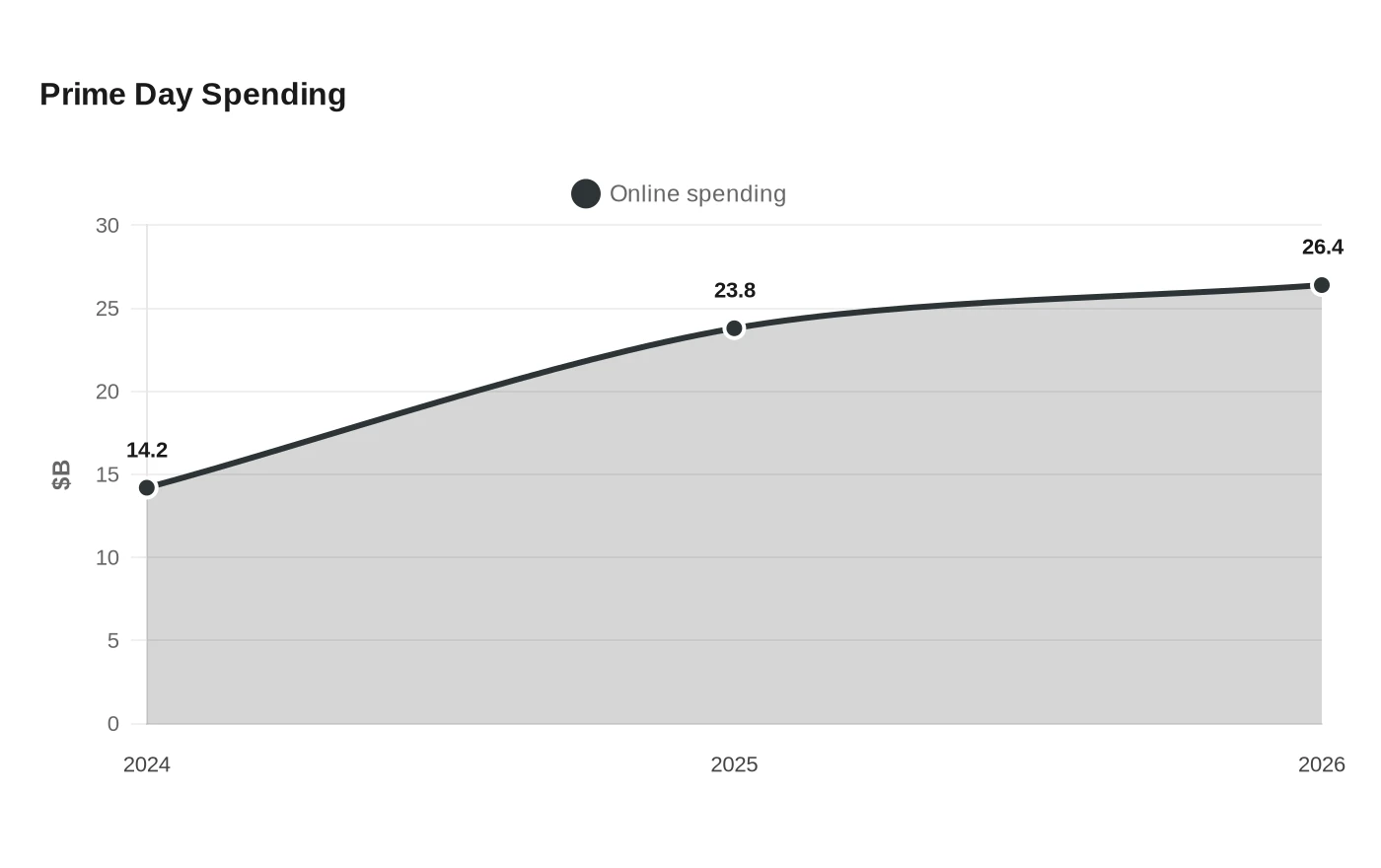
Prime Day has become a major test of retail demand. Adobe said its analysis draws on more than one trillion visits to U.S. retail sites, 100 million SKUs and 18 product categories. Its comparable estimate for Prime Day 2025 was $23.8 billion in online spending from July 8 through July 11, after $14.2 billion in the 2024 period, underscoring how much the event has grown as a barometer for the American consumer heading into back-to-school and the holidays.
Sources
- [1]money.usnews.com
- [2]business.adobe.com
- [3]irs.gov
- [4]numerator.com
- [5]blog.adobe.com