Sports
Push Grows to Induct Theodore Roosevelt Into Pro Football Hall of Fame
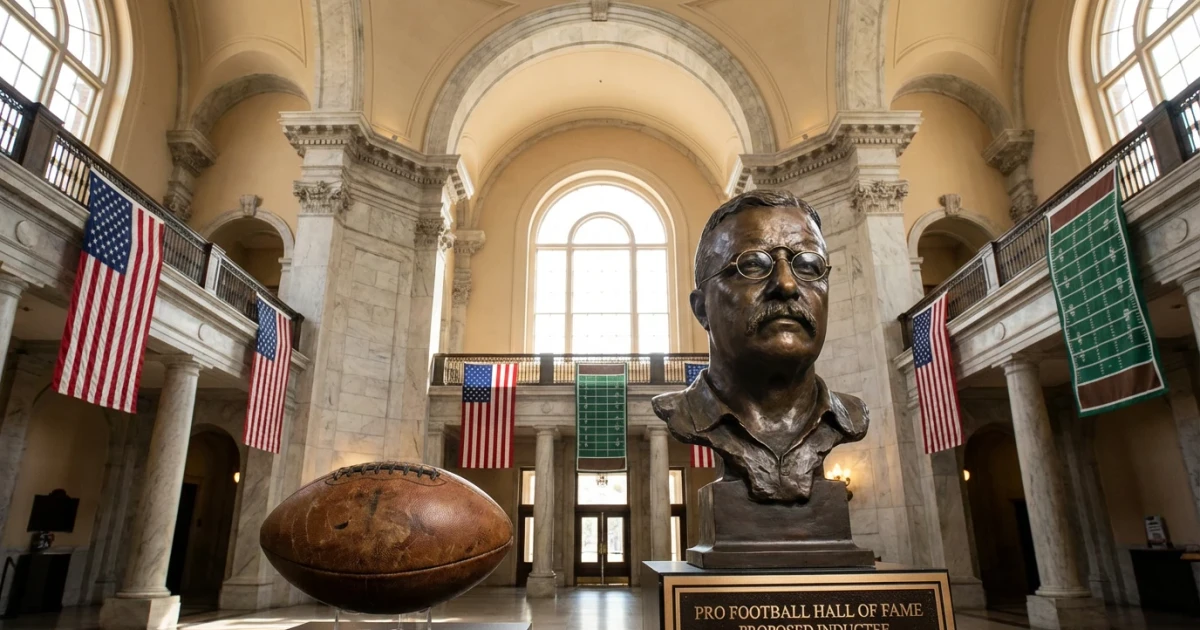
Efforts to induct President Theodore Roosevelt into the Pro Football Hall of Fame are gathering support among political figures and sports historians, with recent endorsements from former Trump administration officials and public predictions by state leaders such as North Dakota Governor Doug Burgum. The movement highlights Roosevelt’s pivotal role in football reform during the early 20th century, as advocates argue his actions helped save and shape the modern game.
Political Figures Rally Behind Roosevelt’s Candidacy
According to The Washington Post, several former Trump administration officials have publicly urged the Pro Football Hall of Fame to honor Roosevelt, citing his unprecedented intervention in 1905 when the sport was facing a crisis of violence and fatalities. The push underscores a growing recognition that non-players who have influenced football’s trajectory deserve consideration under the Hall’s Contributors category.
Governor Doug Burgum of North Dakota added to the momentum by predicting Roosevelt’s eventual induction. Coverage from InForum detailed Burgum’s belief that Roosevelt’s status as a reformer and his deep connection to North Dakota football make him a fitting candidate for recognition.
Roosevelt’s Lasting Impact on Football Reform
Roosevelt’s involvement with football is widely credited with catalyzing reforms that prevented the sport from being banned in the United States. In 1905, following a series of fatalities on the field, Roosevelt convened a meeting with college football leaders at the White House, urging the adoption of safer rules. His actions led to the creation of what would become the National Collegiate Athletic Association (NCAA) and the introduction of significant rule changes, including the legalization of the forward pass and stricter penalties for dangerous plays.
Roosevelt’s correspondence from this period, such as his letter to football coaches in 1905, is considered a foundational document in the history of football safety and reform. The National Park Service and sports historians have long noted that without Roosevelt’s intervention, football may not have survived or evolved into the game recognized today.
Hall of Fame Criteria and Controversy
The Pro Football Hall of Fame has a Contributors category designed for individuals who have made outstanding contributions to the game outside of playing or coaching. Past inductees include commissioners, team owners, and influential executives. Advocates for Roosevelt’s induction argue that his historic intervention and advocacy for safety reforms meet—and even exceed—the standards set for the category.
However, some observers note that no U.S. president has ever been inducted, and Roosevelt’s qualification as a “contributor” is the subject of debate among Hall of Fame voters and football purists. The official list of inductees shows a predominance of players, coaches, and executives, with few non-football professionals recognized.
Growing Momentum and Next Steps
- Trump-era officials and Governor Burgum are among the most prominent voices calling for Roosevelt’s induction.
- The case cites Roosevelt’s well-documented role in football reform, including his intervention in 1905 and advocacy for safety.
- The Hall of Fame’s contributors category has precedent for honoring non-players whose off-field actions have shaped the sport.
- Debate continues within the Hall of Fame’s selection committee regarding the boundaries of the contributors category.
The annual Hall of Fame induction process is highly selective, and Roosevelt’s candidacy—if formally considered—would be closely watched by sports historians, fans, and policy experts alike.
Looking Ahead
As political and public support grows, the question remains whether the Hall of Fame will recognize the unique role Roosevelt played in shaping football’s history. The outcome could set a precedent for honoring transformative figures from outside the traditional confines of the sport, expanding the definition of what it means to be a football “hero of the game.”