Technology
Qualcomm talks to design custom chips for ByteDance's TikTok unit
Qualcomm is in talks to provide custom chip-design services to ByteDance, the Chinese owner of TikTok, in a deal that could make ByteDance one of the first customers for Qualcomm’s emerging design business. The discussions, described by four people familiar with them, come as Qualcomm tries to cut its reliance on the smartphone market, still its biggest revenue source.
The potential partnership lands in a politically fraught corner of the semiconductor industry. ByteDance remains a sensitive counterparty in Washington because of TikTok and the wider fight over AI chips and export controls, yet the talks also show that U.S. technology firms still see commercial value in China even as the two governments harden their positions. Qualcomm would be designing chips that draw in part on technology from Alphawave Semi, the high-speed connectivity specialist it bought last year.
That acquisition is now central to Qualcomm’s broader shift. On June 9, 2025, the San Diego company agreed to buy Alphawave Semi for an implied enterprise value of about $2.4 billion, saying the deal would accelerate its expansion into data centers. Qualcomm completed the acquisition on Dec. 18, 2025, and said Alphawave Semi’s high-speed wired connectivity and compute technologies complement its Oryon CPU and Hexagon NPU processors. Qualcomm also said Tony Pialis, Alphawave’s founder and former chief executive, would lead its data-center business.
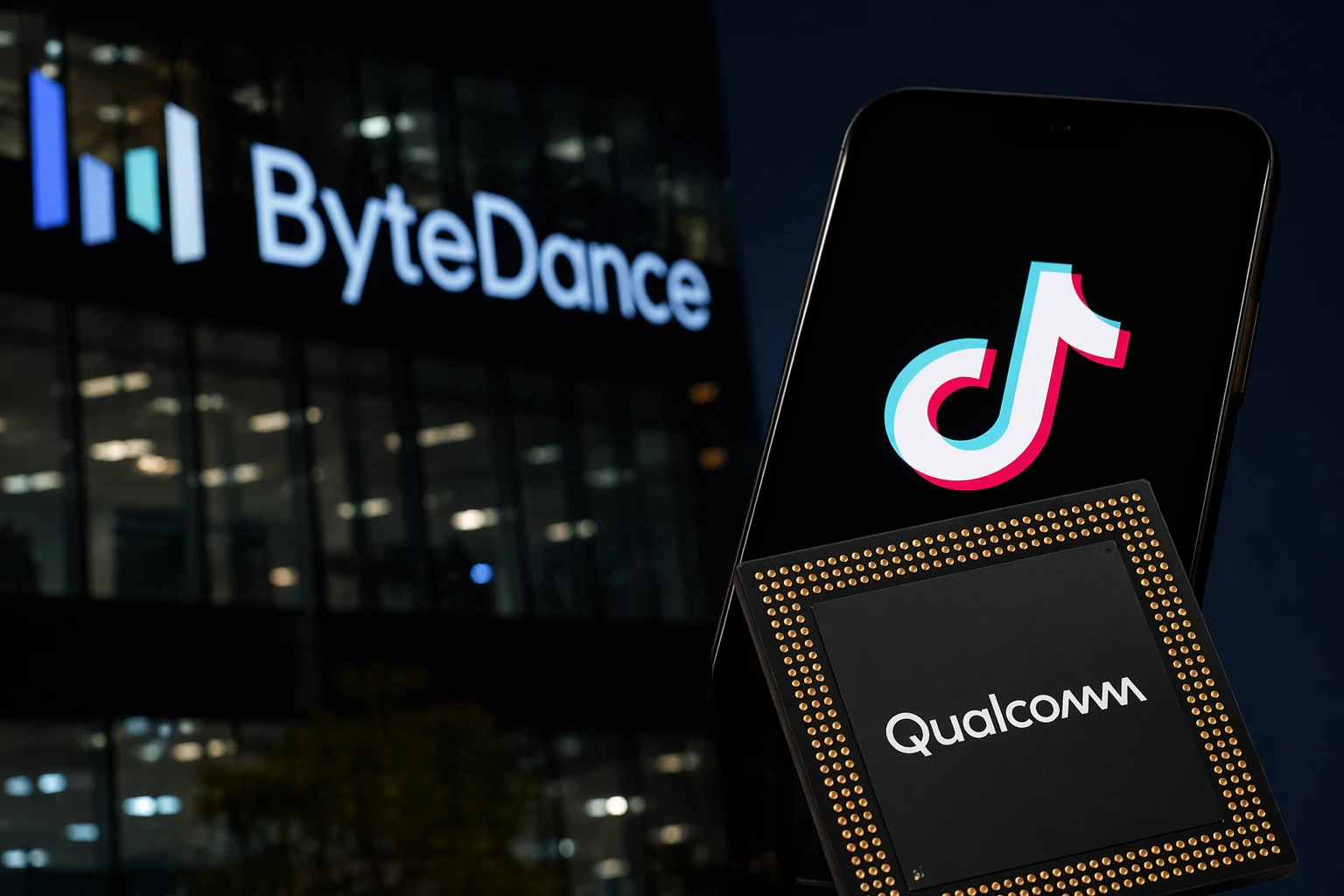
Qualcomm’s recent financial results show why the company is pressing into new markets. It reported record total company revenues of $12.3 billion for its fiscal first quarter ended Dec. 28, 2025, and Cristiano Amon said the company’s momentum across personal, industrial and physical AI was growing. If the ByteDance talks advance, they would give Qualcomm an early marquee customer as it tries to convert acquisitions and chip-design know-how into a broader business that reaches beyond smartphones and into data centers, custom silicon and other specialized infrastructure. The outcome is still uncertain, but the negotiations reflect how tightly U.S. chipmakers and Chinese platform companies remain entangled even under mounting pressure to separate.