Technology
Qualcomm wins Microsoft, Meta for new AI data-center chips
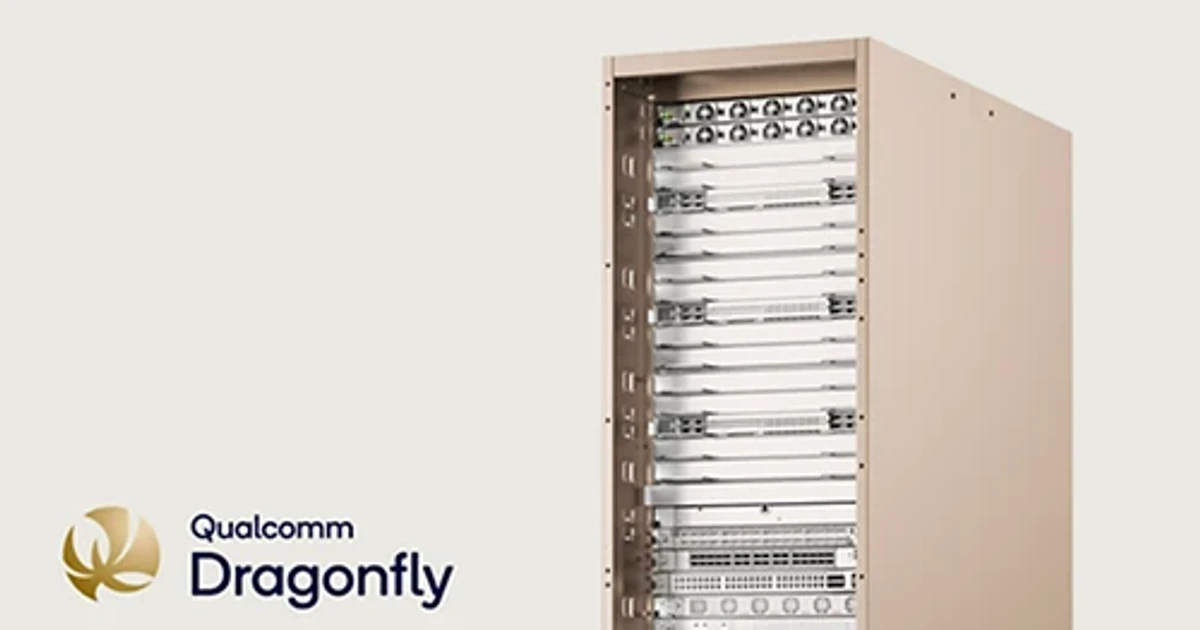
Qualcomm said Microsoft and Meta Platforms will use its new AI data-center chips, putting two of the biggest buyers in cloud computing into its push beyond smartphones. The company also said it will build custom chips for two other hyperscalers it did not name, a move that suggests Qualcomm wants a real seat at the table in AI infrastructure spending, not just a trial run.
The announcement came during Qualcomm’s Investor Day in New York, where chief executive Cristiano Amon, chief financial officer and chief operating officer Akash Palkhiwala, and Tony Pialis, the executive vice president and general manager of the data-center business, laid out the company’s next growth phase. Qualcomm introduced the Dragonfly C1000 CPU, High Bandwidth Compute, and the Dragonfly AI300 inference accelerator, along with connectivity products and custom silicon designed to improve performance per watt and lower total cost of ownership. Dragonfly AI300 joins the earlier AI200 and AI250 products on an annual cadence roadmap.
For Microsoft and Meta, the key question is whether these deals mark broad adoption or early-stage experimentation. Qualcomm said Microsoft will use its HBC chips for AI tasks, while Meta will use the Dragonfly C1000 CPU in AI data centers as part of a multi-generation agreement. Meta’s use is planned to begin with production in 2028, a timeline that makes the deployment meaningful but not immediate. Qualcomm also said revenue from the two unnamed custom-chip customers should begin before year-end.
The commercial stakes are large. Qualcomm expects $5 billion in data-center business revenue in fiscal 2027, including $1 billion from the new custom-chip customers. It is targeting $15 billion in annual data-center sales by 2029 and $40 billion in non-handset revenue by fiscal 2029, up from a prior forecast of $22 billion. Those numbers put pressure on the company to show that its chips can win beyond a handful of headline customers.

The technical bet is equally important. Qualcomm said HBC is designed to address the memory wall and improve energy efficiency and performance per token, leaning on cheaper memory chips more common in smartphones and laptops rather than the pricier approaches used by Nvidia and Cerebras Systems. That pitch matters because the AI chip market has been defined by Nvidia’s lead, with AMD and in-house cloud designs chasing the same workloads. Qualcomm is betting that efficiency, cost, and a CPU-centered architecture can create room for another supplier.
The company also moved to build the software side of the business. On June 24, Qualcomm said it would acquire Modular and expanded its relationship with Hugging Face to move workloads from device to cloud onto Qualcomm Dragonfly data-center systems. Together, those moves show Qualcomm trying to assemble the hardware, software, and customer relationships needed to make its AI push scale.
Sources
- [1]sahmcapital.com
- [2]qualcomm.com
- [3]cnbc.com
- [4]money.usnews.com
- [5]reuters.com