Science
Quantum Experiments Achieve Unprecedented Randomness
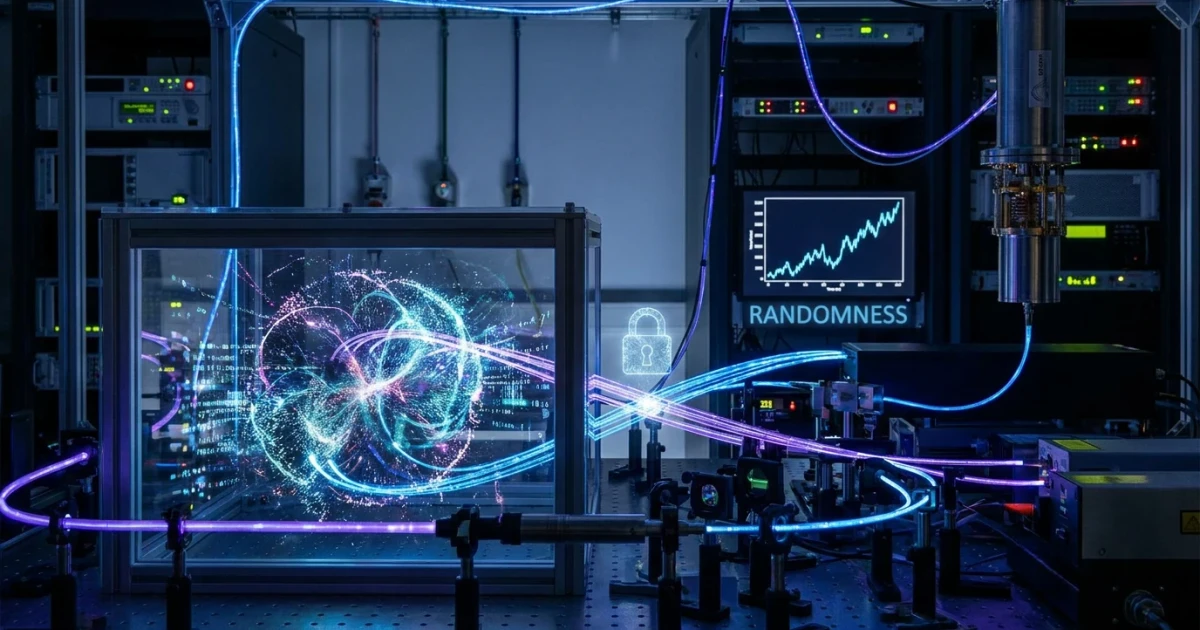
Scientists have achieved a breakthrough in the quest for true randomness, using quantum experiments to generate perfectly random numbers for the first time. This advance, reported by Nature, has profound implications for cryptography, data security, and the future of quantum technology.
Quantum Systems and the Search for Randomness
Randomness is a foundational element in fields ranging from statistical sampling to secure communications. Traditional random number generators, often based on deterministic algorithms, can be vulnerable to prediction or external manipulation. The pursuit of true randomness has long been a focus for physicists and engineers, with quantum systems offering promise due to their inherent unpredictability.
The recent Nature publication highlights an experimental achievement in randomness amplification, in which researchers used a quantum computing system to produce random numbers that passed the strictest statistical tests for randomness. This means the numbers generated could not be distinguished from perfectly random numbers, even with the best existing analytical tools.
How the Experiment Worked
The research team used quantum entanglement and measurement to amplify weak sources of randomness into strong, almost ideal randomness. According to Nature, this process involved carefully controlled quantum systems, whose outputs were checked against established statistical criteria. The system's performance was validated using methods outlined by the NIST Randomness Beacon Project, which serves as a benchmark for secure random number generation.
- The experiment successfully amplified imperfect random numbers into sequences indistinguishable from true randomness
- Extensive testing confirmed no detectable patterns or biases in the outputs
- This result sets a new standard for quantum random number generators in practical applications
Implications for Cryptography and Security
One of the most immediate and significant impacts of this breakthrough lies in cryptography. Many encryption protocols rely on random keys, and the quality of these keys depends on their unpredictability. As Nature notes, quantum random number generators have already been deployed in some security systems, but perfect randomness remained elusive until now.
This experiment demonstrates that quantum systems can deliver randomness suitable for even the most demanding cryptographic applications, potentially protecting sensitive information from future quantum hacking methods. The results could also improve the reliability of simulations, lotteries, and statistical analyses that depend on random sampling.
Future Directions and Challenges
While the experiment marks a major milestone, researchers emphasize that scaling these systems for widespread commercial use will require further engineering. Integrating perfect randomness generation into everyday devices and cloud systems is a complex challenge, but one that now appears feasible.
For those interested in the detailed methodology, results, and data, the full experimental report is available through Nature's publication, while additional technical context can be found in the arXiv preprint covering the experiment.
Conclusion
This demonstration of perfect randomness realized in quantum systems is a significant step forward for information security and the practical application of quantum technologies. The path from laboratory demonstration to mainstream adoption will require continued innovation, but the foundation laid by these results promises a new level of trust in the randomness that underpins modern society.