US News
Questions Grow After Collapse of Canada-US Trade Deal
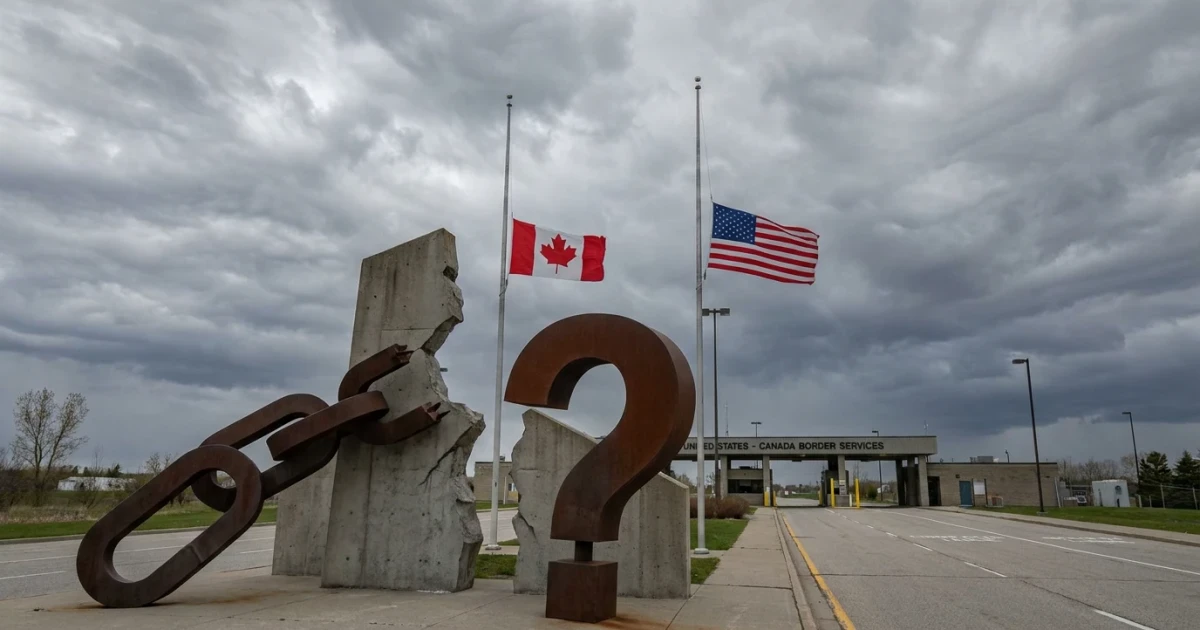
Uncertainty is mounting across North America as the collapse of the Canada-US trade deal sends shockwaves through industries and policymakers. The breakdown marks a major setback for economic cooperation between two of the world's largest trading partners and leaves the future of the US-Mexico-Canada Agreement (USMCA) in question.
How Did the Collapse Happen?
According to Politico, negotiations between the United States and Canada reached an impasse in recent weeks, despite months of talks aimed at salvaging key provisions of the USMCA. Disagreements reportedly centered on agricultural market access, digital trade, and automotive content rules, with both sides unwilling to make further concessions. The impasse culminated in the formal collapse of the bilateral deal, effectively suspending the Canada-US trade relationship that has underpinned continental commerce for decades.
Economic Impact and Industry Reaction
The collapse introduces immediate uncertainty for businesses that rely on the flow of goods between the two countries. Canada and the United States exchange over $700 billion in goods and services annually, according to U.S. Census Bureau data. With the agreement in limbo, companies in the auto, agriculture, and manufacturing sectors are bracing for potential tariffs, supply chain disruptions, and regulatory hurdles.
- Automotive manufacturers could face new tariffs and requirements for cross-border parts.
- Agricultural exporters may lose preferential access for key commodities.
- Digital trade and data rules, previously harmonized under the USMCA, are now less certain.
Many industry groups have urged both governments to resume talks, warning that prolonged uncertainty could harm competitiveness and jobs on both sides of the border. As Politico notes, major business associations are lobbying for interim measures to avoid immediate economic fallout.
Political Fallout and Policy Scenarios
The collapse is already fueling political debate in both countries. Canadian lawmakers have criticized the breakdown as a failure to defend national interests, while some U.S. officials have called for a reassessment of trade priorities. The Council on Foreign Relations identifies three possible scenarios for the future of North American trade:
- Renegotiation: Both sides could return to the table to address sticking points and revive the agreement.
- Bilateral Patchwork: The United States and Canada may pursue smaller, sector-specific deals to maintain trade flows.
- Retreat to WTO Rules: Without a deal, trade could revert to standard World Trade Organization terms, likely increasing costs and complexity.
The uncertainty also affects Mexico, the third partner in the USMCA, which could see its own trade terms reexamined depending on how the remaining parties proceed.
What’s Next for North American Trade?
As analysts debate the path forward, stakeholders are closely watching political developments in Ottawa and Washington. Some experts argue that the collapse may be temporary, pointing to past trade disputes that were eventually resolved through compromise. Others warn that the breakdown could signal a broader shift toward more fragmented, protectionist policies in North America.
The USMCA, which replaced NAFTA and was implemented through the USMCA Implementation Act in the U.S. and Bill C-4 in Canada, was designed to modernize regional trade for the digital age. Its uncertain future now raises concerns about the durability of such agreements in a rapidly changing global economy.
Conclusion
The collapse of the Canada-US trade deal leaves businesses, workers, and policymakers facing new risks and hard choices. Whether the USMCA framework can be salvaged—or whether North American trade will become more fragmented—remains to be seen as leaders on both sides of the border weigh their next moves.