Health
Rabid Bat Prompts Warning for Southern Utah Residents
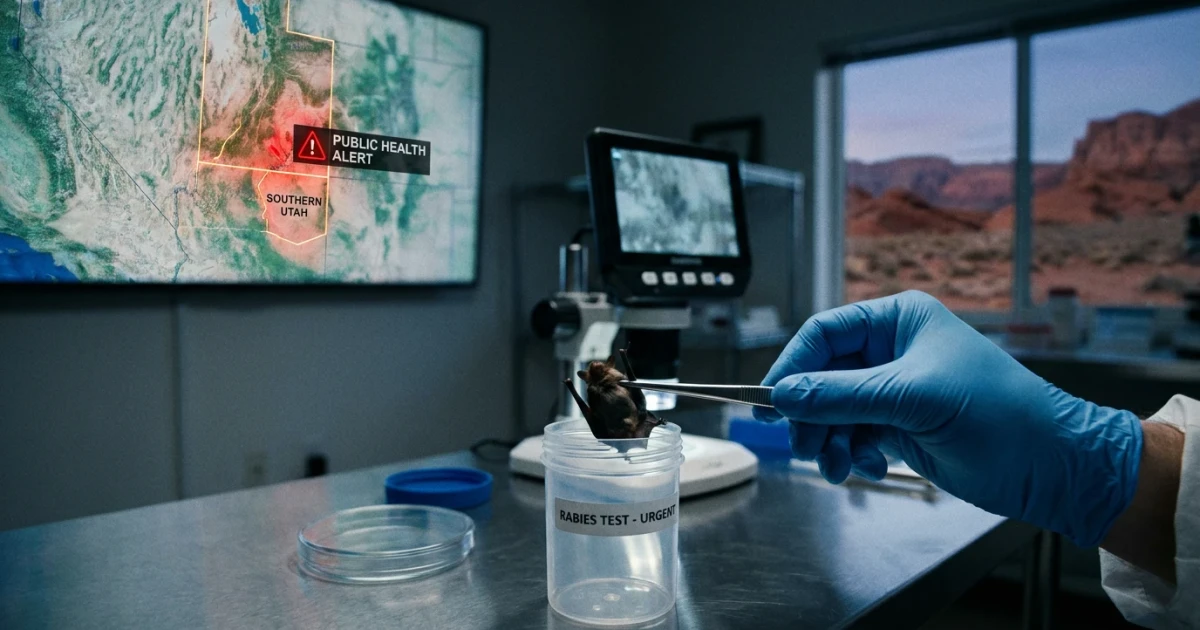
Southern Utah health authorities are urging residents to take precautions after a bat collected from a Kirkwood-area home in Washington County tested positive for rabies—the state’s first confirmed case of the year. The announcement, highlighted by KSL News and KUTV, underscores the ongoing risk of rabies exposure from wildlife, particularly as warmer weather increases human and animal outdoor activity.
Details of the Incident
The Utah Department of Health confirmed that the infected bat was discovered at a private residence and subsequently tested positive for rabies. This is the first reported rabid bat in Utah for 2026. According to health officials, there were no immediate reports of human exposure, but the presence of the virus in local wildlife raises concerns for both residents and pet owners.
Rabies Risk and Regional Context
Rabies is a fatal viral infection that affects mammals, including humans, and is most commonly transmitted through bites or scratches from infected animals. In the United States, bats are a leading source of rabies exposure, with the CDC noting that even minor, unnoticed contact can pose a risk. Utah has consistently monitored rabies cases, with state surveillance data showing low but persistent annual detections in wildlife, primarily bats.
- Utah’s official records indicate that rabid bats are found each year, though human cases remain extremely rare.
- Nationally, the CDC’s surveillance data show that bats account for the majority of animal rabies cases detected in the western United States.
Public Health Response
Local health officials are conducting outreach to ensure anyone who may have had contact with the bat is identified and evaluated. Rabies is nearly always fatal once symptoms develop, but can be prevented with prompt post-exposure treatment. The Utah Department of Health urges the public to avoid touching bats—alive or dead—and to contact authorities if a bat is found in their home or near children and pets.
- Pets should be kept up-to-date on rabies vaccinations.
- Individuals who wake to find a bat in their room, or who have direct contact with a bat, should seek medical advice immediately.
Precautions and Recommendations
Experts emphasize that rabies is preventable through awareness and timely action. The CDC’s annual rabies reports recommend the following:
- Never handle wild animals, especially bats.
- Secure homes by sealing entry points to prevent bats from entering living spaces.
- Report any suspicious or sick wildlife to local animal control.
- Ensure pets are current on rabies vaccinations as required by law.
Looking Ahead
While this rabid bat represents Utah’s first case of 2026, experts highlight that vigilance remains key for preventing human and animal rabies infections. Residents are encouraged to familiarize themselves with bat-related rabies risks and to consult official state guidance for more information.
Ongoing public awareness campaigns and routine pet vaccination remain the cornerstones of effective rabies prevention in Utah and nationwide.