US News
Raúl Castro Indicted in U.S. for 1996 Downing of Planes
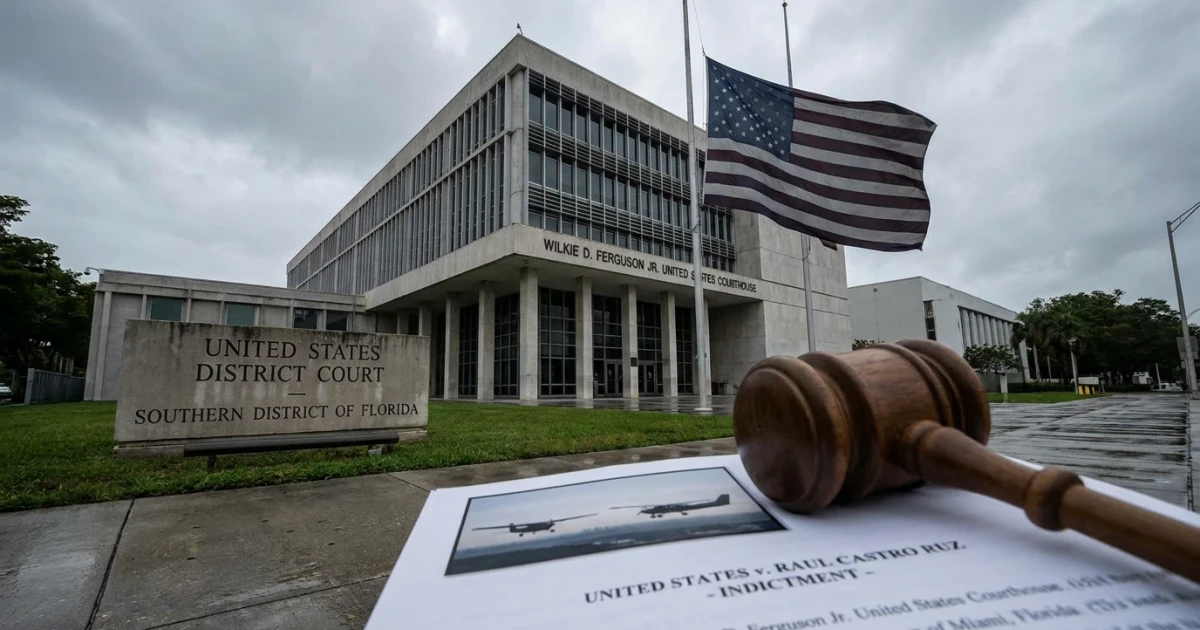
Former Cuban president Raúl Castro has been indicted by the United States on murder and conspiracy charges related to the 1996 downing of two civilian aircraft operated by the exile group Brothers to the Rescue. The long-anticipated federal charges, which were officially announced this week, have reignited tensions between Washington and Havana and drawn renewed attention to a tragic incident that left four people dead and reverberated through U.S.-Cuba relations for decades.
Details of the Indictment
The U.S. Department of Justice formally charged Castro with orchestrating the shootdown of two unarmed Cessna planes in international airspace north of Cuba on February 24, 1996. The official indictment accuses Castro, who was then head of the Cuban military, of directing Cuban fighter jets to intercept and destroy the aircraft. According to the federal court filing, Castro is alleged to have conspired with other high-ranking Cuban officials to deliberately target the planes, resulting in the deaths of four pilots and crew members, all of whom were U.S. citizens or residents.
- The full text of the indictment provides detailed accounts of the incident, the chain of command, and the evidence supporting the charges.
- The National Transportation Safety Board’s investigative report confirmed that the planes were shot down by Cuban Air Force MiG fighters and crashed into the Florida Straits.
Background: The 1996 Shootdown
The Brothers to the Rescue, a Miami-based group of Cuban exiles, regularly flew missions over the Florida Straits to spot and aid Cuban rafters fleeing the island. On February 24, 1996, two of their planes were intercepted and destroyed by Cuban military aircraft. The incident occurred in international airspace, according to U.S. authorities, though the Cuban government has long claimed the planes violated its territory.
The shootdown sparked international outrage and led to a sharp deterioration in U.S.-Cuba relations, including the passage of the Cuban Liberty and Democratic Solidarity (LIBERTAD) Act of 1996, better known as the Helms-Burton Act, which further tightened the U.S. embargo on Cuba.
Political and Diplomatic Implications
Coverage by The Washington Post notes that the indictment comes at a time of already heightened tensions between the two countries. The move is seen as part of a broader effort by the U.S. to hold senior Cuban officials accountable for past human rights abuses and acts of violence against dissidents and exiles. The current Cuban president publicly condemned the indictment, according to The Washington Post, characterizing it as a politically motivated escalation by Washington.
Spectrum News highlights that the charges against Castro mark one of the rare occasions the U.S. has sought to prosecute a former head of state for actions taken while in office. The indictment is largely symbolic given that Castro, who is now in his 90s and living in Cuba, is not expected to face extradition. However, officials and analysts say the charges serve as a strong message of support to victims’ families and the Cuban exile community.
Human Rights and Legal Context
The shootdown has long been cited by human rights organizations and U.S. lawmakers as an example of the Cuban government’s harsh response to dissent. According to Human Rights Watch, the Castro government’s policies during Raúl’s leadership were marked by repression of opposition and limited avenues for justice for victims of state violence.
The CIA World Factbook provides additional context on Castro’s role in Cuban government and military affairs during the period, noting his long tenure as defense minister prior to assuming the presidency from his brother Fidel Castro.
Next Steps and Broader Impact
While legal experts cited by CBS News acknowledge that an actual trial is unlikely without Cuban cooperation, the indictment sets a precedent for future actions against foreign leaders accused of crimes against U.S. citizens. It also reinforces the U.S. government’s policy of pursuing accountability for incidents involving American victims, regardless of when they occurred.
The Families of the victims and Cuban exile groups have long advocated for justice in the case. The new charges, though largely symbolic, provide a measure of official recognition of their loss and underscore the continuing influence of the 1996 shootdown on U.S.-Cuba policy.
As the geopolitical landscape evolves, the indictment of Raúl Castro stands as a stark reminder of the unresolved traumas in U.S.-Cuba relations and the enduring quest for accountability in international law. Readers can explore the full indictment text and the NTSB’s accident report for comprehensive details on the case.