Science
Rare Giant Squid Detected Off Western Australia Coast
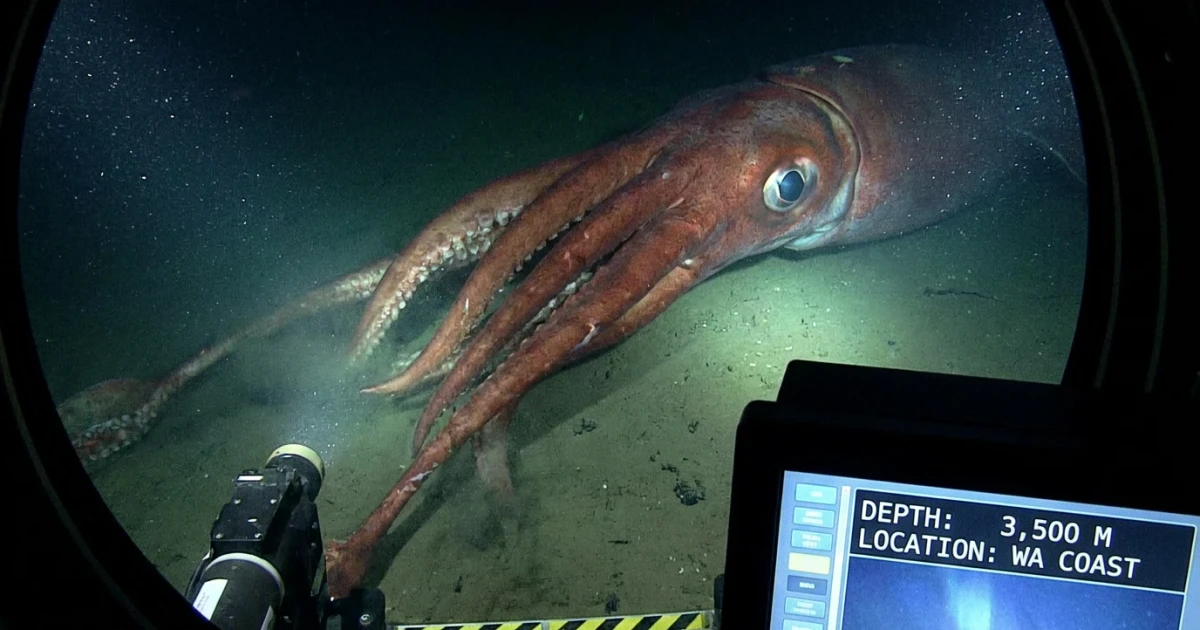
Western Australia—A rare giant squid has been detected in the deep-sea waters off the coast of Western Australia, offering scientists and marine enthusiasts a rare glimpse into one of the ocean’s most mysterious creatures. The discovery, first reported by Yahoo and Oceanographic Magazine, was made through advanced environmental DNA (eDNA) analysis in a remote underwater canyon.
Environmental DNA Sheds Light on Elusive Species
The detection was accomplished as part of a broader scientific survey using environmental DNA (eDNA) technology, which collects genetic material shed by organisms into the water column. This non-invasive method allows researchers to identify the presence of rare and elusive species, even when physical specimens are not observed directly.
According to the recent Nature study, eDNA samples taken from a deep-sea canyon off Western Australia revealed the unmistakable genetic signature of Architeuthis dux, the scientific name for the giant squid. This marks one of the few confirmed occurrences of the species in Australian waters.
Significance of the Discovery
The giant squid, a deep-ocean cephalopod, has long been shrouded in mystery due to its elusive behavior and the extreme depths at which it lives. Most knowledge about the species comes from carcasses that have washed ashore or been caught in deep-sea fishing nets. Live sightings are exceedingly rare.
- Giant squid can reach lengths of up to 13 meters (43 feet), making them among the largest invertebrates on Earth (FishBase).
- They inhabit deep ocean environments, typically at depths ranging from 300 to 1,000 meters, and are found in all of the world’s oceans (Smithsonian Ocean).
- In Australia, official records classify giant squid as a rarely observed, non-threatened species in local waters.
The recent detection in Western Australia expands the known range of the species and provides new evidence of its presence in the region’s deep-sea habitats. The Atlas of Living Australia lists only a handful of giant squid occurrences in the country, underscoring how significant each new finding is for scientific understanding.
What the Detection Means for Science and Conservation
Researchers believe that the new eDNA data can help map the distribution of giant squid populations and inform future conservation efforts. Deep-sea ecosystems remain among the least explored environments on Earth, and the presence of top predators like the giant squid is an indicator of ocean health and biodiversity.
While the discovery does not indicate a change in the species’ conservation status, it highlights the value of modern technologies in uncovering the secrets of the deep sea. As eDNA sampling becomes more widespread, scientists anticipate further discoveries of rare and cryptic marine life in Australian waters and beyond.
Looking Ahead
The detection of a giant squid in Western Australia is a reminder of how much remains undiscovered beneath the ocean’s surface. Each new finding adds to our understanding of giant squid biology and the deep-sea environment itself. Continued research and monitoring will be essential to building a more complete picture of these legendary creatures and safeguarding the ecosystems they inhabit.