Science
Rare Six-Planet Parade Lights Up June Skies
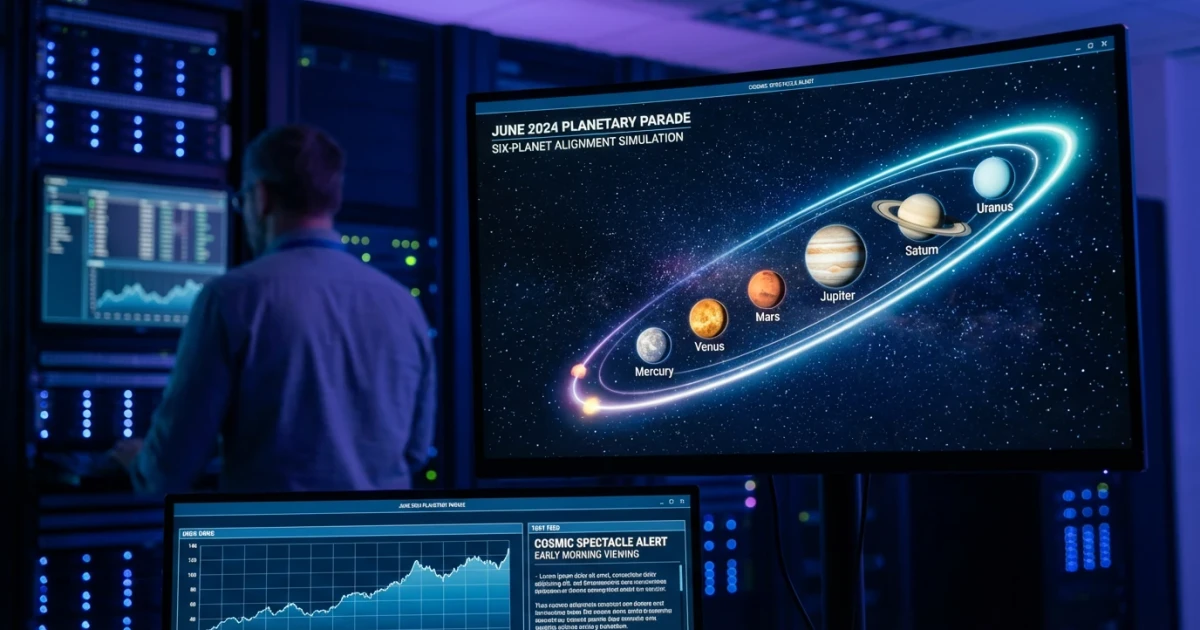
Stargazers are in for a rare celestial event in early June as six planets—Mercury, Jupiter, Uranus, Mars, Neptune, and Saturn—align in a sweeping arc across the dawn sky. This planetary 'parade,' as described by The Telegraph and other outlets, will be visible shortly before sunrise and promises a striking, if subtle, sight for dedicated skywatchers.
What Is a Planetary Parade?
The term planetary parade refers to the appearance of multiple planets lined up in the sky from Earth's perspective. While the planets are not physically close together in space, their orbits occasionally bring them to similar positions in our sky, creating the illusion of an organized procession. According to the International Astronomical Union, these alignments are a natural consequence of the solar system’s structure and the relative orbital speeds of the planets.
When and How to See the Alignment
The best viewing window for this six-planet lineup is the early mornings around June 3, 2024. Observers are advised to look east just before sunrise, when the sky is still dark enough for the fainter planets to be visible. Detailed visibility charts and timing for different locations can be found at In-The-Sky.org, which notes that the parade is most easily spotted from low latitudes with a clear, unobstructed horizon.
- Mercury and Jupiter will be the brightest and easiest to spot, low on the eastern horizon.
- Mars and Saturn will appear higher up, glowing with characteristic reddish and golden hues.
- Uranus and Neptune are much fainter—binoculars or a telescope will be needed to glimpse them.
NASA’s Skywatching Highlights of 2024 confirms this rare event, listing it among the year's top astronomical moments and providing tips for safe and effective viewing.
What Makes This Alignment Special?
While planetary groupings are not unusual, a six-planet parade is relatively rare. According to Sky & Telescope, this particular configuration—spanning the sky in a gentle arc—is best observed with the naked eye for the brighter planets, and offers a unique opportunity to see so many worlds at once. The event will not be as dramatic as some past conjunctions, as the planets will be spread out rather than clustered tightly together, but the sight remains impressive for enthusiasts and casual observers alike.
Viewing Tips for the Best Experience
- Choose a location with a clear view of the eastern horizon, away from city lights.
- Arrive early, as the planets will become harder to see as dawn brightens the sky.
- Use binoculars or a small telescope for fainter planets like Uranus and Neptune.
- Consult interactive sky maps, such as those at Time and Date’s Planet Positions, to pinpoint each planet’s location from your area.
What If You Miss It?
If clouds or timing get in the way, don’t worry—planetary alignments occur with some regularity, though six-planet parades are rare. The NASA skywatching calendar lists other notable events throughout the year, including meteor showers and lunar eclipses, ensuring plenty of opportunities for future astronomical viewing.
Looking Ahead
Events like the June planetary parade remind us of the vast and intricate dance of our solar system. For many, witnessing such alignments is a chance to connect with the broader universe and appreciate the predictable beauty of celestial mechanics. Whether you’re a seasoned astronomer or a curious newcomer, the coming weeks offer a chance to experience a rare spectacle—if you’re willing to rise before dawn and look up.