Science
Rare Three-Meter Fossil Found at Construction Site
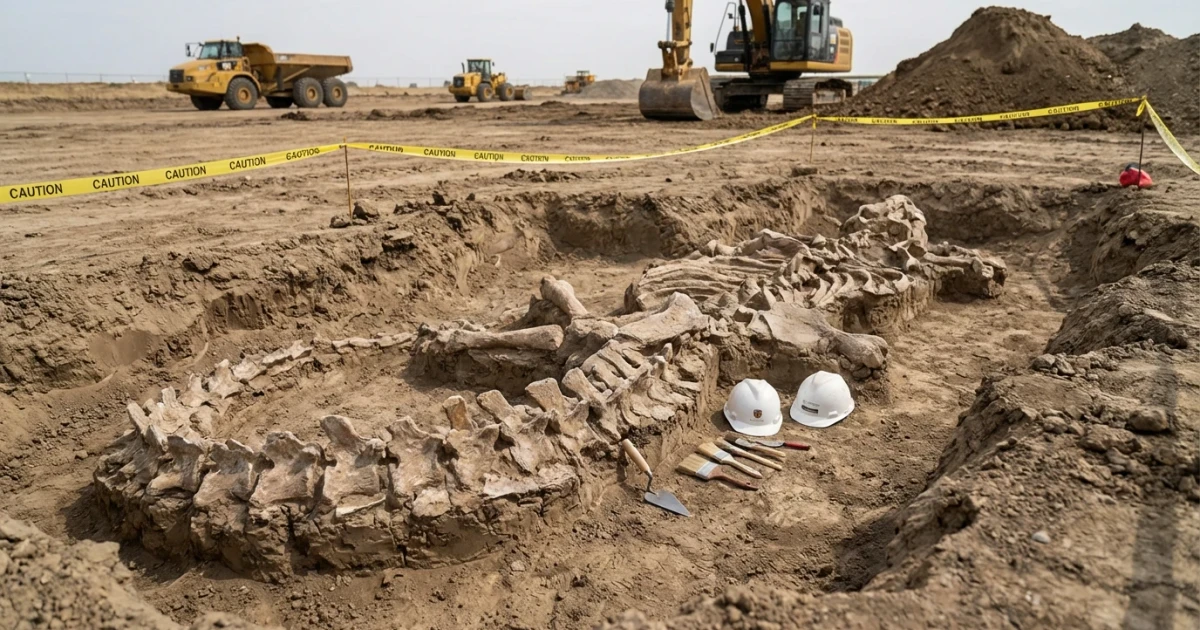
Construction workers in the United States have uncovered the fossilized remains of a gigantic, three-meter-long prehistoric creature beneath an active construction site, sparking excitement among paleontologists and the public alike. The unearthing has been hailed as a rare and significant find, shedding light on the prehistoric giants that once roamed the region.
Discovery During Routine Construction
The fossil was first encountered when workers, engaged in a routine excavation, noticed unusual bone structures protruding from the soil. According to The Daily Galaxy, the remains—measuring an impressive three meters in length—were quickly identified as belonging to a large amphibian or reptile dating back to the Mesozoic era. Finds of this magnitude are uncommon during modern construction, making this discovery particularly noteworthy.
Analyzing the Fossil
Experts from local museums and universities were summoned to the site to assess the specimen. Preliminary analysis suggests that the creature could be a member of the group known as giant prehistoric amphibians or reptiles, which often reached considerable sizes and inhabited freshwater or coastal environments millions of years ago.
Excavation teams carefully extracted the fossil, adhering to strict safety standards for fossil excavation in construction zones. The specimen’s size and preservation level suggest it could provide valuable data for researchers studying the diversity and anatomy of large prehistoric vertebrates.
Scientific Significance
- This is one of the largest and most complete prehistoric skeletons unearthed in a non-scientific context in recent years.
- According to the Natural History Museum, similar discoveries have in the past led to the identification of new species or provided missing links in the fossil record.
- Peer-reviewed research, such as that published on ScienceDirect, emphasizes the importance of large fossil finds in understanding the evolutionary history and ecological roles of ancient marine and freshwater reptiles.
How Fossils Form Beneath Our Feet
Fossils like this one form when the remains of ancient animals are gradually buried by sediment, protecting their bones from decay and enabling mineralization over millions of years. As explained by Encyclopedia Britannica, these processes allow for the preservation of bones, teeth, and sometimes even soft tissues, especially in stable environments such as riverbeds or ancient lakes.
What Happens Next?
The fossil will be transported to a research facility for cleaning, cataloging, and further analysis. Scientists hope to determine the exact species, age, and ecological context of the specimen. Public interest in the discovery is high, with local officials and museum representatives suggesting that the fossil could one day be displayed for educational purposes.
Looking Forward
This remarkable find serves as a reminder of the hidden history lying just beneath developed landscapes. As construction continues to expand into previously unexcavated areas, experts say the potential for more such discoveries remains high—provided that workers and developers follow established protocols for reporting and protecting paleontological finds.
Ultimately, each new fossil unearthed adds valuable information to the scientific community’s understanding of Earth’s distant past, helping to piece together the intricate puzzle of prehistoric life.