Business
Recruitment boss shares tips for standing out in tougher job market

UK vacancies fell by 31,000, or 4.2%, in March to May 2026 from a year earlier, while there were 2.5 unemployed people per vacancy in February to April 2026. Old job-hunting habits are losing their edge in that market. The advice recruiters give candidates is less about polish for its own sake and more about proving value quickly.
A market with fewer openings and more competition
The Office for National Statistics published its latest UK labour market release on 18 June 2026, and the numbers point to a slower, more selective hiring environment. The unemployment-to-vacancy ratio has stayed at 2.5 since July to September 2025, which means jobseekers are not just competing with the applicant pool from a single week or month. They are competing in a market that has been tight for candidates for nearly a year.
That pressure is reflected in the Recruitment and Employment Confederation’s June 2026 Report on Jobs, produced with KPMG and S&P Global, which found the labour market remains under pressure, with weak confidence and cost challenges continuing to weigh on hiring activity. REC director of campaigns Shazia Ejaz put it bluntly: “Much of the job market is on standby mode as employers wait for clearer signals while geopolitical tensions unfold.” In practical terms, that means employers are moving more slowly, testing candidates more carefully and leaving less room for vague experience or generic enthusiasm.
What still works when employers can choose more carefully

The core advice that continues to hold up is the one that makes it easiest for a hiring manager to see fit. Tailoring a CV to the role matters because employers have more applicants to sort through and less time to do it. A broad, one-size-fits-all application is easier to ignore when there are 2.5 unemployed people chasing every vacancy.
ATS-friendly formatting is still essential for the same reason. Applicant tracking systems help employers screen at scale, so cluttered layouts, text boxes and unusual formatting can make a strong candidate harder to find. Clear section headings, standard fonts and straightforward chronology improve the odds that experience is read correctly, not lost in the software layer before a human ever sees it.
Measurable achievements matter more now than they do in looser markets. A CV that says someone “improved performance” is weaker than one that shows the scale of that improvement, whether that means revenue growth, faster turnaround times, lower costs or bigger teams managed. When hiring teams are nervous about confidence and costs, evidence beats general claims.
Interview preparation also carries more weight in a selective market. Employers who are cautious about adding headcount want candidates who can answer quickly and specifically: why this role, why this company and why now. That means preparing examples that connect past results to the job on offer, rather than repeating the same summary that appears on the CV.
What has gone stale in a slower hiring cycle
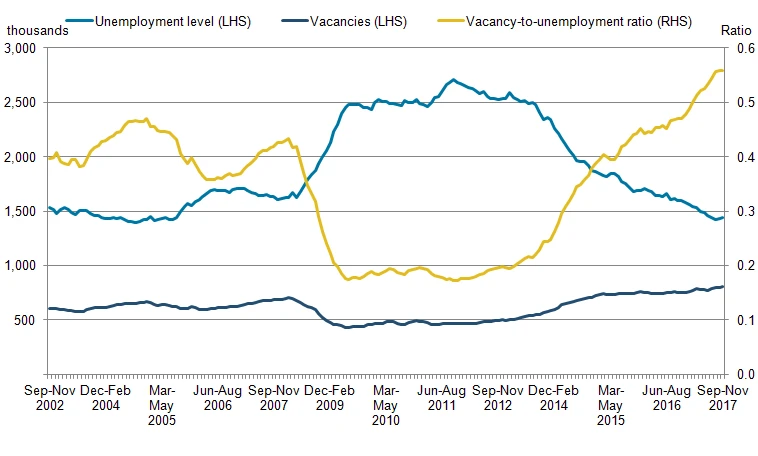
The tactics that weaken fastest in a cooling market are the ones built on volume and assumptions. Sending the same application to multiple employers, hoping one will bite, is less effective when vacancies are down and screening is stricter. If employers are already on standby, then scattershot applications create noise, not traction.
Overwritten CVs are also more of a liability than an asset. Long biographies, dense paragraphs and vague responsibility lists make it harder for recruiters to see the strongest points. In a market with fewer openings, candidates need sharper documents, not longer ones. The same goes for interview answers that describe effort without outcome, or confidence without proof.
Why local recruiters in Sheffield matter
That shift helps explain why long-established local recruiters are leaning into advice as much as placement. Sue Ross Recruitment, based in Sheffield and established in 1997, is celebrating 29 years in business. Big Fish Little Fish, also based in Sheffield, was set up over 20 years ago.

Recruiters see which sectors are still moving, which employers are delaying decisions and which candidates are standing out because they have adapted their approach. They also see a common mistake: applicants often keep using tactics from a busier market long after employers have become more selective.
How jobseekers need to adjust now
The practical response is to treat every application as a fit test, not a volume exercise. Candidates need to match the language of the vacancy, show outcomes with numbers where possible and trim anything that does not help a recruiter decide faster. A strong application in 2026 is built for clarity, not decoration.
• Tailor each CV to the role rather than recycling the same document. • Use simple, ATS-friendly formatting so the application can be read cleanly. • Lead with measurable achievements, not just responsibilities. • Prepare interview answers around specific examples and results. • Be selective about where to apply, because slower hiring rewards precision.
Sources
- [1]bbc.co.uk
- [2]ons.gov.uk
- [3]rec.uk.com
- [4]suerossrecruitment.co.uk
- [5]bigfishlittlefish.co.uk