Science
Reflect Orbital’s Space Mirror Proposal Raises Light Pollution Concerns
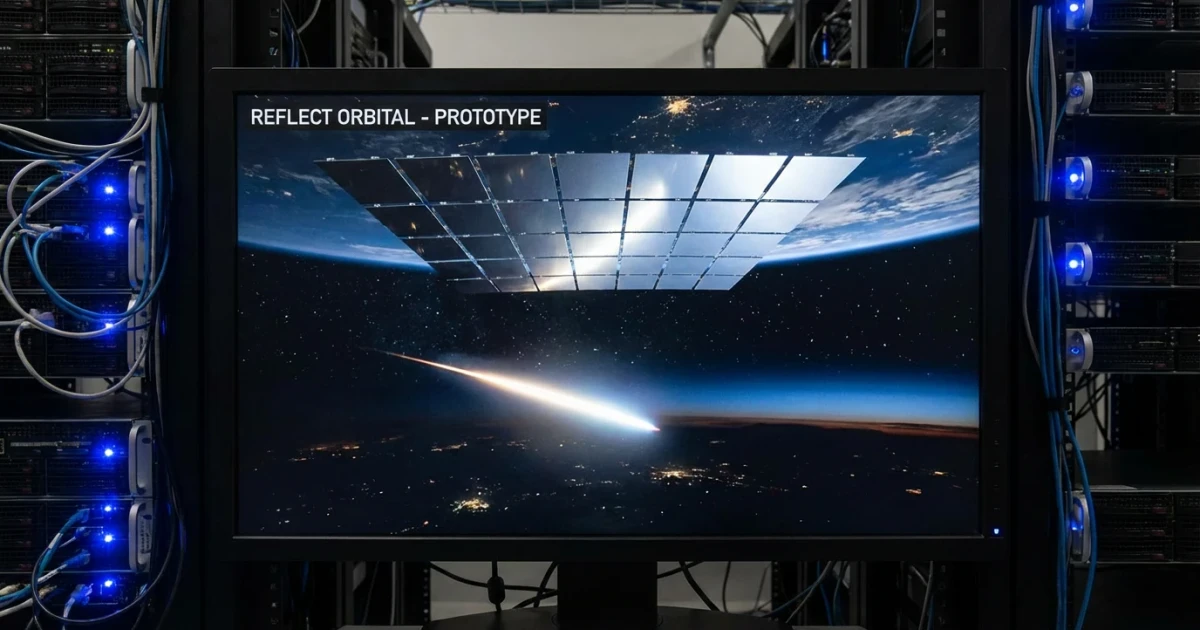
Reflect Orbital, a private space technology firm, has unveiled plans to launch a massive orbital space mirror, reigniting global debate over the impact of artificial objects on the night sky. The proposal, first reported by The New York Times, outlines the company’s ambition to deploy a reflective satellite capable of directing sunlight to Earth’s surface for illumination and potential energy applications.
Ambitious Proposal Meets Astronomical Concerns
The concept behind Reflect Orbital’s project is not entirely new; similar initiatives have been considered over the years, including Russia’s Znamya program in the 1990s. Reflect Orbital claims its advanced materials and orbital control will allow for more precise and efficient light reflection than previous attempts. The company envisions the mirror providing nighttime lighting for urban areas, disaster zones, or even aiding in renewable energy collection.
However, the prospect of launching such a large, reflective object into orbit has sparked immediate concern from astronomers and advocates for dark skies. Artificial satellites and orbital structures have been increasingly scrutinized for their role in light pollution and sky brightness, which can interfere with ground-based observations and disrupt wildlife.
Potential Impact on Night Sky and Astronomy
According to the research in Nature Astronomy, the proliferation of bright satellites and large orbital structures has already made significant portions of the night sky less accessible to both professional and amateur astronomers. The International Astronomical Union (IAU) has repeatedly warned that satellite constellations and reflective objects can interfere with telescope imaging, reduce the number of observable stars, and complicate scientific measurements.
- Recent estimates suggest that over 10,000 objects larger than 10 centimeters are currently tracked in Earth’s orbit, with the number steadily increasing due to commercial satellite deployments.
- The cumulative effect of these objects is a measurable increase in sky brightness, making it harder for ground-based telescopes to detect faint objects and phenomena.
- Research indicates that the addition of one large, highly reflective satellite could have a disproportionate effect on certain astronomical surveys, especially those conducted at dawn and dusk.
Regulatory and Environmental Debate
The New York Times notes that Reflect Orbital’s plan will require regulatory approval. In the United States, the Federal Communications Commission (FCC) reviews commercial space project filings, while international coordination is overseen by the United Nations’ Committee on the Peaceful Uses of Outer Space (COPUOS). The IAU has submitted formal statements to these bodies, urging that the cumulative impact of large orbital objects be carefully assessed before new deployments are authorized.
Environmental advocates have also raised concerns about the mirror’s effect on wildlife, citing studies that link artificial night lighting to disrupted migration, nesting behaviors, and ecological balance. The IAU’s 2023 statement to the UN reiterates the need for a global approach to protecting the night sky as a shared natural resource.
Industry Response and Next Steps
Reflect Orbital maintains that its proposal could provide significant social and economic benefits, especially for regions lacking reliable power infrastructure. The company asserts that it will work closely with regulatory agencies and scientific organizations to address concerns and refine its technology.
As the project moves forward, it will likely face intense scrutiny from both the scientific community and policymakers. With the debate over satellite light pollution far from settled, the fate of Reflect Orbital’s space mirror could set important precedents for future orbital megastructures and space-based technologies.
For now, astronomers and environmentalists are watching closely, hoping that space innovation and stewardship can find common ground—before the night sky’s darkness fades even further.