Technology
Reflection AI signs $6.3 billion compute deal with SpaceX
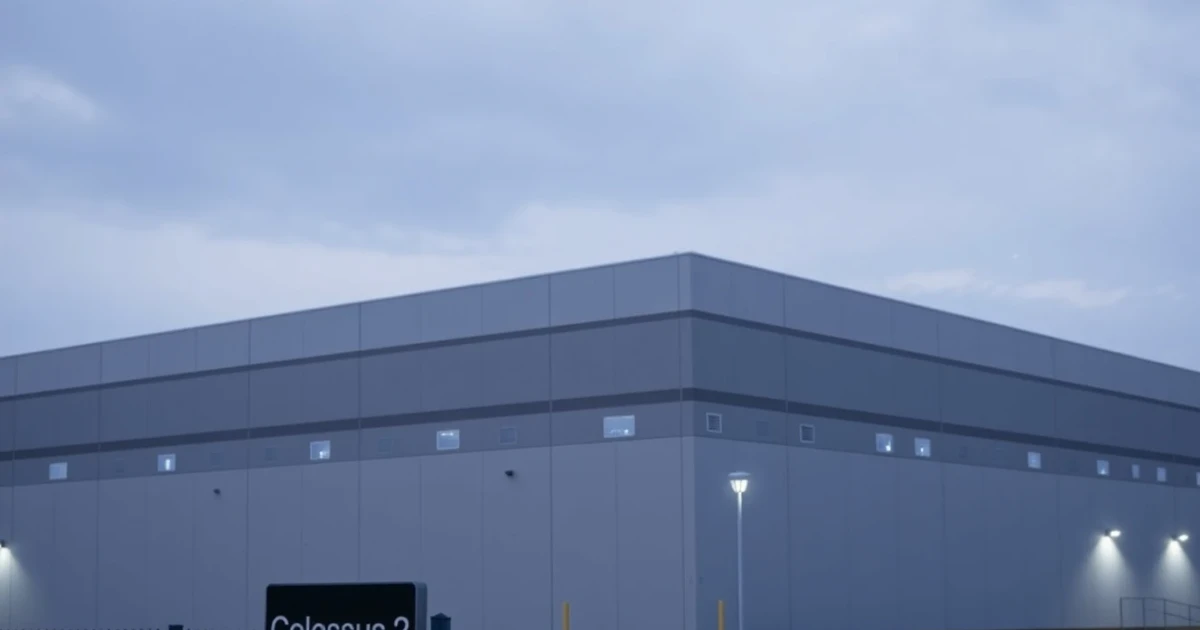
Reflection AI has tied its open-source ambitions to one of the most valuable assets in the AI economy: scarce frontier compute. The startup signed a contract with SpaceX that gives it immediate access to Nvidia GB300 chips at the Colossus 2 data center near Memphis, Tennessee, and sets monthly payments at $150 million beginning July 1, 2026.
If the agreement runs its full term through 2029, the bill would reach about $6.3 billion. The contract also gives either side the option to walk away after the first three months with 90 days’ notice, a clause that keeps the deal flexible even as it highlights how expensive access to top-tier AI infrastructure has become.
For SpaceX, the arrangement shows that Colossus is becoming more than an internal research system built to support Grok, Elon Musk’s AI chatbot. It is emerging as a commercial platform for outside customers, with compute deals already extending to Anthropic, Google and Cursor. That shift matters because the companies controlling chips, power and data-center capacity increasingly hold the leverage in the next phase of the AI race.
The economics are stark. Google’s separate arrangement with SpaceX has been described as running from October 2026 through June 2029 at $920 million per month, a scale that underscores how premium frontier compute has become. SpaceX is effectively monetizing a strategic bottleneck, while AI developers are turning to large, long-duration contracts to secure enough capacity to train and run advanced models.
Reflection, which was founded in 2024 by former DeepMind researchers Misha Laskin and Ioannis Antonoglou, raised $2 billion at an $8 billion valuation in October 2025. Its backers include Eric Schmidt, Citi, 1789 Capital, Lightspeed and Sequoia. The company said the new SpaceX deal gives it more room to push the frontier on open models, a goal that depends on access to the kind of infrastructure usually reserved for the largest players.
The company’s wager is broader than one contract. In May 2026, it was also linked to the U.S. Department of Energy’s Genesis Mission, a federal initiative launched by executive order on November 24, 2025 to accelerate scientific discovery with AI. Together, those moves place Reflection inside a small and increasingly interconnected circle of firms shaping who gets to build, train and scale the next generation of models.
Sources
- [1]thestar.com.my
- [2]cnbc.com
- [3]money.usnews.com
- [4]finance.yahoo.com
- [5]axios.com
- [6]whitehouse.gov
- [7]memphisflyer.com