Lifestyle
Regular museum and concert visits linked to younger body age

Regular trips to museums, theatres, cinemas and concerts were associated with a lower physiological age in a new analysis of older adults in England, a finding that adds a public-health question to a familiar cultural one: who gets access to the places and routines that may help keep aging bodies functioning well.
The paper, Cultural engagement and physiological ageing: a fixed-effects analysis, was published by BMJ Group in the Journal of Epidemiology & Community Health. Yusuke Matsuyama, Sakura Kiuchi and Jun Aida at Institute of Science Tokyo analyzed 1,899 adults from the English Longitudinal Study of Ageing, producing 4,207 observations from people aged 50 and older living in England. The sample was 46.9% male, and the mean physiological age was 68.7 years.
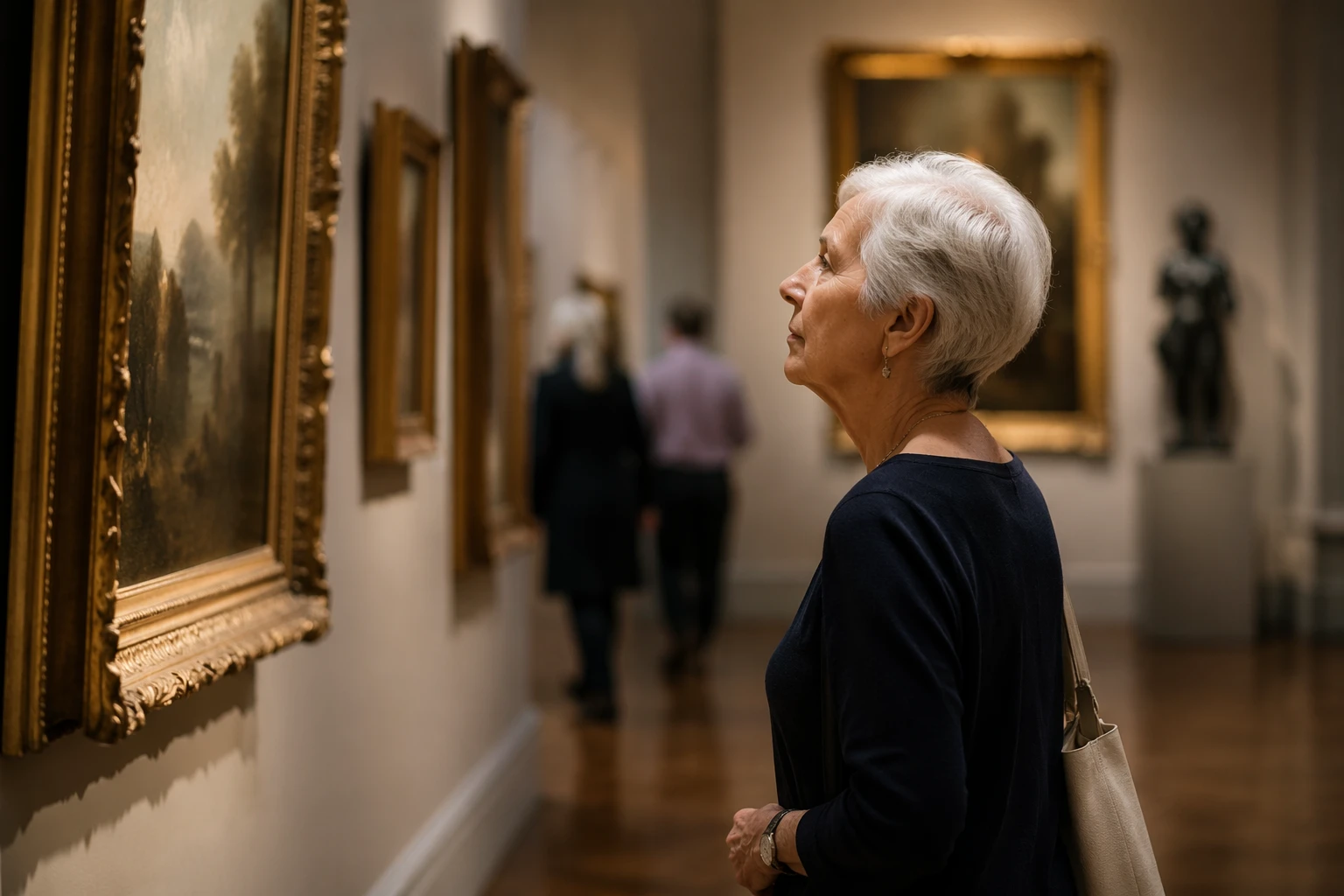
Instead of relying on chronological age alone, the researchers used a physiological age measure built from 10 markers and clinical indicators, including blood pressure, forced expiratory volume, grip strength and body mass index. They also scored cultural engagement from 0 to 15 based on how often participants went to cinemas, museums and theatres. After adjusting for time-varying factors such as socioeconomic and health status, a 1-point higher cultural engagement score was linked with a 0.085-year lower physiological age.
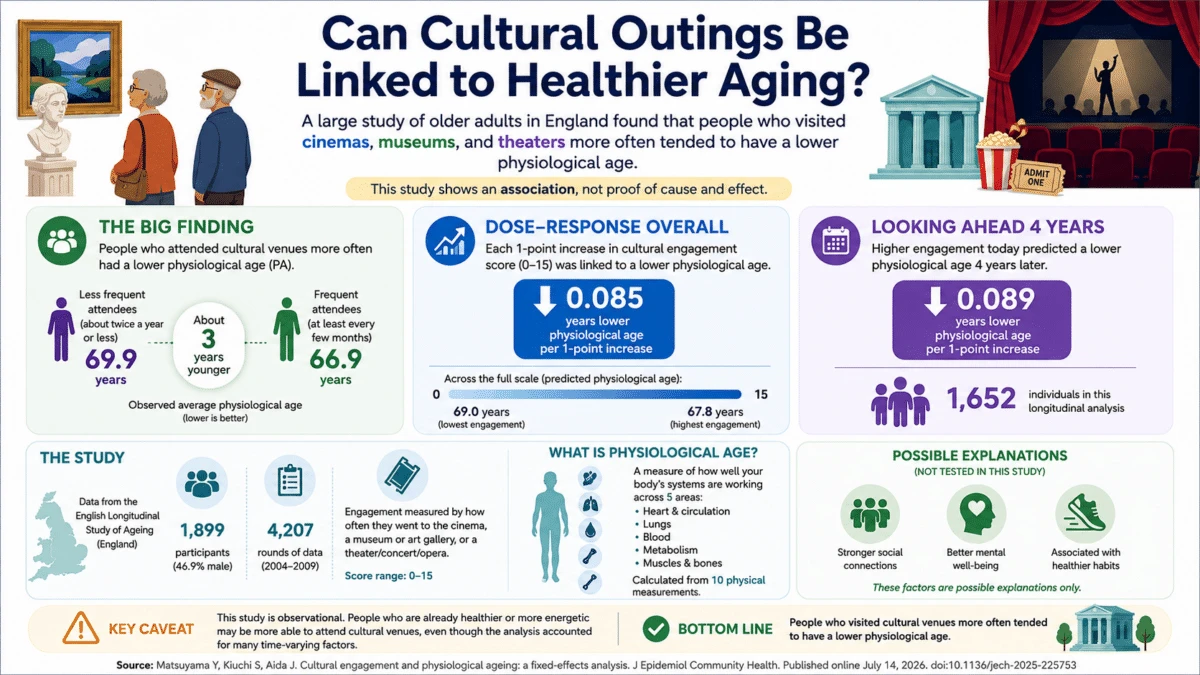
That is an association, not proof. The fixed-effects design was built to account for stable differences between individuals and other unmeasured confounders that do not change over time, but it still cannot show that a night at the theatre or a visit to the museum directly slows aging. The more likely explanation is a cluster of advantages that travel together: social connection, cognitive stimulation, mobility, income, and the ability to live near venues and afford admission, transport and time away from other obligations.

The result lands in a growing line of evidence that treats arts participation as more than leisure. A 2019 study in The BMJ found that frequent receptive arts engagement was associated with a 31% lower risk of death over 14 years in 6,710 community-dwelling adults aged 50 and older, while a 2026 University College London study linked regular arts engagement, including reading, music and gallery or museum visits, with slower biological ageing. Taken together, the studies do not turn concerts into medicine, but they do raise a health-equity question that reaches beyond clinics and gyms: whether access to cultural life belongs in the conversation about healthy aging.
Sources
- [1]sciencedaily.com
- [2]jech.bmj.com
- [3]bmj.com
- [4]ucl.ac.uk
- [5]telegraph.co.uk