Business
Renault teams up with Thales to develop military vehicle

Renault Group’s move into military hardware landed in the middle of Europe’s biggest land-defence showcase, where the carmaker and Thales unveiled 4 TROOP, a prototype version of the VCMR vehicle adapted for land-forces missions. The unveiling at Eurosatory 2026 in Paris made clear that this is no side project: Renault’s industrial base, built for passenger cars and commercial vehicles, is being pulled into a sector reshaped by rearmament and higher public spending.
The vehicle is a 4x4 with a hybrid drivetrain, designed to integrate UAV and UGV systems alongside secure communications, tactical connectivity, operational coordination and decision-support tools. Thales said the platform can serve as a mobile command centre and support reconnaissance, troop coordination, escort duties, logistical support and sensitive-site surveillance. The company also said the vehicle is intended to be produced quickly at optimum cost, a signal that procurement speed and scale are now as important as battlefield performance.
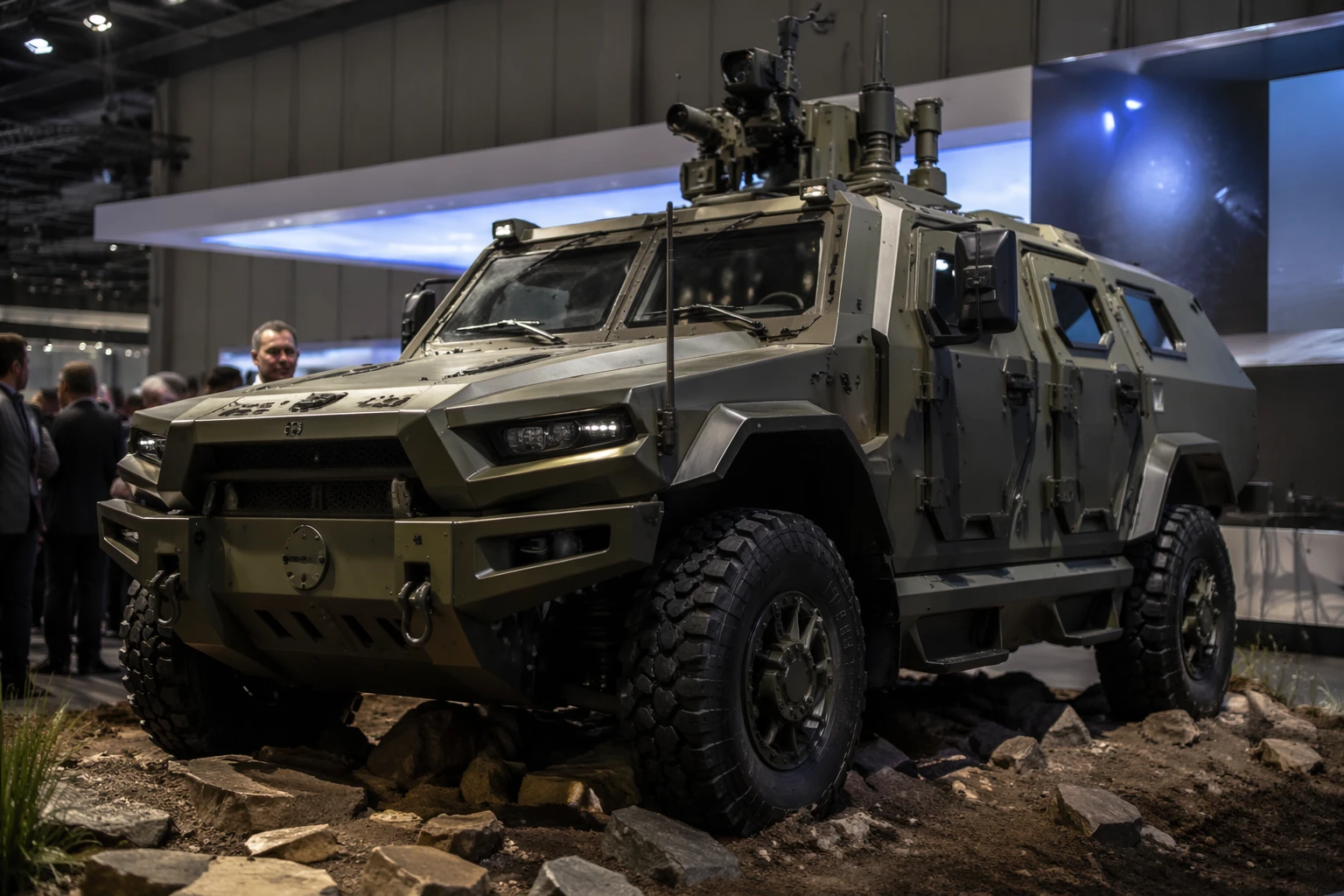
The timing reflects a broader shift in European industrial strategy. Reuters reported that Renault had already responded to requests from France’s defence ministry on military projects, including a plan to produce aerial drones with Turgis Gaillard. Russia’s invasion of Ukraine and a shift in U.S. foreign policy under Donald Trump have accelerated European defence investment, pushing governments to look beyond traditional arms makers for capacity, engineering depth and supply-chain resilience.
France’s fiscal and military stance has also been moving in the same direction. The country adopted its delayed 2026 budget in February, clearing the way for higher military spending promised by President Emmanuel Macron. France’s 2026 defence budget is estimated at about $69.4 billion, or 2.2% of GDP, a scale that is large enough to reward suppliers that can bridge civilian manufacturing and military requirements.
For Renault, the partnership opens a foothold in a market that could offer steadier demand than the volatile car business. For Thales, it brings an automotive-scale production partner with manufacturing muscle, engineering breadth and after-sales support for maintenance and through-life sustainment. That combination points to a new model for European rearmament: civilian industry increasingly embedded in defence procurement, with taxpayers effectively underwriting the build-out of a wider military-industrial base.