World
Renewables surge past fossil fuels, reshaping climate politics in the UK

Britain’s electricity mix has crossed a threshold that changes the climate argument: renewables supplied 50.4% of power in 2024, coal generation stopped in September 2024, and fossil-fuel generation fell to 31.8%, a record low. That progress is substantial, but it does not mean the climate emergency has eased. It means the politics have shifted from proving clean energy can work to deciding whether institutions can scale it fast enough to matter.
A global power system is turning, even as the climate burden remains high
The UK’s numbers sit inside a broader global shift that is still easy to underestimate. In 2024, renewables and nuclear together provided 40% of global electricity generation for the first time, while renewables alone supplied 32%. The International Energy Agency says 80% of the growth in global electricity generation last year came from renewable sources and nuclear power, a sign that most new demand is being met by low-carbon supply rather than fossil fuels.
The next phase is likely to be even more concentrated. The IEA forecasts that solar PV and wind will account for 95% of all renewable capacity additions through 2030, and that global renewable capacity will increase by more than 5,520 GW during 2024-2030. It also expects renewable energy consumption across power, heat and transport to rise by nearly 60% over that period. That is a profound structural change, but it still unfolds against a backdrop of dangerous heat, emissions already in the atmosphere, and climate damage that will not disappear just because the energy mix is improving.
McKibben’s argument is that the economics have already changed
Bill McKibben has made the case that this is not a marginal transition but a civilizational one. In his book, Here Comes the Sun: A Last Chance for the Climate and a Fresh Chance for Civilization, published by W. W. Norton & Company and released on August 19, 2025, he argues that solar and wind are now the cheapest power on the planet and are growing faster than any energy source in history. His recent writing goes further, pointing to solar generation growing 12 times, battery storage 180 times, and EV sales 100 times, evidence, in his telling, that the world has moved onto the steep part of the renewable-energy S curve.
That framing matters because it shifts the story from sacrifice to scale. When clean power becomes cheaper and faster to deploy, climate politics stops being only a morality tale about reducing harm and becomes a contest over who captures the benefits of abundance. The hard part is no longer persuading the public that the technology exists. It is building the political coalitions, market rules, and industrial capacity that let it arrive everywhere, not just in the best-located projects.
The UK has become one of the clearest tests of that shift
Nowhere is that more visible than in the United Kingdom. Official statistics show renewables generated 50.4% of UK electricity in 2024, the highest share on record. Coal generation ceased in September 2024, and fossil-fuel electricity generation dropped to 31.8%, also a record low. Those figures do not merely signal cleaner power. They show a system in which the old baseline is losing its centrality faster than many political debates have caught up.
The economic stakes are large enough to change the tenor of the argument. The UK low-carbon and renewable energy economy had an estimated turnover of £77.0 billion in 2024 and supported 304,000 full-time equivalent jobs. That scale gives clean energy a constituency that is no longer limited to environmental campaigners. It reaches across developers, manufacturers, contractors, engineers, suppliers, and the local labor markets that depend on them.
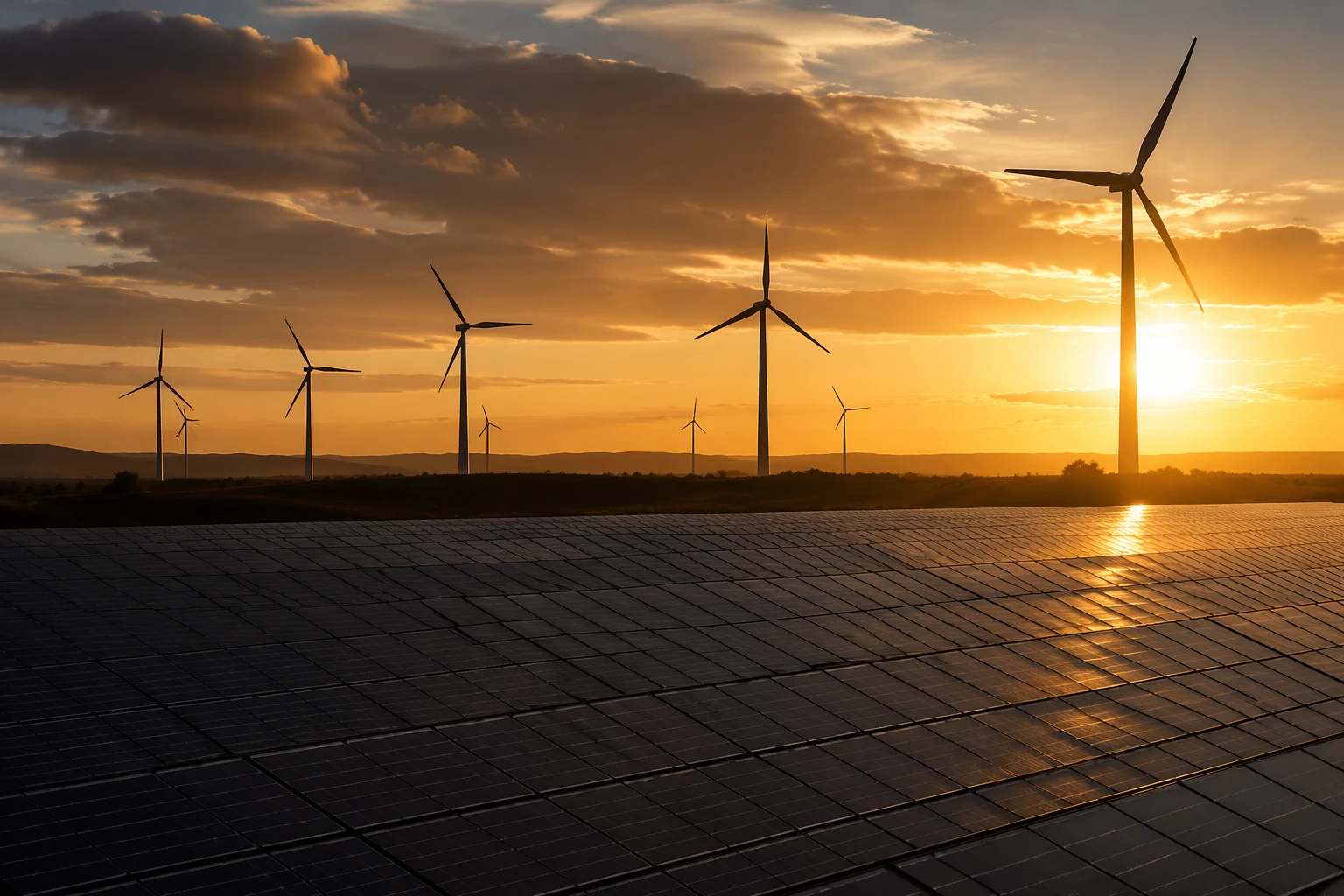
That is why Sheffield matters in the national conversation. In a city with a strong industrial identity, clean-energy policy is not just about emissions targets. It is about whether the transition creates visible work, investment, and a reason for voters to believe that decarbonisation is being done with them, not to them.
Miliband has turned clean energy into a governing message
Ed Miliband, as Secretary of State for Energy Security and Net Zero, has tied clean energy to three promises that carry political weight: energy security, lower bills, and jobs. That combination matters because it gives the transition a practical frame rather than a purely environmental one. A policy seen only as climate mitigation can be attacked as abstract; a policy tied to household costs, industrial strategy, and resilience has a much broader base.
The government has also begun to fold climate and nature into a wider state agenda. On July 14, 2025, it issued its first State of the Climate and Nature statement, a marker that these issues are being treated as core governance questions rather than side files. In London, that means the debate is no longer confined to carbon accounting alone. It now touches energy security, land use, investment, and the institutional capacity to deliver long-term change.
What determines whether the gains arrive fast enough to matter
The central policy question is not whether renewables can win more share. The numbers already show that they can. The question is whether the state can move at the speed implied by the technology curve, with grid upgrades, planning reform, storage, and market design aligned enough to keep cheap power flowing into homes, industry, and transport.
That is where the institutions matter most. The Department for Energy Security and Net Zero sets the political direction, Ofgem shapes the market rules that determine how power is delivered and priced, and the Office for National Statistics measures the scale of the economy built around the transition. Together, they define whether clean power remains a headline or becomes the operating system.
McKibben’s larger point is that the climate story is no longer only a story of loss. It is also a story of whether governments can use a real technological break to cut emissions quickly enough, while building a more durable economy around it. The UK has already shown that renewables can overtake fossil fuels in electricity. The harder test is whether politics can now keep pace with the physics, the economics, and the heat that still rises outside the door.