Sports
Reporter finds unexpected payoff training in Kenya’s running mecca
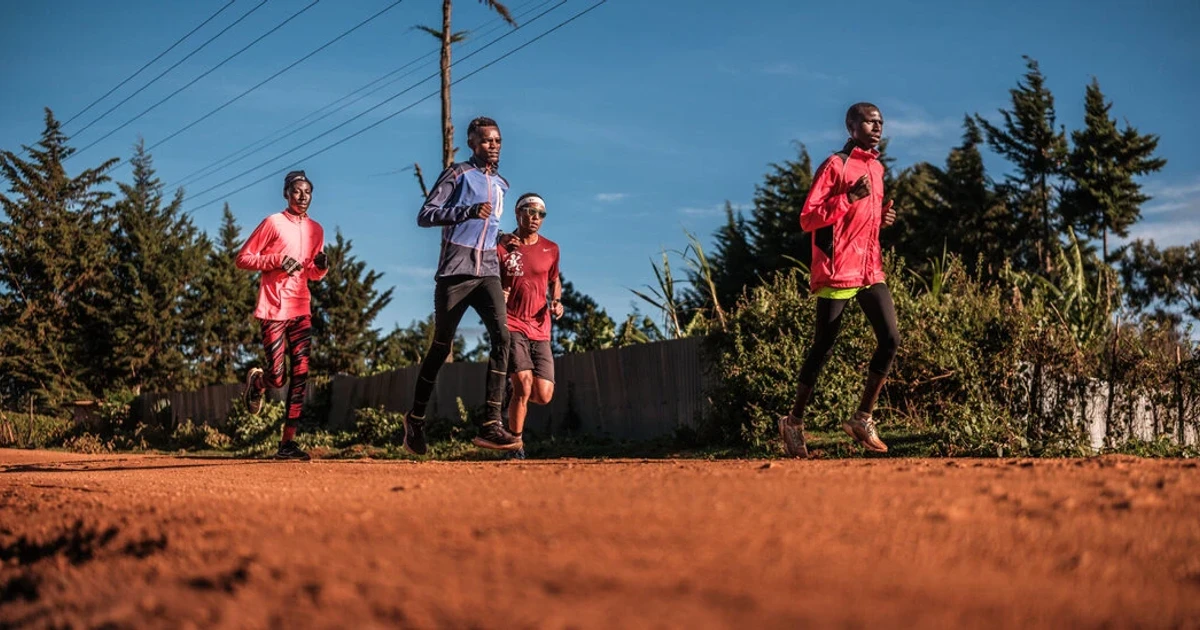
John Eligon went to Iten, Kenya, with one clear target: beat the marathon personal best he set 14 years earlier. The week he spent in the Great Rift Valley sharpened the question that keeps drawing runners there, but the answer was not just about faster splits. Iten gave him something more unexpected, and that is what makes the story larger than one reporter's race.
Why Iten still sets the standard
The New York Times had already cast Iten in unusually lofty terms more than a decade ago. In "Paths to the Marathon in a Small Kenyan Town," the paper described the town, which sits in the Great Rift Valley and about 8,000 feet above sea level, as a training ground for elite marathon runners. That basic geography still anchors the town's reputation: the altitude is real, and so is the concentration of serious runners who treat the area as a proving ground.
That reputation was reinforced again in a Times video published May 9, 2026, "Training for a Marathon in Kenya," a 2:22 piece that followed Eligon running in the Great Rift Valley to experience why the region is considered "the mecca of distance running in the world." The phrase has stayed attached to Iten because the town is not just a scenic backdrop. It is a place that outsiders keep returning to when they want to understand why Kenyan distance running remains the global reference point.
Coverage from other outlets has pointed in the same direction. CBC Sports identified Iten as home to two-time Olympic gold medallist Eliud Kipchoge and a training ground for Mo Farah. AP News has also described the town as a high-altitude destination drawing runners from around the world. Taken together, those details explain why Iten is repeatedly treated as more than a village: it is a place whose name has become a synonym for endurance ambition.

What Eligon was chasing
Eligon's project was personal, but not unusual among recreational marathoners. He is a reporter, not an elite athlete, and the goal was to see whether a week in Kenya could help him break the best time he had set 14 years earlier. That makes the story useful far beyond one runner's schedule, because it reflects the same logic that brings thousands of visitors to training camps: the belief that altitude, hard workouts and local running culture can unlock performance.
The story's key twist is that the biggest benefit he got was not what he expected. That matters because it shifts the value of the trip away from the stopwatch and toward a harder-to-measure outcome. A camp can improve pace, but it can also change how a runner thinks about effort, patience and what actually drives endurance over time.
The real lesson in Kenya's running culture
Iten is often reduced to a simple formula, as if the town's success can be explained by thin air alone. But the reporting around Eligon's trip shows that the benchmark status of Kenyan distance running comes from a broader ecosystem: altitude, repetition, and a culture in which serious running is treated as ordinary rather than exceptional. That is why the town keeps producing the same kind of global fascination year after year.

The lesson extends well beyond elite circles. Recreational marathoners often look for a quick answer, a camp, a workout block or a location that promises immediate gains. Iten suggests a more demanding truth: endurance improves when training is embedded in an environment that makes consistency the default and complacency harder to sustain. Eligon went looking for speed, and the more consequential payoff was a clearer view of what endurance training actually asks for.
What outsiders miss about the mecca
Visitors tend to arrive in Iten expecting a physiology lesson. They want the altitude number, the famous names and the hard sessions that produce fast times. What they often miss is that the town's influence comes from the daily normality of running there, from the fact that the place has long been built around athletes who train at a level many outsiders only visit briefly.
That is why Iten keeps holding its status as distance running's benchmark. It is not simply a high-altitude stop in Kenya's Great Rift Valley, and it is not only the home of elite champions like Kipchoge or a training ground associated with runners such as Farah. It is a place that keeps testing assumptions about performance, and Eligon's week there shows that the deeper gain may be less about what the legs can do than about how the runner sees the work itself.
Sources
- [1]nytimes.com
- [2]cbc.ca
- [3]apnews.com