US News
Republicans Weigh Limits on Trump’s $1.8 Billion Payout Fund
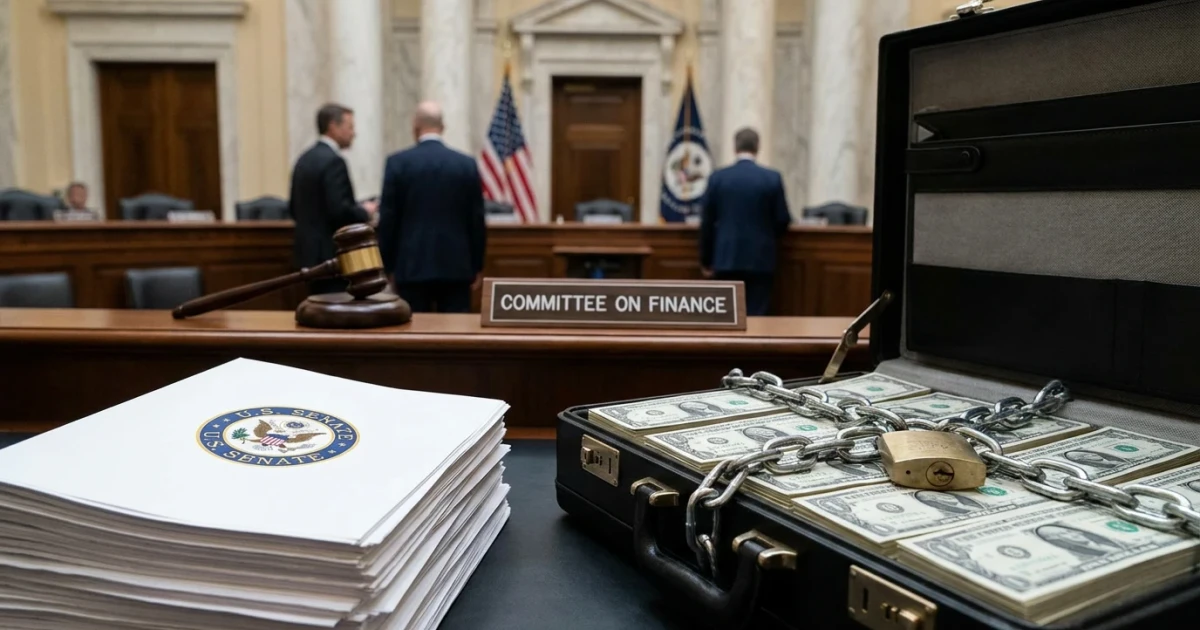
Senate Republicans are grappling with how to assert control over former President Donald Trump’s $1.8 billion payout fund, designated for combating what he and allies call the 'weaponization' of government agencies. The political debate underscores ongoing tensions in Congress over executive authority and the allocation of federal funds.
Background on the $1.8 Billion Fund
The fund, established under the Protecting Americans from Weaponized Government Act (H.R.8369), is intended to provide payouts to individuals or groups who claim harm from perceived politicized actions by federal agencies. The law was championed by Trump and Republican leaders, but has since come under increased scrutiny as details of its use and oversight have drawn bipartisan attention.
According to Congressional Budget Office estimates, the fund allocates $1.8 billion in federal spending over several years, with parameters for disbursement that critics say are loosely defined. Transparency advocates and some senators worry the structure could allow for political favoritism or insufficient oversight.
Republican Senators Push for Greater Oversight
In recent weeks, key Senate Republicans have voiced concerns about the fund’s potential for misuse. The Washington Post reported that several lawmakers are seeking to tighten legislative controls, either by amending the original law or by imposing new reporting requirements on the executive branch. The debate reflects a broader effort within the party to balance support for Trump’s agenda with calls for fiscal responsibility and institutional checks.
- Some Republicans propose increased oversight from the Government Accountability Office, which has previously recommended clearer guidelines for similar federal programs.
- Others favor restricting the types of claims eligible for payouts or requiring congressional approval for large disbursements.
- There is also discussion of leveraging the appropriations process to set stricter terms for future spending from the fund.
Political Dilemmas and Potential Paths Forward
The issue puts Senate Republicans on a political knife-edge. As The Washington Post notes, many in the party are wary of appearing to oppose Trump’s core agenda, especially as the former president remains influential with the Republican base. At the same time, lawmakers face pressure from fiscal conservatives and watchdog groups to ensure the fund is not used for partisan purposes.
GOP strategists and legislative aides cited by The Washington Post suggest that changes to the fund would likely require bipartisan cooperation in the Senate, where margins are slim. Democrats have signaled willingness to support additional guardrails, framing their position as support for accountability rather than opposition to the fund’s stated purpose.
Legal Tools and Congressional Authority
Congress retains several mechanisms to control federal funds, as detailed in a Congressional Research Service report. These include:
- Passing amendments to the fund’s authorizing legislation
- Withholding or conditioning appropriations in future budgets
- Mandating regular reporting and audits by executive agencies
Each approach carries political and practical hurdles, requiring negotiation between the House, Senate, and White House.
Looking Ahead
As scrutiny of the $1.8 billion payout fund intensifies, the debate is likely to shape broader discussions in Congress about the balance of power between the legislative and executive branches. The outcome will affect not only the fate of this fund, but may also set precedents for how future 'anti-weaponization' or similar programs are administered and overseen.