Science
Researchers Explore Speech-Related Mutation in Mice
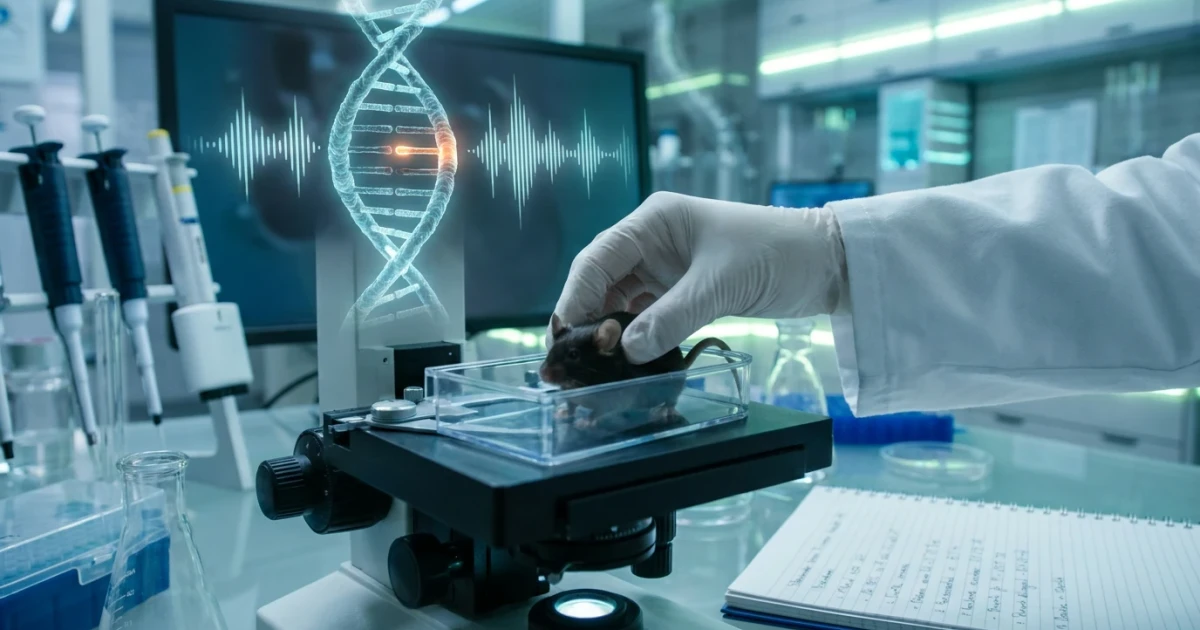
Scientists have introduced a key human gene mutation linked to speech and language into mice, a breakthrough that offers new clues into how the human capacity for complex communication evolved. Recent research, covered by The New York Times, focuses on the FOXP2 gene, which has long been associated with the unique ability of humans to speak and understand language.
Understanding the FOXP2 Gene
The FOXP2 gene is a critical piece of the puzzle in the study of speech and language. Mutations in this gene are known to cause speech and language disorders in humans, and its evolution appears tightly linked to the emergence of spoken language. The gene encodes a protein that acts as a transcription factor, regulating the activity of other genes important for brain development, particularly in areas that control motor skills needed for speech.
Genetic Engineering in Mice Sheds Light on Human Speech
In the experiment reported by The New York Times, scientists created a line of mice carrying a version of the FOXP2 gene found in humans. By doing so, they aimed to observe whether this human-specific mutation would produce observable changes in the mice’s brain circuits and vocalizations. Prior research, including a study titled "A Humanized Version of Foxp2 Affects Cortico-Basal Ganglia Circuits in Mice", found that mice with the humanized gene showed differences in the neural circuits associated with learning new movements and in the characteristics of their ultrasonic vocalizations.
- The research showed that mice with the human FOXP2 variant had changes in the cortico-basal ganglia circuits, regions of the brain essential for motor control and learning.
- The mice also produced ultrasonic vocalizations that were subtly different in pitch and duration compared to unmodified mice, hinting at a potential role for FOXP2 in vocal communication.
Implications for Evolution and Neuroscience
The introduction of the human FOXP2 mutation into mice provides a unique window into how a single genetic change might have contributed to the evolution of human speech. According to background provided by peer-reviewed research, the human FOXP2 gene differs from that of chimpanzees and other primates by only a few amino acids, but those differences appear to have significant effects on neural development and function relevant to language.
- Studies of families with inherited speech and language disorders trace mutations directly to the FOXP2 gene.
- Animal models, including the engineered mice, offer a way to experimentally test the effects of specific mutations on brain structure and behavior, which is not possible in humans.
Limitations and Future Research
While the mice with the human FOXP2 mutation showed changes in brain circuits and vocalizations, they did not develop speech in the human sense. As highlighted by MedlinePlus Genetics, the complexity of language involves many genes and environmental factors, and the FOXP2 gene is just one part of this intricate network. Mouse model data further suggest that while FOXP2 influences communication-related traits, the leap to human speech required additional evolutionary developments.
Continued Significance
These experiments underscore the power of modern genetics to unravel the origins of uniquely human traits. As research continues, scientists hope to better understand not only speech and language disorders but also the broader question of what makes us human.