Science
Researchers Uncover Speech-Like Patterns in Sperm Whale Clicks
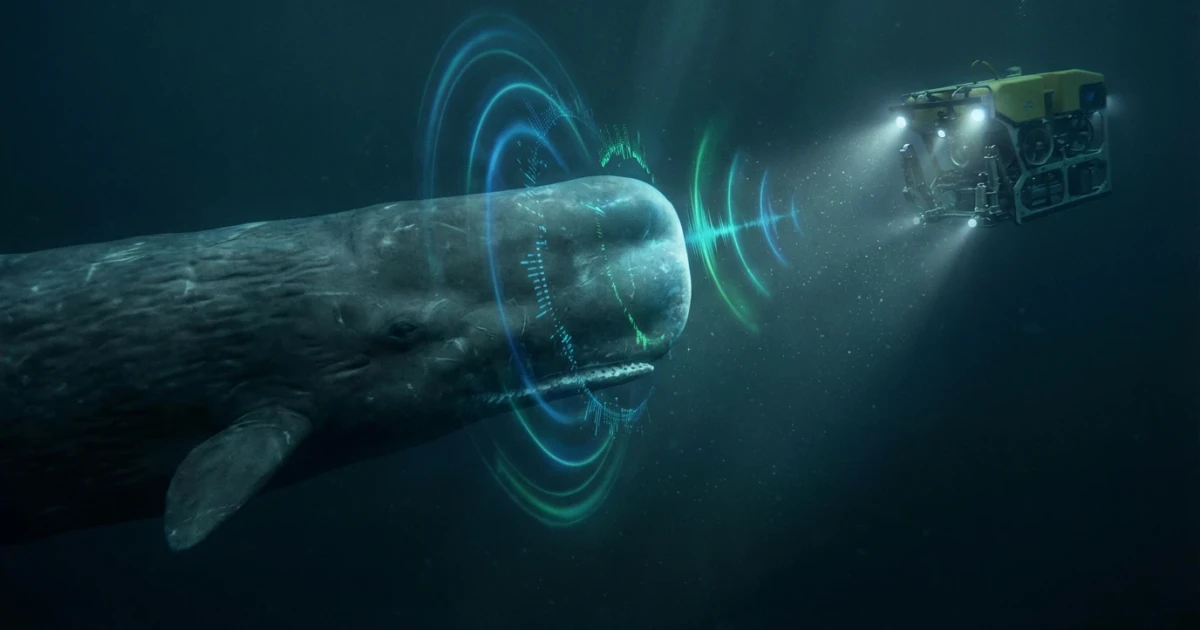
Scientists have discovered that sperm whale clicks, long known to be complex, exhibit patterns similar to those found in human speech. This breakthrough, reported by ScienceAlert, is reshaping our understanding of animal communication and the cognitive abilities of these remarkable marine mammals.
Breakthrough in Whale Communication Research
The recent study, highlighted by ScienceAlert, analyzed the vast datasets of sperm whale vocalizations collected over years of oceanic research. Using advanced computational methods, researchers have identified that sperm whales use click sequences—known as "codas"—with combinatorial structures mirroring those in human language. This means the whales arrange basic sound units in ways that encode complex information, much like words and sentences in human speech.
According to the study, these clicks are not just random bursts of sound but are organized into patterns that could represent meaningful communication among individuals and groups. The team found evidence suggesting that whales can combine different click types to create new meanings, a hallmark of sophisticated communication systems.
How Sperm Whale Clicks Compare to Human Language
While humans use words and grammar, sperm whales use variations in click patterns—such as rhythm, tempo, and sequence—to convey information. The researchers drew parallels between the whales' use of combinatorial rules and the way humans combine phonemes and words to produce language.
- Sperm whales produce powerful, patterned clicks known as codas for social interaction and identification.
- The study identified combinatorial structures that allow whales to generate a variety of messages from a limited set of basic sounds.
- Unlike random animal noises or simple call-and-response signals, these patterns show evidence of grammar-like organization.
This finding builds on previous work that established the role of codas in sperm whale social structure and clan identification, as detailed in the MarineBio sperm whale species profile.
Implications for Understanding Animal Intelligence
The discovery that sperm whale clicks encode information using a combinatorial communication system has far-reaching implications. It challenges the long-held belief that advanced language is unique to humans and certain primates. Instead, it suggests that other species, particularly cetaceans, may possess cognitive abilities previously unrecognized by science.
Experts believe this research could prompt a re-evaluation of animal intelligence and social complexity, especially for species with sophisticated acoustic communication systems. The findings also provide new avenues for exploring the evolution of language and cognition across different branches of the animal kingdom.
Next Steps and Future Research
The study's authors emphasize that more work is needed to decode the exact meanings of specific click sequences and to understand the full extent of sperm whale "language." Ongoing projects, such as those documented by the Whale Acoustics Research initiative, are expanding the database of whale sounds and refining analytical techniques to interpret them.
As researchers gather more data and develop new models, they hope to unlock deeper insights into how sperm whales use their clicks for social coordination, navigation, and possibly even storytelling.
Conclusion
This latest discovery underscores the remarkable complexity of sperm whale communication and highlights the importance of interdisciplinary research in understanding the natural world. By revealing speech-like patterns in whale clicks, scientists are opening new frontiers in the study of animal minds—and bringing us one step closer to unraveling the mysteries of life beneath the waves.