Science
Researchers Uncover the Complex Science Behind Horse Whinnies
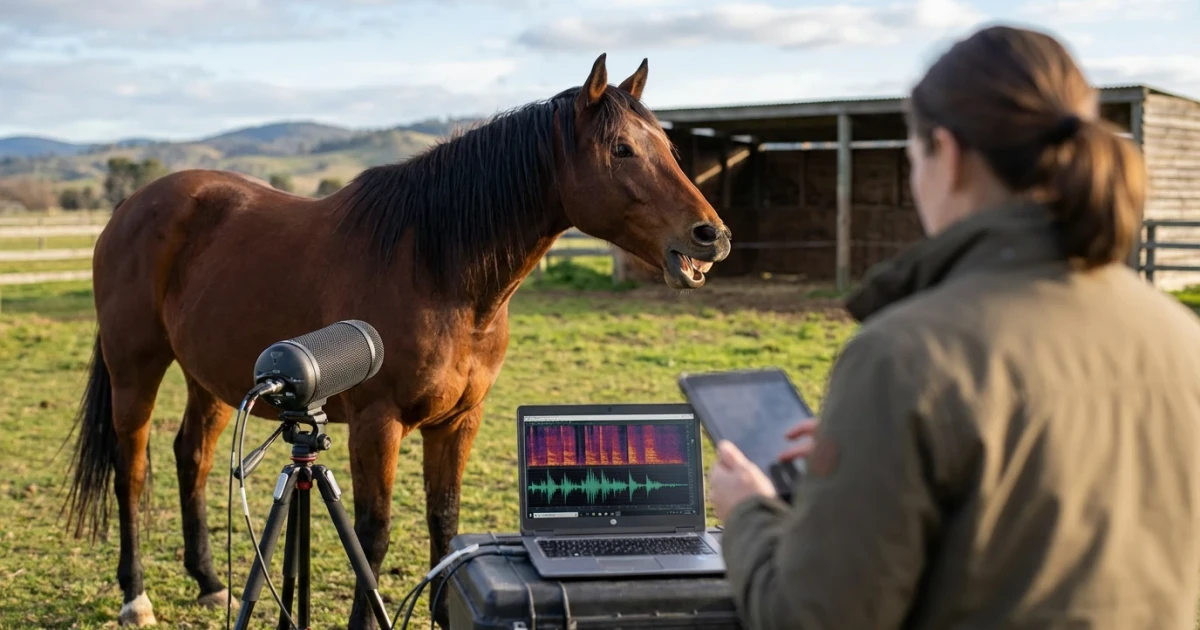
Horses’ whinnies—those familiar, high-pitched calls heard on farms and racetracks—have long intrigued scientists and animal lovers alike. Now, new research is unveiling the acoustic secrets behind these distinctive vocalizations and highlighting their remarkable complexity.
The Science Behind the Whinny
Recent findings published in leading journals and reported by The Guardian offer a detailed look at how horses produce their characteristic whinny. Unlike the simple calls of many mammals, the horse’s whinny is a sophisticated combination of a whistle and a song, created by manipulating airflow through the vocal tract and larynx. Scientists describe it as a two-part vocalization: the initial segment is a high-frequency whistle, followed by a lower, modulated segment that resembles singing.
- The whistle portion can reach frequencies well above those produced in typical mammalian calls.
- The song-like segment is rich in harmonics and varies significantly between individual horses, suggesting potential roles in identification and emotional expression.
According to acoustic analyses, these dual elements are produced simultaneously, making the whinny one of the most complex forms of nonhuman mammal communication. Researchers have used high-speed cameras and detailed spectrographic analysis to study the mechanisms involved, confirming that horses can control the tension and length of their vocal folds with impressive precision.
Communication and Emotion in the Whinny
The emotional content embedded in a horse’s whinny is another focal point for researchers. Studies show that subtle variations in pitch, duration, and rhythm can signal a wide range of emotional states, from excitement and distress to contentment and social bonding. For example:
- Horses separated from herd mates emit whinnies with higher frequency and faster tempos, indicating heightened arousal or anxiety.
- Social, affiliative calls tend to have lower frequencies and smoother transitions between the whistle and song components.
This nuanced system of communication allows horses to convey detailed social and emotional information. Experts believe that the complexity of the whinny may have evolved alongside the horse’s sophisticated social structure, which relies on clear long-distance signals in open habitats.
Comparing Across Breeds and Contexts
Comparative studies, such as those available in recent research, reveal that whinny characteristics vary not only among individuals but also across breeds and behavioral contexts. For example, some breeds exhibit broader frequency ranges or longer durations, possibly reflecting genetic influences or selective breeding for vocal traits. Behavioral observations confirm that whinnies are most common during social interactions—such as greetings, reunions, or moments of distress—underscoring their importance in herd dynamics.
Broader Implications for Animal Communication
Understanding the acoustic features of horse vocalizations has larger implications for the study of animal communication and cognition. Horses’ ability to encode information in both frequency and amplitude modulation is rare among mammals and may provide clues about the evolution of complex vocal learning. These findings also have practical applications: improved interpretation of vocal cues can enhance animal welfare, training, and management by allowing humans to better recognize signs of stress or well-being.
Looking Ahead
As researchers continue to decode the full range of information carried in the horse’s whinny, the hope is to foster deeper understanding between humans and horses. With ongoing advances in recording technology and machine learning, scientists are poised to unlock even more about this ancient and intricate form of equine expression.