Science
Researchers Unveil Triplet Superconductivity Breakthrough
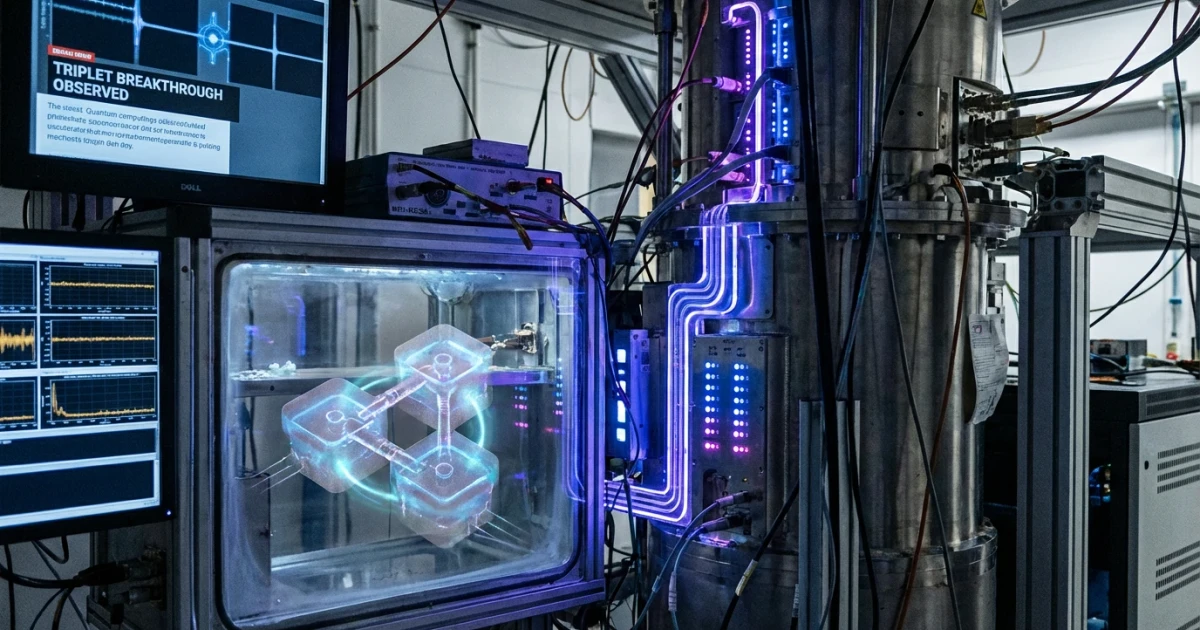
Scientists have announced a significant breakthrough in the field of quantum materials with the experimental observation of triplet superconductivity, a phenomenon long theorized but elusive to confirm. This discovery, detailed in recent reports highlighted by ScienceDaily, is being hailed as a potential 'holy grail' for advancing quantum computing.
What Is Triplet Superconductivity?
Superconductivity is a state of matter where electrical resistance drops to zero, allowing currents to flow without energy loss. Traditionally, known superconductors involve singlet pairing—electrons pair up with opposite spins. In contrast, triplet superconductivity involves electrons pairing with parallel spins, resulting in unique magnetic and quantum properties. This state has been theorized to offer superior robustness against disturbances that typically disrupt quantum information, making it highly attractive for quantum computing technologies.
The Recent Discovery
ScienceDaily reported that researchers have successfully detected experimental signatures of triplet superconductivity in uranium-based compound UTe2. This observation is notable because previous attempts to confirm triplet pairing in bulk materials have faced technical and theoretical challenges. The breakthrough was made possible by advanced measurement techniques and precise material synthesis, allowing scientists to observe subtle properties—such as spin alignment and magnetic field responses—that differentiate triplet from singlet pairing.
- Researchers observed robust zero-resistance states even under strong magnetic fields, a hallmark of triplet superconductivity.
- Detailed experimental data and theoretical analysis support the claim, with measurements showing unusual spin and magnetic properties consistent with triplet pairing.
- Data from the NIST Materials Data Repository confirms the unique superconducting behavior of UTe2 compared to conventional materials.
Implications for Quantum Computing
The confirmation of triplet superconductivity could open new avenues for quantum computing research and development. Triplet-paired superconductors are theorized to host Majorana fermions—exotic quantum states that are highly stable and resistant to decoherence, a persistent problem in current quantum computers. This stability could enable the construction of more reliable quantum bits (qubits), paving the way for scalable quantum machines capable of solving problems beyond the reach of classical computers.
Key Advantages for Quantum Technologies:
- Enhanced Stability: Triplet pairing is less susceptible to magnetic disturbances, improving qubit coherence times.
- Topological Quantum Computing: Theoretical models suggest these materials could underpin fault-tolerant quantum computation schemes.
- New Quantum States: The discovery enables exploration of previously inaccessible quantum phases and excitations.
Next Steps and Ongoing Research
While the initial findings are promising, researchers emphasize the need for further studies to fully characterize the properties and technological potential of triplet superconductors. International collaborations and institutional projects, such as those led by Quantum Computing UK, are already underway to replicate the results and investigate possible device applications.
The broader scientific community is optimistic that the discovery marks a pivotal step toward robust quantum computing platforms. As experimental techniques improve and new materials are synthesized, the pursuit of practical and scalable quantum technologies is expected to accelerate in the coming years.