Sports
Review finds serious failings after Old Firm cup disorder at Ibrox

Serious failings in policing, stewarding and stadium control were laid bare by the independent review into the Old Firm Scottish Cup quarter-final at Ibrox, four months after Celtic won on penalties following a 1-1 draw. The July 2026 report, led by sports event consultant Mark Blackbourne, pushed responsibility back onto Police Scotland, Rangers, Celtic and the Scottish Football Association to turn condemnation into visible change before the next high-risk meeting between the rivals.
The disorder erupted on 8 March 2026 after the final whistle in Glasgow, when supporters spilled on to the pitch and officers had to form a cordon between rival fans. Police made a number of arrests at the ground, and later STV reporting said nine arrests followed after a child was hit by a coin and police were attacked. Further arrests and charges continued in the weeks after one of Scottish football’s most volatile fixtures.
Rangers and Celtic both condemned the scenes, but their public responses reflected different pressures. Rangers called the behaviour “unacceptable” and backed the need for an independent review, while Celtic said there was “no justification” for the conduct of supporters and said it would co-operate with investigations. The Scottish FA charged both clubs over the disorder, underlining that the fall-out reached beyond the police response on the day.
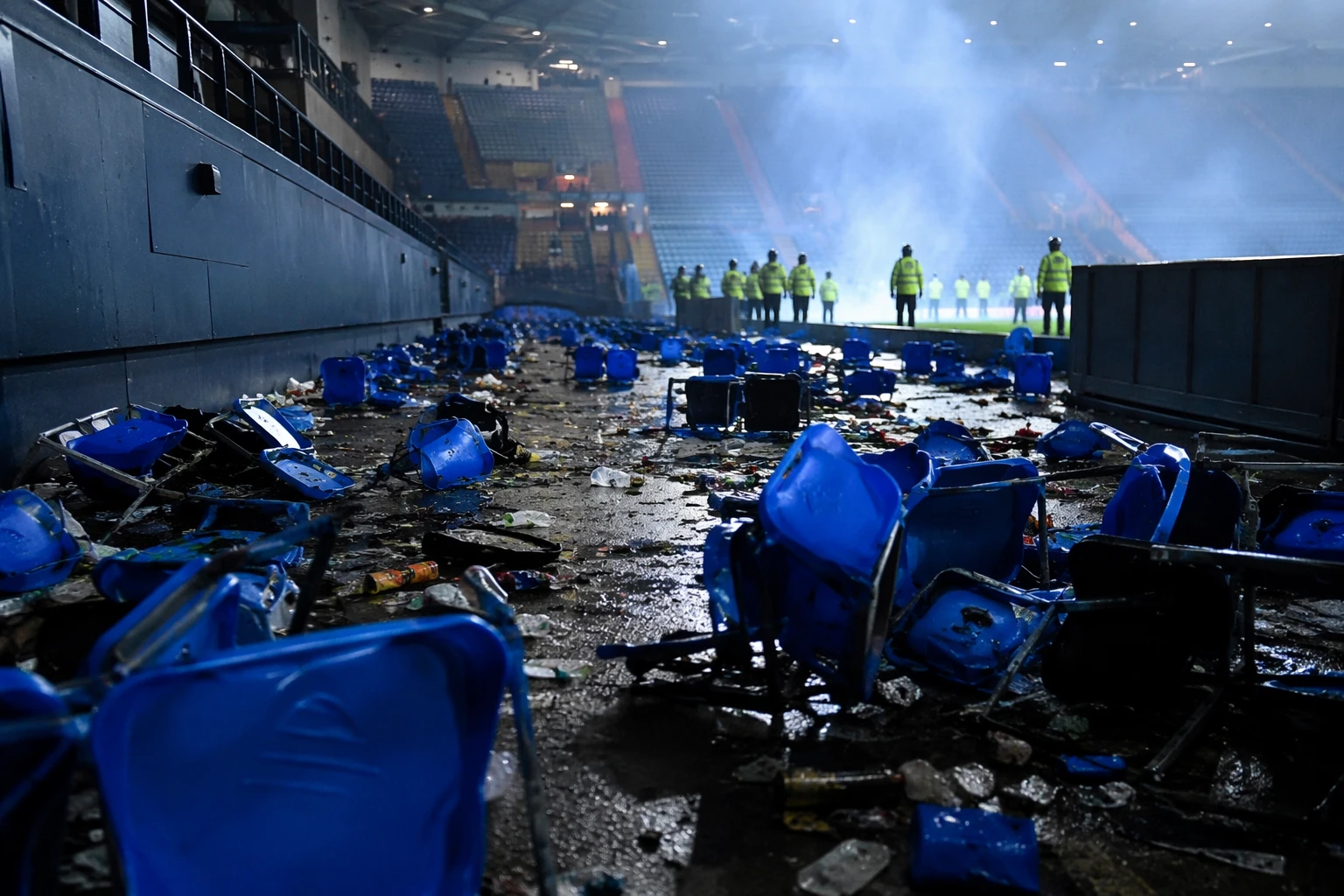
The review arrived with added force because it followed a match already heavy with tension. Rangers said it was “appalled” by graffiti mocking the Ibrox disaster in the Broomloan stand, deepening the sense that the afternoon’s crowd trouble was not an isolated flashpoint but part of a wider breakdown around control, rivalry and respect inside the stadium.
Police Scotland’s chief officer has already indicated that larger away supports at Old Firm matches may not be workable, and the review’s publication has intensified pressure on football authorities to decide whether that warning will become policy. The immediate question now is not whether the disorder was serious, but which measures will actually be imposed in time for the next fixture: tighter crowd segregation, reduced allocations, stronger stewarding, or changes in police deployment.
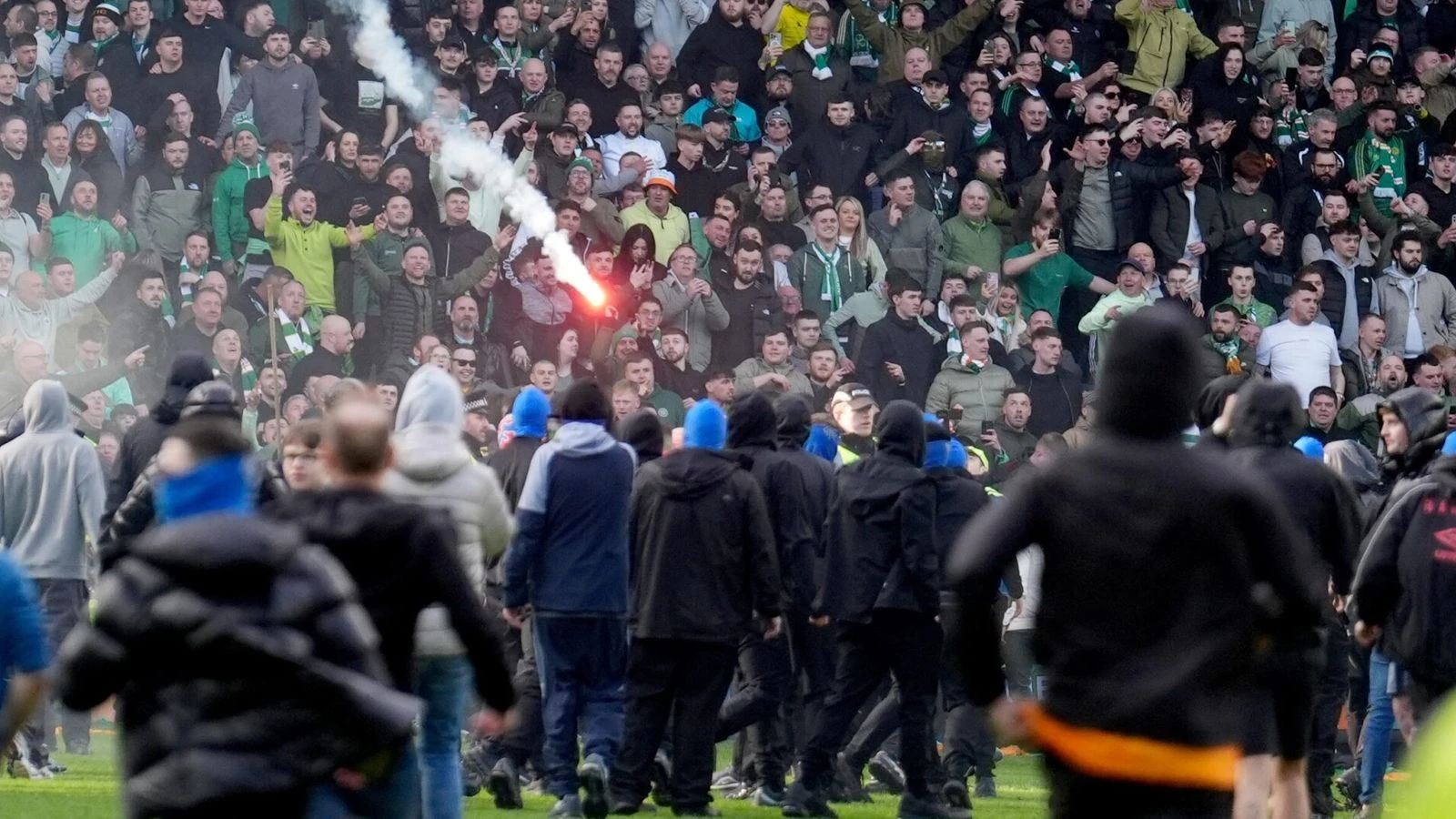
Blackbourne’s findings shift the debate from blame to action. With the Scottish FA having launched the review in the first place, and with both clubs already charged, the test is whether those bodies use the report to force operational change rather than leave the response at the level of statements and disciplinary process.
Sources
- [1]bbc.co.uk
- [2]bbc.com
- [3]news.stv.tv
- [4]skysports.com
- [5]stv.tv