US News
Revolutionary America’s table reflected wealth, race, and Indigenous knowledge
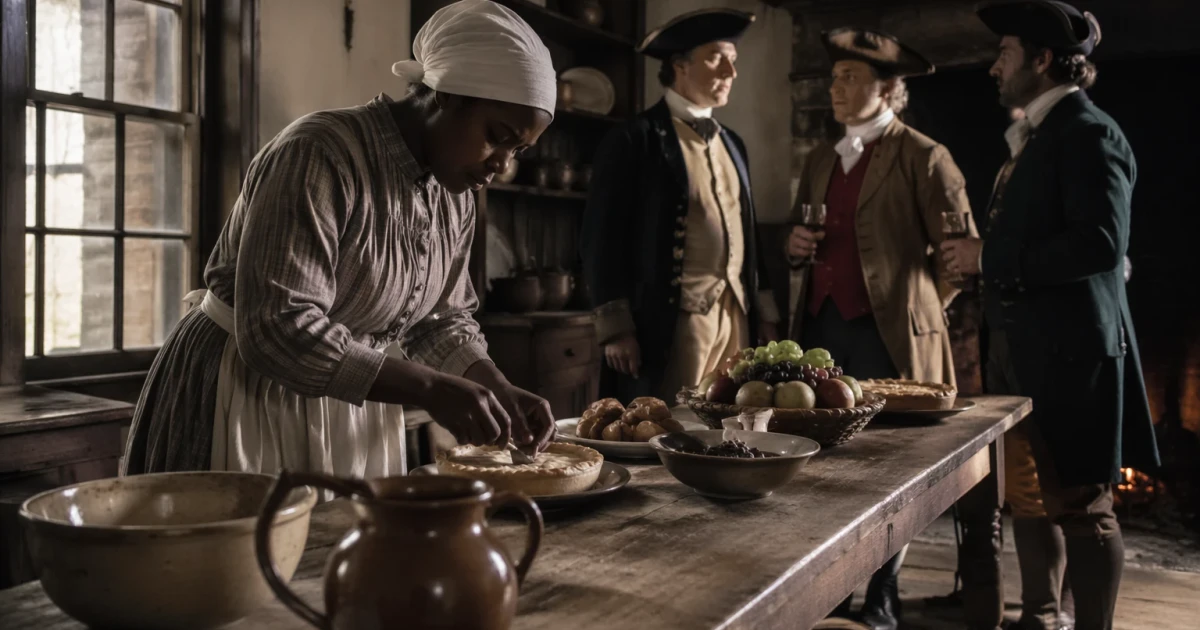
In 1776, food tracked the same hierarchy that shaped politics, with access to wealth, race, and gender determining who dined well and who labored to make those meals possible. The same household could produce an elaborate spread of sauces, multiple courses, and imported wine for the elite while the enslaved cooks who prepared it survived on far more limited rations.
A table built on hierarchy
The developing United States was already organized around status, and the table made that visible. Wealthy households ate elaborate meals at home, often in a style that still looked toward Britain and the Atlantic world, even as independence approached. Those meals were not accidental displays of abundance: multiple courses, rich sauces, and imported wines signaled rank as clearly as property or office.
That hierarchy ran through everyday eating as well as ceremonial occasions. Colonists in New England, the Middle Colonies, and port cities encountered different ingredients and dining customs, but the broad pattern held: the better the household’s access to money and trade, the more varied and performative the meal.
The labor behind elite abundance
The lavishness of elite tables depended on enslaved labor. Enslaved cooks often prepared the meals served in prosperous households, yet they themselves were forced to live on limited rations.
The system was especially stark in households that wanted to project refinement. A table could carry the appearance of abundance, with several courses moving in sequence, while the labor of shopping, cooking, and preservation fell to enslaved people whose own diets were constrained.
Indigenous knowledge shaped what colonists could grow
Colonial foodways were also built on Indigenous knowledge. Indigenous communities taught colonists how to plant crops that could survive Northeastern seasons, a transfer of expertise that helped settlers adapt to conditions they did not understand well on their own. Corn became especially important by 1776, and it appeared in everyday foods such as hasty pudding and johnnycakes.
Corn moved from a learned crop into a staple ingredient. Colonial Americans did not simply inherit a self-sufficient agricultural system; they relied on Indigenous cultivation knowledge to make local farming work.
Eating without refrigeration
The colonial kitchen was governed by seasonality and preservation because refrigeration did not exist. Food had to be kept edible for more than a few days, roads were rough, and meat spoiled quickly, so cooks leaned on salting, sugaring, pickling, and other methods that extended shelf life. The menu of the period reflects that reality: dishes were designed as much for survival and storage as for pleasure.
That constraint did not produce a dull table. Revolutionary-era meals could include savory pie, turtle soup, syllabub, and ice cream, alongside imported ingredients and British-style dining customs that many colonists still aspired to keep.
Ice cream, election cake, and the early republic’s sweet tooth
Ice cream was already part of colonial life by at least 1744, and Hannah Glasse’s 1751 book, The Art of Cookery made Plain and Easy, helped spread recipes more widely. The frozen treat was not yet a modern mass-market dessert, but it was known well enough to appear in elite settings and recipe circulation. Eighteenth-century versions could be surprising by modern standards, including Parmesan ice cream and oyster ice cream.
Other foods speak to the rhythms of political life itself. Election cake, especially popular in New England, was tied to long, crowded voting days and the public gatherings that surrounded them.
Revolution began before independence was declared
By the time July 4, 1776 arrived, the Revolution was already under way. The first shots had been fired in April 1775, more than a year before independence was formally declared. Food culture moved through that turbulence without losing its older habits, which is why colonial tables still held on to British-style service, imported wines, and elite tastes even as political rupture deepened.
How the past is staged in Annapolis
That layered history still shapes how the era is presented in Annapolis, Maryland, where historical reenactors often lead tourists through the historic streets. Some restaurants and interpretive sites there highlight foods associated with the period, including large quantities of rockfish, crab claw meat, calamari rings and tentacles, crackers, and lemon juice.
Sources
- [1]npr.org
- [2]thepresidency.org
- [3]dornsife.usc.edu
- [4]research.colonialwilliamsburg.org
- [5]allthingsliberty.com
- [6]nps.gov
- [7]wprl.org