Science
RHIC Shuts Down, Marking Shift in U.S. Physics Research
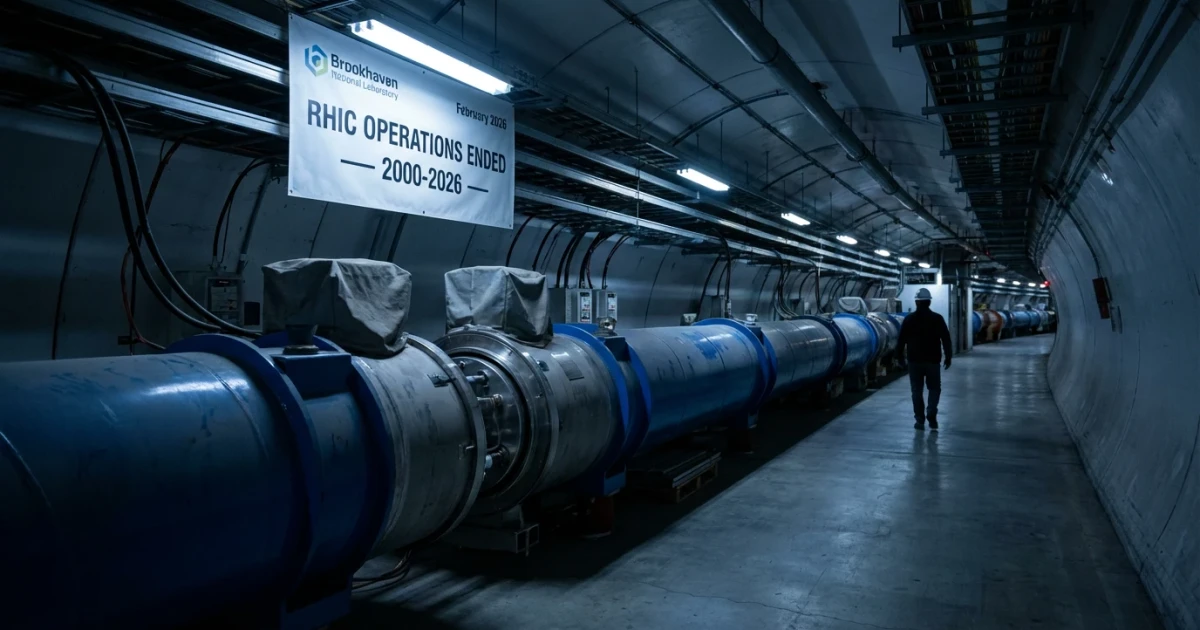
The Relativistic Heavy Ion Collider (RHIC), the largest particle collider in the United States, officially ceased operations this week. The shutdown, widely reported by outlets including Gizmodo, marks the end of a groundbreaking era for American nuclear physics and prompts new questions about the future of high-energy research in the country.
RHIC’s Impact on Science
Since its commissioning in 2000, RHIC, located at Brookhaven National Laboratory in New York, has been a cornerstone of U.S. nuclear and particle physics. The facility is renowned for its ability to accelerate heavy ions to near-light speeds and collide them, recreating conditions similar to those microseconds after the Big Bang. These experiments have yielded significant discoveries, particularly about the quark-gluon plasma—a state of matter believed to have existed at the universe’s birth.
- RHIC has supported more than 3,000 scientific publications and facilitated collaborations among thousands of international researchers.
- Major findings include evidence for the creation of a nearly perfect liquid and insights into the strong force that binds subatomic particles.
- It was the only operating collider in the U.S. capable of exploring these fundamental questions.
Why Did RHIC Shut Down?
The decision to end RHIC’s operations was not sudden. According to the U.S. Department of Energy, funding and strategic priorities have been gradually shifting toward new projects, including the planned Electron-Ion Collider (EIC) at Brookhaven. The EIC is expected to further advance the study of quarks and gluons with more precise measurements, building on RHIC’s legacy.
The shutdown also reflects broader trends in U.S. nuclear physics policy, as resources are reallocated to next-generation facilities. This pivot aims to keep the United States competitive in a global field where facilities like CERN’s Large Hadron Collider (LHC) in Europe currently lead in high-energy frontier research.
Scientific Legacy and Achievements
RHIC’s two and a half decades of operation have produced a range of scientific breakthroughs. Notably, it was the first collider capable of colliding heavy ions, such as gold nuclei, at energies high enough to melt protons and neutrons into their constituent quarks and gluons. Experiments at RHIC have shown that the quark-gluon plasma behaves as a nearly perfect fluid with extremely low viscosity, a discovery recognized as one of the top physics achievements of the early 21st century.
The collider has also been instrumental for education and training, supporting the careers of hundreds of graduate students and early-career scientists. Data from RHIC have been cited in thousands of peer-reviewed publications and have significantly shaped the direction of nuclear physics research worldwide.
What Comes Next for U.S. Collider Science?
With RHIC’s closure, attention now turns to the construction of the Electron-Ion Collider, scheduled to begin operation in the next decade. The EIC aims to answer outstanding questions about the structure of protons and neutrons, leveraging technologies and expertise developed at RHIC. According to the DOE’s decadal review of RHIC, lessons learned from the collider’s operation will inform future projects and maintain U.S. leadership in the field.
International collaborations are expected to continue, with U.S. scientists participating in experiments at facilities around the world. While the shutdown marks an end, Brookhaven and RHIC’s legacy will persist through ongoing analysis of vast data archives and the continued development of advanced accelerator technologies.
Looking Forward
RHIC’s shutdown is a pivotal moment for American science, closing one chapter while opening new opportunities for discovery. As the global landscape of high-energy physics evolves, the United States will seek to build on RHIC’s achievements and invest in the next generation of research infrastructure.