US News
Rip current safety tips as summer beach crowds rise
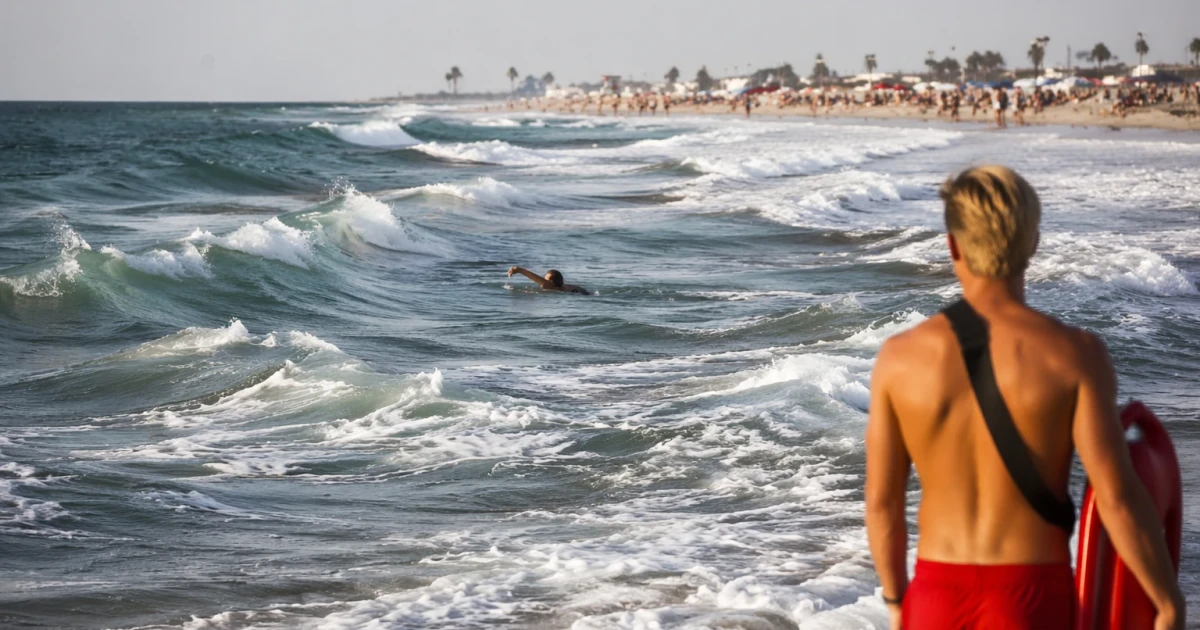
If a rip current grabs you, the move that matters most is simple: swim parallel to shore, not straight back against the pull. If the current is carrying you shoreward, float or tread water until you can reset, and never let panic turn one bad moment into a drowning emergency.
What a rip current is, and why it catches people off guard
A rip current is a channelized flow of water moving away from shore at a surf beach, and it also forms at Great Lakes beaches. Rip currents are the number one hazard at surf beaches. NOAA and the United States Lifesaving Association attribute tens of thousands of lifeguard rescues and more than 100 drowning fatalities every year in the United States to them. USLA attributes more than 80% of rescues performed by surf-beach lifeguards to rip currents.
They are easy to underestimate because they do not look like dramatic waves. Rip currents can average 1 to 2 feet per second, but they have been measured at up to 8 feet per second, fast enough to outrun many swimmers. Some stretch more than 50 yards wide and can extend hundreds of yards offshore, which is why swimming straight against the pull wastes energy fast.
The terms “undertow” and “riptide” are incorrect. The hazard is a rip current.
How to reduce your risk before you swim
The best defense starts before your feet hit the surf. Swim at a lifeguard-protected beach whenever possible, ask a lifeguard about the conditions before entering the water, and obey posted signs and instructions.
Surf-zone forecasts deserve the same attention as the weather app on a travel day. National Weather Service fatality tracking places surf-zone fatality peaks in June and July and identifies the typical victim as a male between ages 10 and 29.
Piers and jetties deserve special caution. Rip currents often form around those structures, and beachgoers should avoid them because the permanent currents near the edges can be stronger and more persistent than the water next to open sand.
A practical pre-swim check
Before you go in, use this quick sequence:
- Look for a lifeguard tower or protected swim area.
- Ask the lifeguard about current surf and current risk.
- Check the surf-zone forecast before entering the water.
- Avoid swimming beside piers and jetties.
- Keep children and weaker swimmers within close reach.
How to escape if a rip current takes hold
The escape strategy is not to fight the pull head-on. Swim parallel to shore, toward breaking waves, and then angle back to the beach once you are out of the strongest current. That path matters because rip currents usually run straight seaward through a narrow channel, while breaking waves are more likely to push you back toward safer water.
If you cannot make ground, float or tread water and conserve energy until the current weakens. The goal is to stay calm, stay afloat, and buy time to move out of the narrow flow rather than exhausting yourself in a straight-line battle you are unlikely to win.
The steps that matter most in the water
If you feel yourself being pulled away from shore:
- Stay calm.
- Do not swim straight back against the current.
- Swim parallel to the shoreline.
- Move toward breaking waves.
- Once free of the strongest pull, angle back to shore.
- If you cannot swim out of it, float or tread water and signal for help.
How to help without becoming a second victim
Rescue attempts turn dangerous when untrained swimmers jump in without flotation. Do not try to rescue someone in a rip current by swimming in without flotation; instead, get a lifeguard or call 911.
If you are on shore and see someone in trouble, the fastest useful action is to alert a lifeguard immediately or call 911 if no lifeguard is nearby. Throwing a flotation device is safer than entering the water yourself, because it gives the swimmer something to hold while keeping another body out of the current.
Why this warning is back in the spotlight
ABC News aired demonstrations with Matt Gutman and the Huntington Beach Fire Department showing how to escape a rip current. In Huntington Beach, California, surf beaches can look calm even when a rip current is running underneath.
Sources
- [1]cbsnews.com
- [2]weather.gov
- [3]usla.org
- [4]noaa.gov
- [5]abcnews.com