Business
Rising Gas Prices Squeeze American Households Amid Iran Conflict
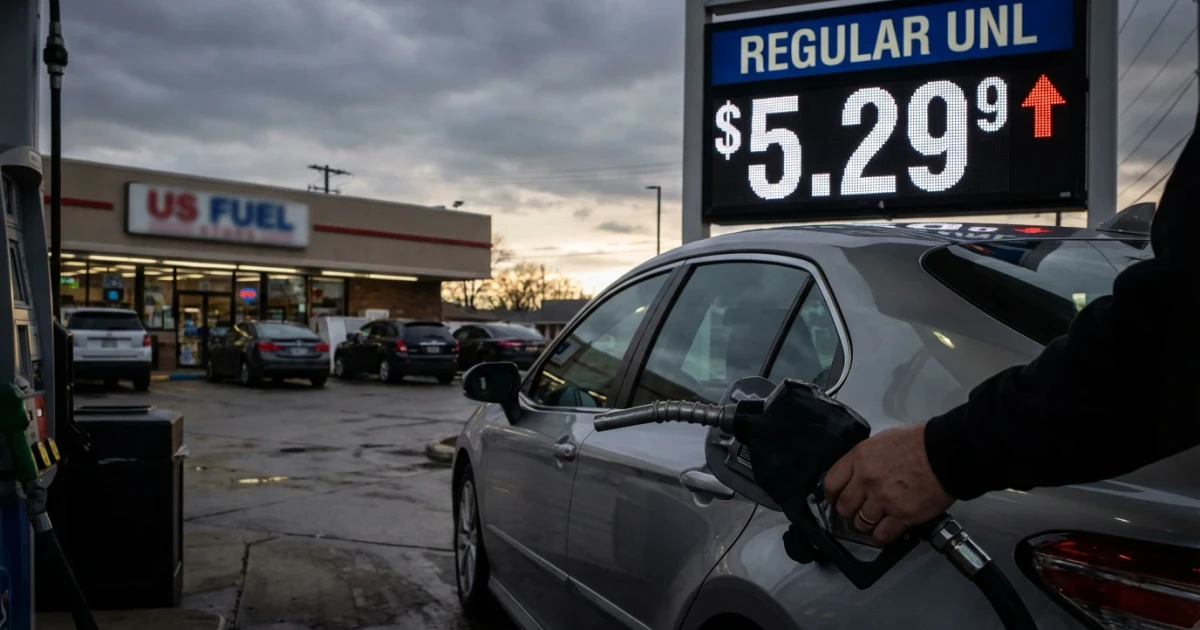
Americans are feeling the pinch as the war in Iran triggers a sharp rise in gasoline prices, putting pressure on household budgets and fueling broader economic anxiety across the United States. The recent conflict has driven up the cost of crude oil, leading to an immediate impact at the pump for consumers nationwide.
Gas Prices Surge Nationwide
According to recent coverage by The Guardian, the escalation of the Iran war has led to significant increases in gas prices across much of the country. The Energy Information Administration's weekly gasoline and diesel update shows that average U.S. retail gasoline prices have jumped noticeably in recent weeks, with some regions experiencing sharper rises than others. The interactive maps provided by AAA Gas Prices confirm these regional disparities, highlighting states where the price hikes have been most acute.
- National average gas prices have climbed above $4 per gallon for the first time since 2022, according to government data.
- States in the West and Northeast are seeing the fastest increases, with some localities paying over $4.50 per gallon.
- Rural and lower-income communities are being hit hardest, as commuting distances and limited public transport options increase vulnerability to fuel cost spikes.
Many Americans have expressed concern that these rising costs are unsustainable. As one resident told The Guardian, “I’m worried we won’t make it through.”
Why the Iran Conflict Impacts Energy Costs
The Iran war has significantly disrupted global oil markets. According to the Energy Information Administration's Iran country analysis, Iran is one of the world’s largest oil producers and exporters. Any instability in the region—especially involving a major oil supplier—tends to drive up crude prices due to fears of supply shortages and shipping disruptions in the Persian Gulf.
The link between Middle East conflicts and oil price volatility is well-established. Research from the Brookings Institution shows that geopolitical tensions in the region can spark sharp, sometimes sustained, increases in global energy prices, which are quickly passed on to American consumers at the gas pump.
Broader Economic Impact and Inflation
Energy costs are a major driver of inflation in the United States. The latest Consumer Price Index (CPI) report from the Bureau of Labor Statistics shows that gasoline and other energy prices are a significant component of the overall inflation rate. As gas prices rise, so do transportation and production costs for businesses, leading to higher prices for goods and services across the economy.
- Consumers are facing higher prices not only at the pump, but also for groceries, utilities, and transportation.
- Small businesses reliant on transportation are seeing their costs rise, sometimes forcing them to pass on increases to customers or cut back on services.
Regional Differences and Community Impact
The Guardian’s reporting highlights that the impact of rising gas prices is uneven. Urban residents with access to public transit have more options to reduce their fuel use, while rural Americans often lack alternatives and are forced to absorb the full brunt of higher costs. The EIA’s weekly retail gasoline price tables illustrate these disparities, showing that some states have seen price increases of 20 cents per gallon or more in a matter of weeks.
Looking Ahead
As the Iran conflict continues, energy analysts warn that prices could remain elevated or rise further if tensions escalate. Federal Reserve policymakers are watching closely, as persistent high energy prices could complicate efforts to control inflation and support economic growth. For now, American families and businesses are bracing for continued uncertainty and hoping for relief at the pump.