Health
RNA-Triggered Chromatin Shredding Emerges in Cancer Mutation Therapy
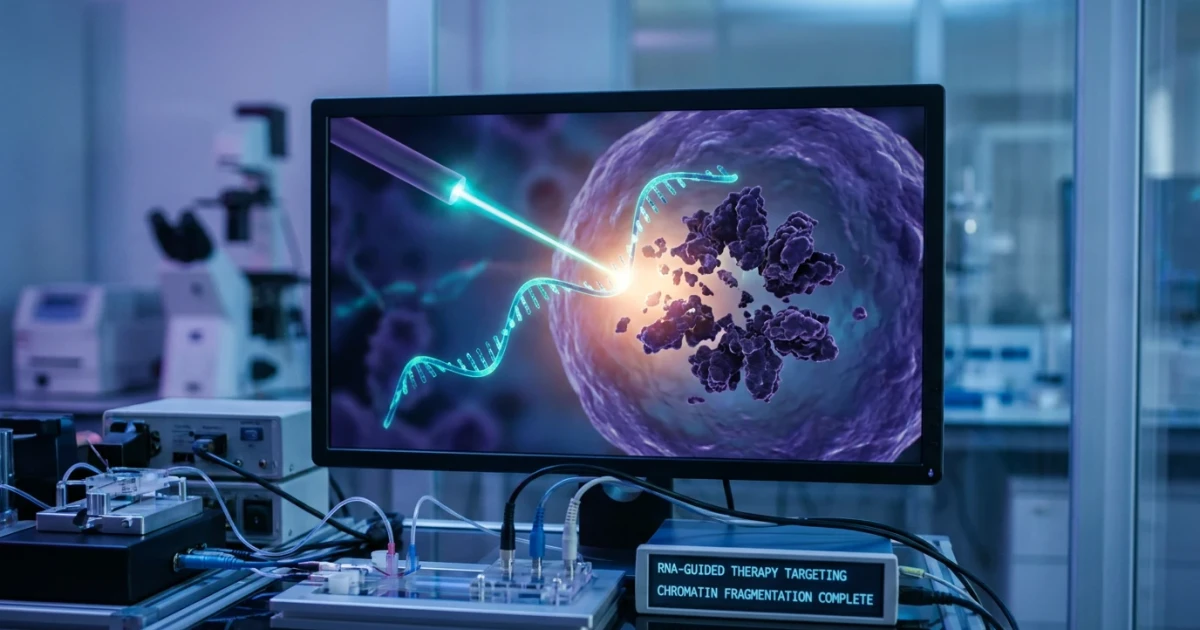
Recent advances in cancer research have unveiled a promising approach to targeting cancer-specific genetic mutations using RNA-triggered chromatin shredding, as highlighted in a Nature article. This novel method leverages RNA molecules to guide the disruption of chromatin—the complex of DNA and proteins that regulates gene expression—specifically at sites of oncogenic mutations, potentially opening new pathways in precision oncology.
Understanding Cancer-Specific Mutations
The fight against cancer often centers on identifying and neutralizing genetic mutations that drive tumor growth. According to the National Cancer Institute, such mutations can be inherited or acquired, and they frequently alter normal cell functions to promote uncontrolled proliferation. Historically, therapies have targeted these mutations through small molecules, antibodies, or more recently, gene-editing tools like CRISPR.
Mechanism of RNA-Triggered Chromatin Shredding
The Nature report describes a new method where engineered RNA molecules recognize and bind to mutated DNA sequences unique to cancer cells. These RNA guides recruit specialized protein complexes designed to disrupt chromatin structure at the mutation site. By dismantling the chromatin, the cell's ability to transcribe cancer-promoting genes is severely curtailed, effectively 'shredding' the genetic instructions that fuel tumor growth.
This approach draws parallels to the CRISPR-Cas systems, which have revolutionized gene editing, but with a distinct focus on epigenetic regulation. Instead of making permanent DNA changes, RNA-triggered chromatin shredding modulates gene activity at the chromatin level, potentially reducing off-target effects and improving safety profiles.
Potential and Challenges in Cancer Therapy
One of the key advantages of this technique is its specificity. Since the RNA guides are designed to match unique cancer mutations, healthy cells with normal DNA sequences remain unaffected. This precision could minimize the side effects commonly seen with traditional chemotherapy and radiation.
- According to data from the cBioPortal for Cancer Genomics, thousands of distinct mutations have been cataloged across various cancer types, illustrating the potential reach of mutation-targeted therapies.
- The OncoKB database further details which mutations are clinically actionable, providing a roadmap for personalized intervention strategies.
However, challenges remain. Delivering the RNA-guided chromatin shredders efficiently to tumors, avoiding immune system detection, and ensuring sustained effects are ongoing hurdles. As with other gene and RNA therapies, manufacturing and regulatory clearance processes are also significant considerations.
Broader Context and Future Directions
This research fits into a larger landscape of emerging cancer therapies that utilize both gene editing and RNA-guided chromatin remodeling to disrupt tumor biology. Clinical trials are already underway to test related CRISPR-based therapies, and experts anticipate that RNA-triggered chromatin shredding could follow suit in the coming years.
- Comprehensive analyses, such as those published in Nature's cancer mutation landscape studies, show that targeting chromatin dynamics is a promising frontier in oncology, with several proof-of-concept studies demonstrating tumor suppression in preclinical models.
Conclusion
The emergence of RNA-triggered chromatin shredding represents a significant step toward highly selective, mutation-driven cancer therapies. While clinical translation will require further development, the specificity and adaptability of this approach could dramatically impact patient outcomes, particularly for cancers driven by well-characterized genetic mutations. As the catalog of actionable cancer mutations grows, so too will the opportunities for precision interventions that minimize collateral damage and improve quality of life for patients.