Politics
Roberts court balances Trump wins and limits in turbulent term

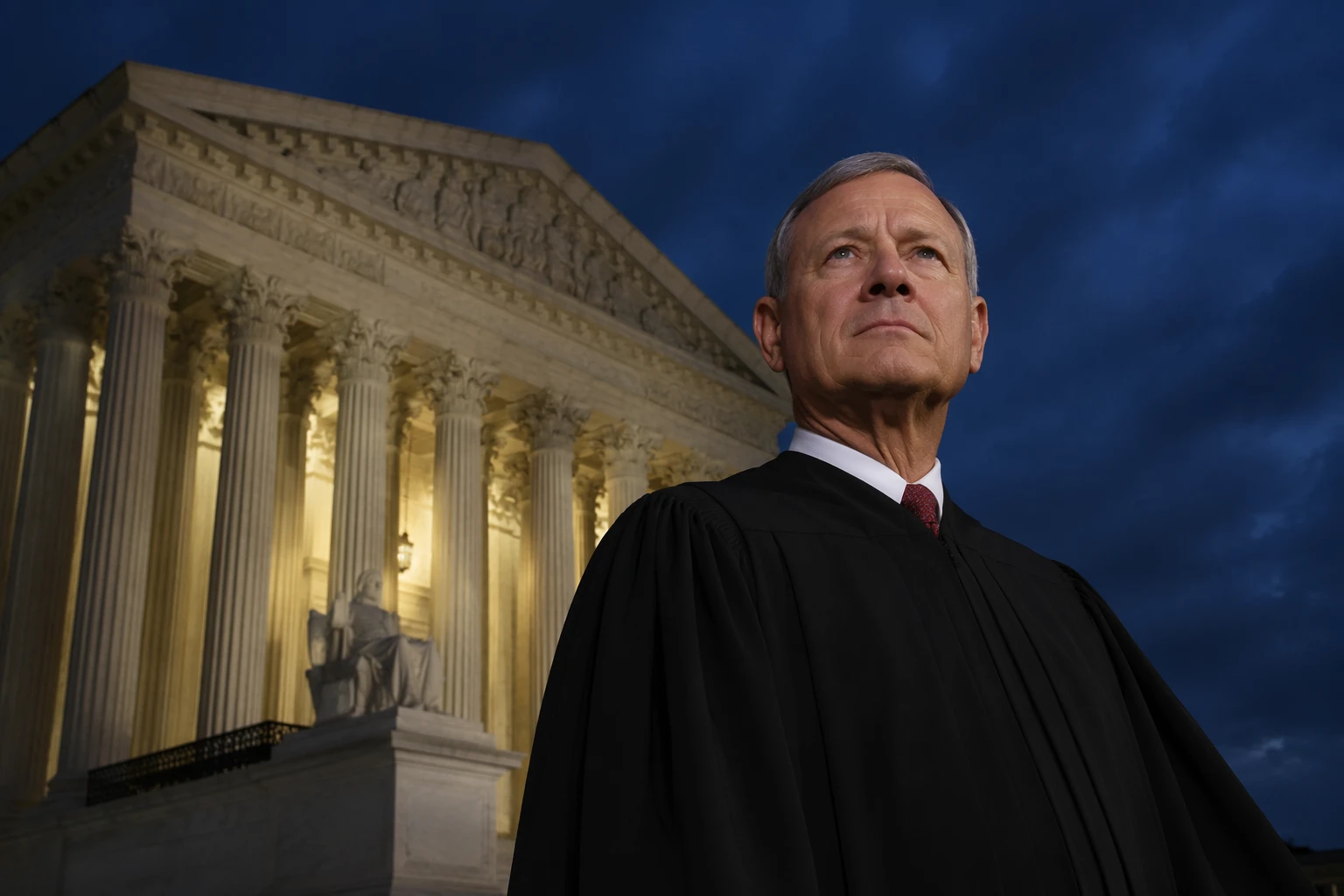
The Supreme Court’s latest term put John Roberts at the center of a presidency-testing year, and the results cut in two directions. He helped block Donald Trump’s bid to narrow birthright citizenship, but he also sat at the helm of rulings that gave the administration room on other fronts, leaving the court more divided and the chief justice more visibly managerial than ever.
A term defined by pressure, scale and division
The 2025-26 term ended on June 30, 2026, after a heavy docket that SCOTUSblog tallied at 74 granted cases, 67 arguments and 68 opinions. That volume mattered because the court was not simply busy, it was handling the kind of disputes that shape the boundary between executive power and constitutional restraint. The final stretch did not settle into the familiar 6-3 rhythm that had characterized many recent terms, and observers described the court as more ideologically divided than the one before it.
The subject list alone shows how much was at stake: presidential power, tariffs, voting, gun regulations, LGBTQ rights and money in elections all landed before the justices. Those cases did not sit at the edges of policy. They went to the structure of authority itself, especially at a moment when Trump was pressing for aggressive control over institutions that usually stand apart from the White House.
Roberts as the court’s institution manager
Roberts’ influence this term was bigger than any single vote count. The more revealing story is how he shaped the court’s public posture, steering outcomes that preserved enough internal cohesion to project order even as the substance of the rulings showed deep ideological strain. That is what made the term feel different: the chief justice was not just tallying a majority, he was managing the court’s tone.
The New York Times captured that dynamic in blunt terms, describing Roberts as facing down the president, forging unlikely coalitions and achieving long-sought goals. That description fits the pattern of the term. Roberts appeared to be balancing two imperatives at once: limiting open institutional chaos while still moving the court in a direction consistent with the conservative legal project he has overseen for two decades.
The result was a court that looked more controlled on the surface even when it was making disruptive choices underneath. That tension is central to understanding the Roberts Court now. The chief justice can reduce visible friction, but that same discipline can also make a more assertive court seem steadier than it really is.
Birthright citizenship became the clearest limit on Trump
The sharpest direct rebuke to Trump came on June 30, 2026, when Roberts wrote the court’s opinion rejecting the president’s executive order aimed at denying citizenship to children born in the United States to parents who are in the country unlawfully or temporarily. The decision was 6-3, and the court’s case page says children born in the United States to parents unlawfully or temporarily present are citizens at birth under the 14th Amendment.
That ruling mattered on both constitutional and political levels. It reaffirmed a long-standing principle of citizenship while also showing that Roberts was willing to draw a hard line against a presidential bid to rewrite that rule by executive action. In a term packed with fights over executive authority, the opinion became a marker of where the court would not go, even for a Republican president whose agenda otherwise found significant sympathy from the bench.
The Fed and the FTC showed how Roberts balanced protection and permission
One day earlier, on June 29, 2026, Roberts wrote separate opinions in two cases that together captured the term’s contradictions. In the Federal Reserve dispute, the court allowed Lisa Cook to remain in office for now, preserving central bank independence at a time when Trump had tried to remove her. The Supreme Court noted that in August 2025 Trump purported to fire Cook, who was the first governor ever fired in the central bank’s 111-year history.
In the Federal Trade Commission case, the court took the opposite approach and allowed Trump to remove FTC Commissioner Rebecca Kelly Slaughter. Put side by side, those rulings are a reminder that the court was not operating with one simple anti- or pro-executive rule. Instead, it was sorting institutions differently, preserving autonomy in one case while conceding presidential authority in another.
That split has broader economic implications. The Fed decision guarded a central bank whose independence matters for inflation expectations, interest-rate credibility and market stability. The FTC decision, by contrast, strengthened presidential leverage over a regulator with direct influence on antitrust and consumer policy. The court did not choose one clean theory of government. It chose a sequence of institutional outcomes that will shape how future administrations approach agencies with very different legal histories.
Trump wins, Trump limits and the politics of legitimacy
The term’s biggest story is not that Trump lost or won across the board, but that he did both. Conservatives saw major victories for the administration in some areas, even as the court imposed real setbacks in others. Critics saw a different pattern, arguing that Roberts and the Republican appointees were enabling an expansion of executive power even while occasionally drawing lines that looked restraining.
That split reaction says as much about the court’s legitimacy as it does about the individual cases. Roberts has spent years trying to protect the institution from looking overtly partisan, and this term showed why that effort matters. The court’s ability to project moderation can soften the political blow of controversial rulings, but it can also obscure how forcefully the institution is reshaping the balance of power.
A twenty-first term in a longer rightward arc
Roberts became chief justice on September 29, 2005, making this his twenty-first term leading the court. Over that span, commentators have described his tenure as part of a dramatic rightward turn in the court’s jurisprudence, and this term did nothing to reverse that larger arc. If anything, it showed how that movement can coexist with selective restraint.
That is the central question the term leaves behind. Roberts can still hold together coalitions, lower the temperature and present the court as an institution above raw partisanship. But the cases on birthright citizenship, the Federal Reserve and the FTC show a court that is also willing to press hard on presidential power, agency control and the reach of conservative legal doctrine. The stewardship may reduce visible chaos, but the substance of the rulings suggests a court that is more assertive, more ideological and still very much in motion.
Sources
- [1]nytimes.com
- [2]scotusblog.com
- [3]supremecourt.gov
- [4]politico.com
- [5]apnews.com
- [6]reuters.com
- [7]constitutioncenter.org