Business
Rocket Lab buys Iridium in $8 billion all-stock deal
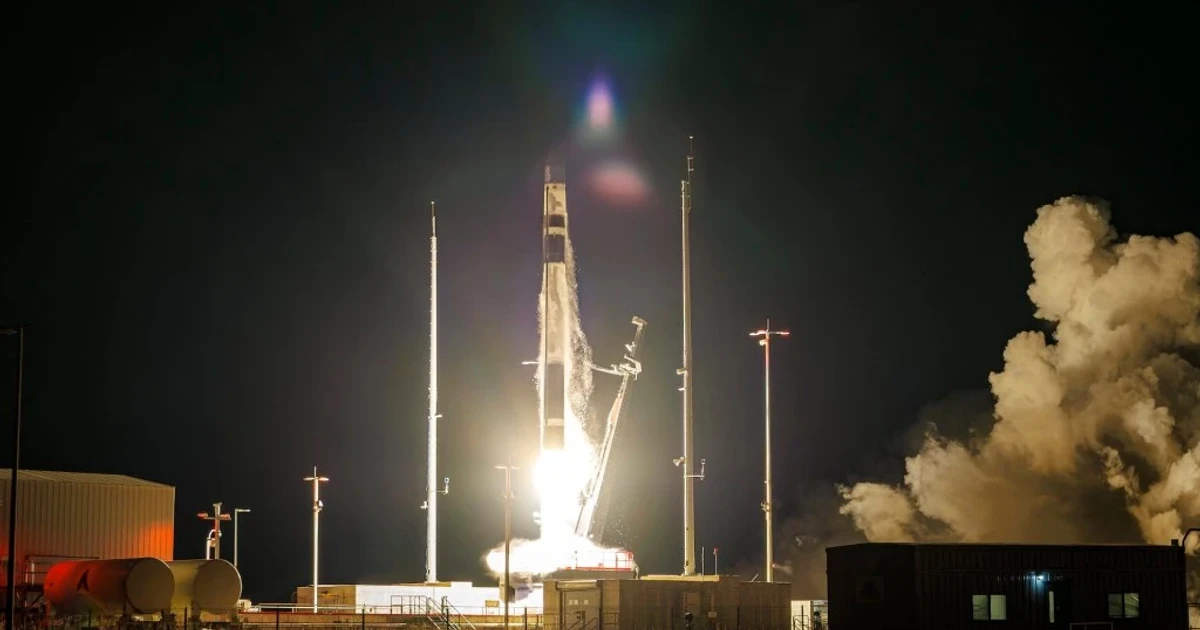
Rocket Lab agreed to buy all outstanding Iridium common stock for $54 a share in a cash-and-stock deal that values Iridium at about $8.0 billion, a move that would turn the Long Beach, California company from a launch and satellite manufacturer into a broader operator of orbital services. The boards of Rocket Lab Corporation and Iridium Communications Inc. unanimously approved the transaction, which they expect to close in mid-2027 after shareholder votes and regulatory reviews.
The acquisition would combine Rocket Lab’s launch services, satellite manufacturing and space systems business with Iridium’s global low-Earth-orbit communications network, licensed L-band spectrum and more than 2.55 million active subscribers. Iridium’s network serves government, defense, aviation, maritime and commercial customers, and the merged company would enter satellite Internet of Things, direct-to-device communications, positioning, navigation and timing, and safety-of-life services with an immediate customer base and a 500-plus partner ecosystem.

Peter Beck said the transaction was a defining moment and could unlock new markets. William Blair analyst Louie DiPalma said the combination was “very strategic,” pointing to Iridium’s global L-band network, spectrum licenses, government business and subscriber base as assets that Rocket Lab can use to expand beyond launch revenue and into recurring service revenue.
Rocket Lab has a committed $3.6 billion, 364-day senior secured bridge term loan facility to help finance the cash portion of the purchase, which is about half the deal. Iridium shares jumped after the announcement, while Rocket Lab’s stock also rose, even as Iridium closed Friday at $43.52, below the offer price. For Rocket Lab, the acquisition also follows the April 14 completion of its purchase of Mynaric AG, which added laser optical communications terminals, and comes as the company continues development of Neutron, its larger reusable rocket aimed at medium-lift missions, constellation deployment and national security customers.

The concept began at Motorola in 1987, and the original company filed for Chapter 11 bankruptcy in 1999 after a collapse that became one of the largest bankruptcies in U.S. history. The current network has 66 operational low-Earth-orbit satellites and provides weather-resilient connectivity that can remain useful when GPS or GNSS signals are degraded or unavailable.