Politics
Rod Dreher warns of a distinctively American authoritarian turn

Rod Dreher has been returning to “Weimar America” as a warning about what he sees as a distinctly American slide toward authoritarian politics. In 2025 commentary, he tied the phrase to New York City mayoral politics and the rise of extremes on both the left and right, arguing that the center is collapsing under pressure.
Dreher’s frame is deliberate. He has said the country may not be heading toward Hitler or Stalin again, but toward “something all American,” shaped by social breakdown, polarization and elite distrust. He has also said he is working on a new book exploring parallels between 1920s Germany and 2020s America, extending an argument he first laid out in The American Conservative essay “Weimar Germany, Weimar America” on November 21, 2016.
The historical comparison is drawn from the Weimar Republic itself, which lasted from November 9, 1918, to March 23, 1933. That period included hyperinflation from 1921 to 1923 and severe political turmoil. Britannica notes that the republic’s late-1920s prosperity rested heavily on foreign credits, leaving the system exposed when lending dried up after the 1929 crash and the economy plunged. That combination of instability, dependence and collapse helped make the republic vulnerable to Nazi takeover.
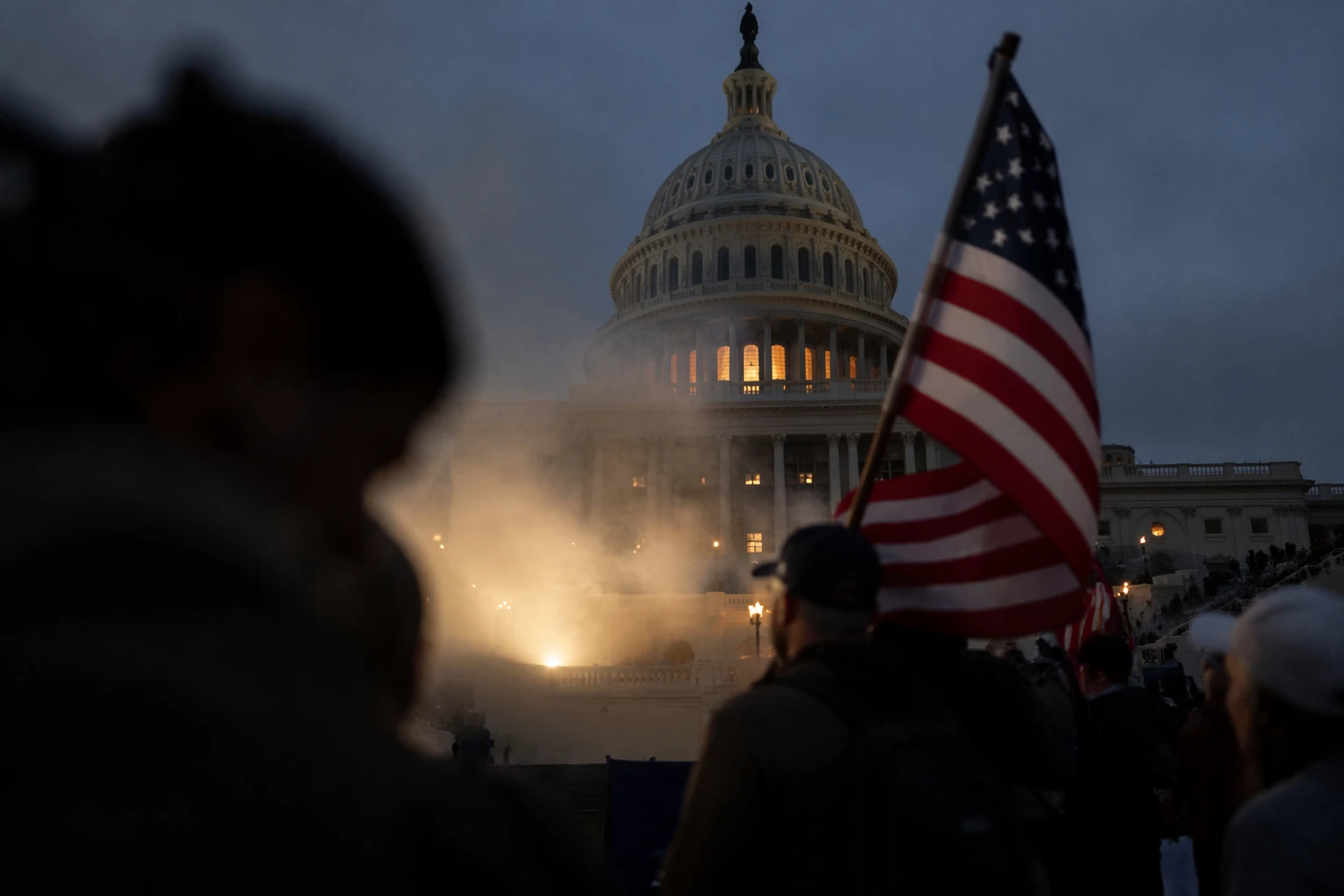
Dreher’s argument lands in a United States already marked by measurable strain. Pew Research Center reported in 2025 that Americans’ feelings about the federal government had grown more polarized. A Cambridge study found that much of the rise in U.S. polarization since the late 1980s occurred after 2008. Carnegie Endowment research has also examined the links among polarization, democratic backsliding and political violence in the United States.

That record gives Dreher’s Weimar analogy its force and its limits. The Weimar Republic ended in dictatorship; the American system has not followed that path, and the political conditions differ in essential ways. Still, Dreher is using the comparison to argue that the danger is not imitation but mutation, a domestic form of illiberal politics emerging from distrust, fragmentation and the stress of a polarized public life.
Sources
- [1]nytimes.com
- [2]theamericanconservative.com
- [3]thefp.com
- [4]britannica.com
- [5]history.com
- [6]pewresearch.org
- [7]cam.ac.uk
- [8]carnegieendowment.org
- [9]encyclopedia.ushmm.org