Technology
Roll for Initiative: Scientists Use Dungeons & Dragons to Unlock Human-AI Teamwork
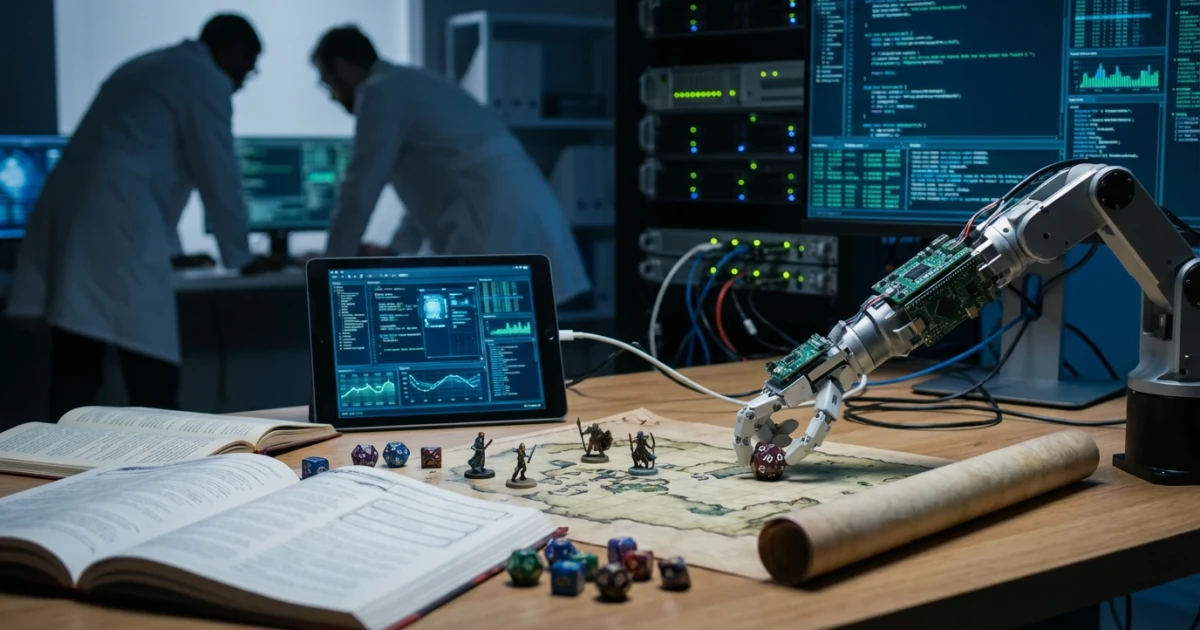
As artificial intelligence increasingly shapes our world, scientists are searching for new ways to understand and improve collaboration between humans and AI. In a creative twist, researchers are now using the legendary role-playing game Dungeons & Dragons to explore the dynamics of human-AI teamwork.
Why Dungeons & Dragons?
Dungeons & Dragons (D&D) is a complex, collaborative role-playing game where players must communicate, strategize, and make decisions together to overcome challenges. This makes it an ideal environment for studying the nuances of group interaction, decision-making, and leadership. By adding AI players or Dungeon Masters into the mix, scientists can closely observe how human and artificial teammates interact, negotiate, and solve problems.
The Science Behind the Game
According to Live Science, researchers are designing experiments where AI systems take on the roles of either fellow adventurers or the game's narrator and referee—the Dungeon Master. These AI participants are programmed with varying levels of autonomy and social skills, allowing scientists to test different models of AI-human collaboration. The goal is to identify which approaches best support trust, communication, and shared problem-solving in teams that blend human and artificial intelligence.
- Teamwork dynamics: D&D requires constant negotiation, creative thinking, and adaptability—key elements for effective teamwork in any domain.
- Measuring outcomes: By tracking player choices, group success rates, and satisfaction, researchers can quantify the impact of AI behaviors on group performance.
- Real-world applications: Insights gained from these experiments could translate to AI assistants in workplaces, healthcare, education, and beyond.
Potential Implications for Human-AI Collaboration
Understanding how to build trust and fluid communication with AI partners is an urgent challenge as these systems become more prevalent. The lessons learned from D&D-based studies could inform the design of future AI teammates—ones that can adapt to human social cues, support group goals, and enhance decision-making in high-stakes environments.
While still in early stages, this innovative approach highlights the importance of context-rich, interactive settings for evaluating AI systems. Rather than focusing solely on technical benchmarks, scientists are prioritizing the quality of human-AI interaction and the subjective experience of working alongside artificial agents.
Looking Forward
As researchers continue to experiment with AI in the imaginative world of Dungeons & Dragons, their findings could reshape the way we design and deploy artificial intelligence in our everyday lives. By learning from the cooperative adventures of fantasy worlds, we may discover the keys to more harmonious and productive partnerships between humans and machines.
Sources
- [1]Live Science