Science
Roman Space Telescope Prepares for Landmark Launch
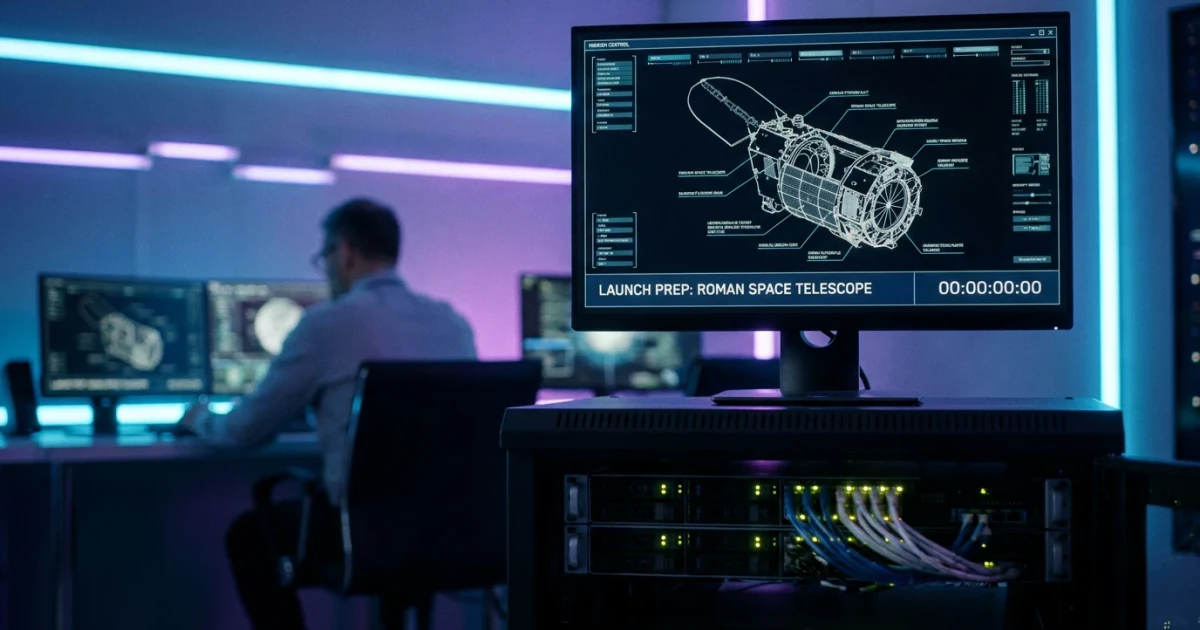
NASA’s Roman Space Telescope is on the brink of launch, marking a pivotal moment for astronomy and cosmology. Set to observe the universe in unprecedented detail, Roman is expected to unlock new insights into dark energy, exoplanets, and the structure of the cosmos.
Mission Overview and Scientific Goals
The Roman Space Telescope, named after Dr. Nancy Grace Roman, NASA’s first Chief of Astronomy, is designed to answer some of the most profound questions in astrophysics. According to NASA’s official mission overview, Roman will conduct wide-field surveys of the sky, enabling scientists to study the mysterious force of dark energy—thought to be responsible for the accelerating expansion of the universe. The telescope will also search for and characterize thousands of exoplanets, providing a wealth of data on worlds beyond our solar system.
Advanced Technology and Wide Field of View
Roman’s most distinctive feature is its Wide Field Instrument, which pairs the image quality of the Hubble Space Telescope with a field of view 100 times larger. This means Roman can capture sweeping vistas of the cosmos, mapping large portions of the sky with exceptional clarity.
- The telescope will use a 2.4-meter primary mirror, matching Hubble’s size, but with advanced detectors enabling larger and deeper surveys.
- Roman’s sensitivity and resolution are designed to complement other observatories, like the James Webb Space Telescope, offering a powerful synergy for future discoveries.
Exploring Cosmic Mysteries
As outlined in the science objectives, Roman will address key cosmic mysteries, including:
- Measuring the effects and properties of dark energy with high precision
- Mapping the distribution of galaxies to chart the universe’s expansion history
- Detecting thousands of new exoplanets through gravitational microlensing
- Surveying the structure and evolution of the Milky Way
Data Accessibility and Community Involvement
The Space Telescope Science Institute emphasizes that Roman’s expansive datasets will be made publicly available, supporting research worldwide. The mission’s open data policy aims to empower both professional astronomers and citizen scientists to participate in groundbreaking discoveries.
Looking Ahead
The impending launch of the Roman Space Telescope signals a major advance for space science. With its wide field of view, advanced technology, and ambitious science goals, Roman is positioned to transform our understanding of the universe’s origins, structure, and fate. As WTVG’s coverage highlights, astronomers and the public alike anticipate the new discoveries Roman will bring, marking a defining chapter in humanity’s quest to explore the cosmos.