Sports
Ronaldo, Neymar and Modrić mark the end of a World Cup era

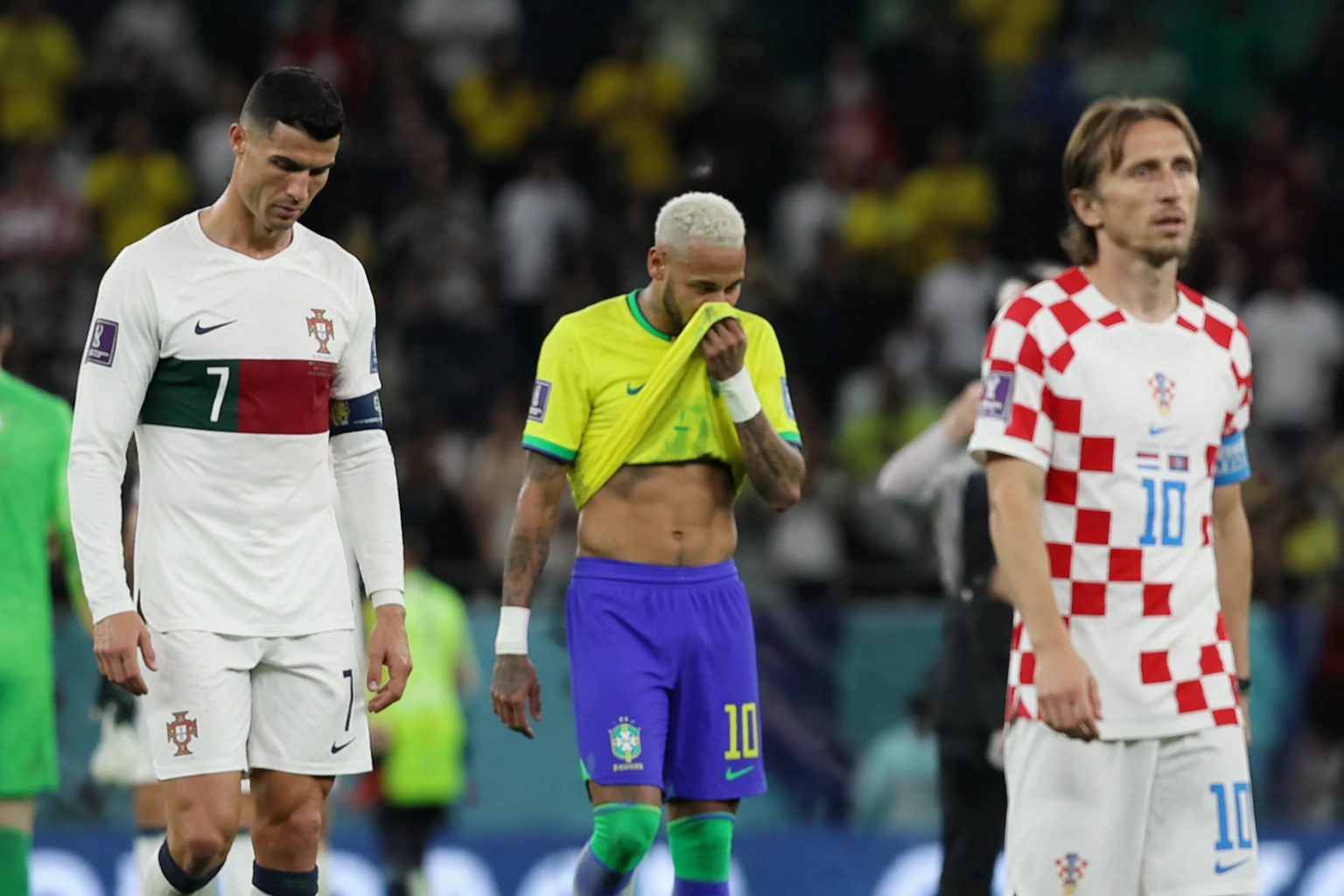
The 2026 World Cup is changing the tournament’s scale before a ball has been kicked. With Canada, Mexico and the United States sharing the first 48-team edition, it is also becoming the final World Cup stage for Cristiano Ronaldo, Neymar and Luka Modrić, three players who helped make the modern game more global, more commercial and more individually branded.
A larger tournament, a smaller cast of familiar giants
This World Cup is not just expanding the field; it is closing a chapter. Ronaldo, Neymar and Modrić arrive at the end of their World Cup arcs with different styles and different national histories, but the same defining reality: each has carried his team’s identity far beyond a single cycle of matches.
That matters because these players were never only athletes. Ronaldo became football’s model of relentless personal branding and output, Neymar turned flair into a global product, and Modrić made technical control and longevity feel like a standard rather than a luxury. Their exits leave the tournament’s next generation with something harder to replace than goals or assists: recognizable figures who could anchor entire eras.
Ronaldo’s farewell came with a final defeat and a final declaration
Portugal’s 1-0 loss to Spain in the round of 16 ended Ronaldo’s World Cup run, and FIFA marked the moment with a tribute titled “Record-setting Ronaldo says goodbye to the World Cup.” NBC News also noted that Ronaldo said the 2026 tournament would be his last after the defeat, turning that elimination into a clear line of departure rather than a vague possibility.
The emotional tone around the exit sharpened the sense of finality. An Instagram post cited in the results described him as “at peace” and as having given everything he had, a fitting detail for a player whose career has been measured as much by durability and consistency as by trophies. Ronaldo’s influence stretched well beyond Portugal’s results, because he became one of the sport’s most bankable and visible figures, a player whose name could sell a match before kick-off.
Neymar’s final World Cup chapter was unfinished, but unmistakable
Neymar’s closing act was more abrupt, and in some ways more familiar, because it also carried the weight of injury and expectation. Brazil fell to Norway in the round of 16, Neymar converted a penalty, and still could not push his team into the next round. That combination of individual contribution and collective exit defined much of his international career, where brilliance often lived beside frustration.
FIFA had already framed 2026 as his fourth World Cup and quoted him calling it “my last mission.” In the same message, he said, “I am going after this World Cup trophy in any way I can.” Al Jazeera described the result as the end of his international football, a phrase that captures how Neymar’s legacy reaches beyond one loss. He made the game’s creative improvisation part of the global mainstream, and he did it under the weight of enormous expectation from a country that treats its best attackers as national symbols.
Modrić’s exit was slower, older, and just as revealing
Modrić’s story has a different shape because it is about longevity as much as peak brilliance. Croatia named the 40-year-old in its World Cup 2026 squad, and BBC Sport identified him as the most-capped player in Croatian history with 196 appearances. The same coverage said he was expected to recover from a fractured cheekbone in time for the tournament, an unusual coda for a player whose defining trait has been calm control under pressure.
The Athletic noted that he could reach his 200th appearance for Croatia during the tournament, while Fox Sports described the campaign as a possible “final World Cup appearance.” ESPN later characterized his last dance as ending in a dramatic and emotional elimination, which suits a player whose international career has often been a study in persistence rather than spectacle. Modrić changed what elite midfield play can look like on the world’s biggest stage, making intelligence, balance and tempo control central to a team that reached heights many larger federations still chase.
James Rodríguez and Guillermo Ochoa belong in the same closing frame
James Rodríguez and Guillermo Ochoa remain part of the same farewell generation, even where the available coverage does not supply the same level of detail on their final World Cup turns. Their names matter here because this end-of-era feeling is not only about three superstars from Europe and Brazil; it also includes long-serving figures from Latin America whose careers have helped widen the tournament’s emotional and commercial footprint.
That broader cast is part of what changes when a World Cup era ends. Fans do not just lose goals or saves; they lose familiar national reference points, players whose face, style and history have been woven into multiple tournaments. When those names disappear together, the replacement job falls to a younger group that will inherit a bigger tournament, a louder media market and a more demanding standard of visibility.
What the next generation has to replace
The next World Cup generation will not need to copy Ronaldo, Neymar or Modrić. It will need to replace the functions they served: Ronaldo’s certainty in front of goal and his global marketability, Neymar’s capacity to make individual skill feel like an event, and Modrić’s authority as a midfield metronome who could define a team’s rhythm over years, not just matches.
The tournament itself is already changing around that handoff. A 48-team World Cup across Canada, Mexico and the United States broadens the stage, but it also raises the bar for the players who want to become the new reference points. The old era is ending with a set of exits that are personal, dramatic and culturally loaded, and the next one begins with the challenge of filling that vacuum without diluting what made these three names feel so large in the first place.
Sources
- [1]telemundo.com
- [2]fifa.com
- [3]facebook.com
- [4]aljazeera.com
- [5]bbc.com
- [6]nytimes.com
- [7]foxsports.com
- [8]espn.com