Business
Russia offers India access to Tomtor rare earth deposit
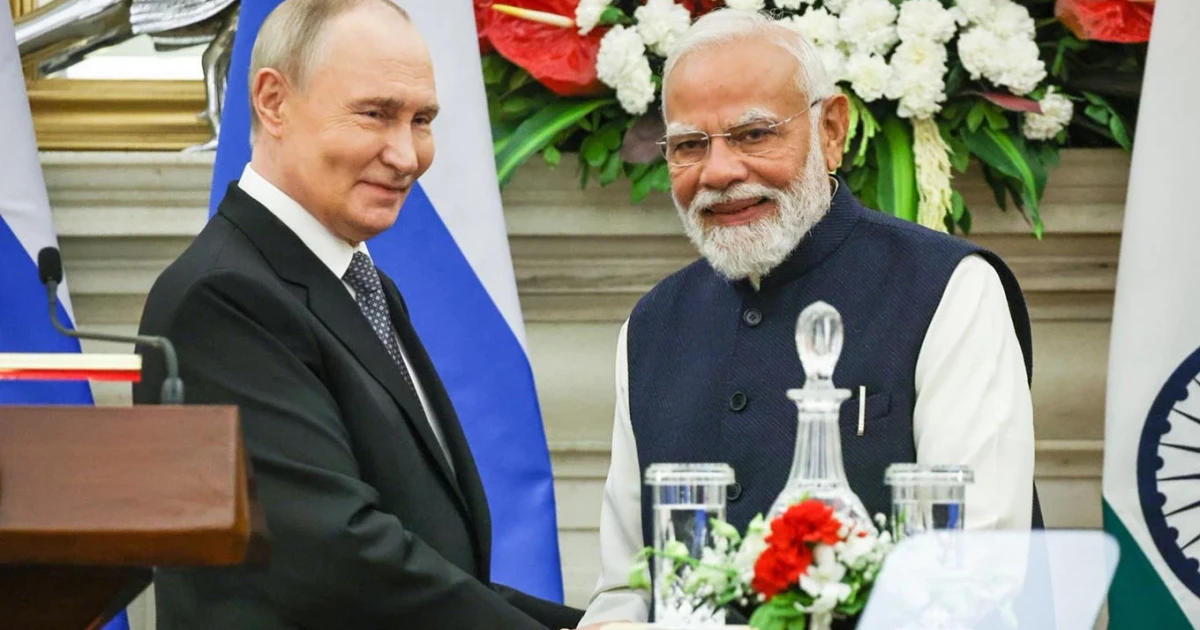
Russia has opened a new front in the global scramble for critical minerals by offering India access to the Tomtor rare earth deposit in Yakutia, a move that could tighten economic ties between Moscow and New Delhi while giving India a route around China-dominated supply chains. The talks center on samples from the Siberian site, with Indian state-owned miner IREL discussing a plan in which the material would be processed in Russia before being sent to India for analysis.
The pitch matters because rare earth elements sit at the heart of modern industry. They are essential for permanent magnets used in electric-vehicle motors, wind turbines, electronics and defence systems, making access to supply a strategic issue rather than a narrow mining deal. For India, the timing is especially sharp: more than 45% of the country’s rare-earth imports were coming from China in the latest reporting tied to Budget 2026, underscoring how exposed New Delhi remains to a supply chain it wants to de-risk.
That pressure has already pushed the Indian government into action. On November 26, 2025, the Union Cabinet approved a 7,280-crore scheme to promote manufacturing of sintered rare earth permanent magnets, with a target of 6,000 metric tons per annum of integrated REPM manufacturing. The plan is aimed at building industrial capacity for the automotive, defence and aerospace sectors, where magnet supply can quickly become a bottleneck.
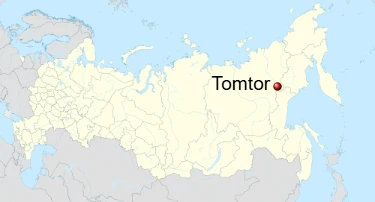
Tomtor is attractive because of its scale. Discovered in 1977 and located in the Olenyoksky District of north-west Yakutia, the deposit has long been described as one of the world’s largest undeveloped rare-earth sources. Earlier estimates for the Buranniy section alone put resources at about 11.4 million to 13.2 million tonnes of ore, containing about 780,000 tonnes of niobium oxide and about 1.7 million to 2.0 million tonnes of rare-earth oxides.
The project’s corporate path has also shifted. Rosneft acquired control of Tomtor in May 2025, giving the Russian oil producer a stake in a project that now sits at the intersection of industrial policy and geopolitics. Any deeper cooperation would have to navigate Western sanctions on Russia and restrictions tied to the war in Ukraine, but Moscow’s willingness to talk to India shows how resource diplomacy is adapting to pressure.
India is not betting on one source alone. IREL has also been scouting rare-earth options in Argentina, Australia and Malawi, and has explored partnerships with Japanese and South Korean firms. Even so, Tomtor suggests India may be emerging as a pivotal swing buyer in critical minerals, willing to test deals wherever the geology is rich and the politics still allow room to maneuver.