World
Russia pounds Kyiv with drones and missiles, killing at least 30
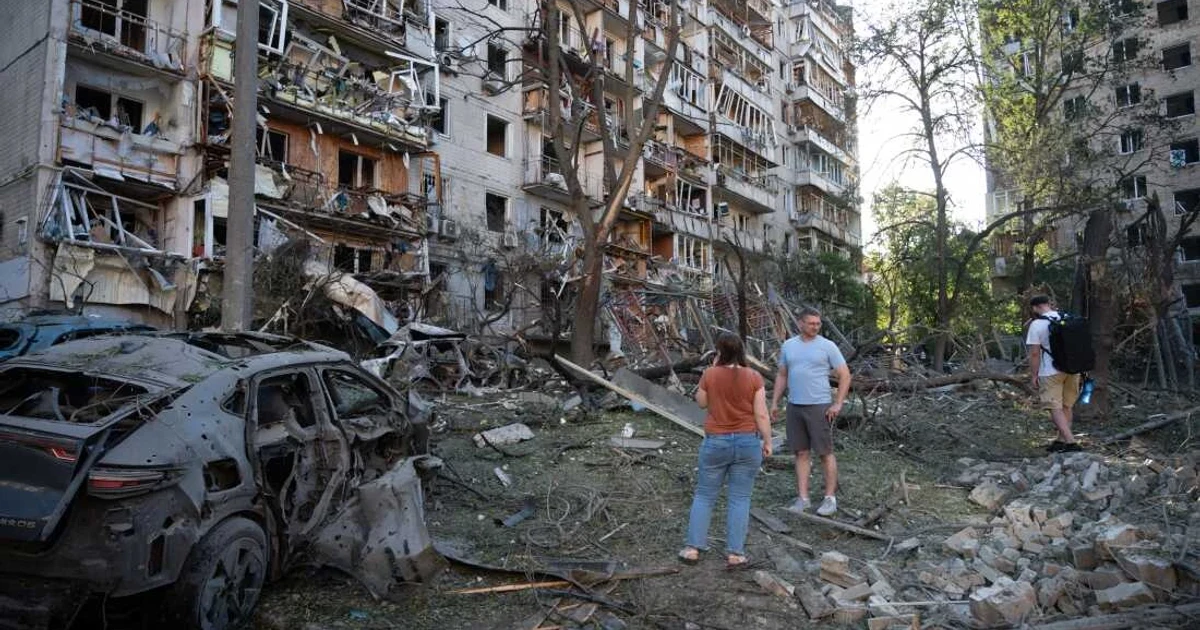
Russia’s overnight drone and missile barrage killed at least 30 people in Kyiv and tore into residential blocks across the capital, leaving about 130 buildings damaged. The attack hit mostly homes and civilian infrastructure, turning one of the war’s most heavily defended cities into a field of shattered glass, burned-out apartments and mass sheltering.
Ukraine’s air force said Russia launched 74 missiles and 496 long-range drones in the assault, a scale that suggested a deliberate attempt to overwhelm air defenses rather than to hit a single military target. Tymur Tkachenko, head of the Kyiv City Military Administration, said damage was recorded in 30 locations across the city. Interior Minister Ihor Klymenko said 20 residential buildings were damaged. As the strike unfolded, thousands of residents rushed underground into shelters and metro stations, while rescue crews dug through collapsed facades and scorched stairwells.
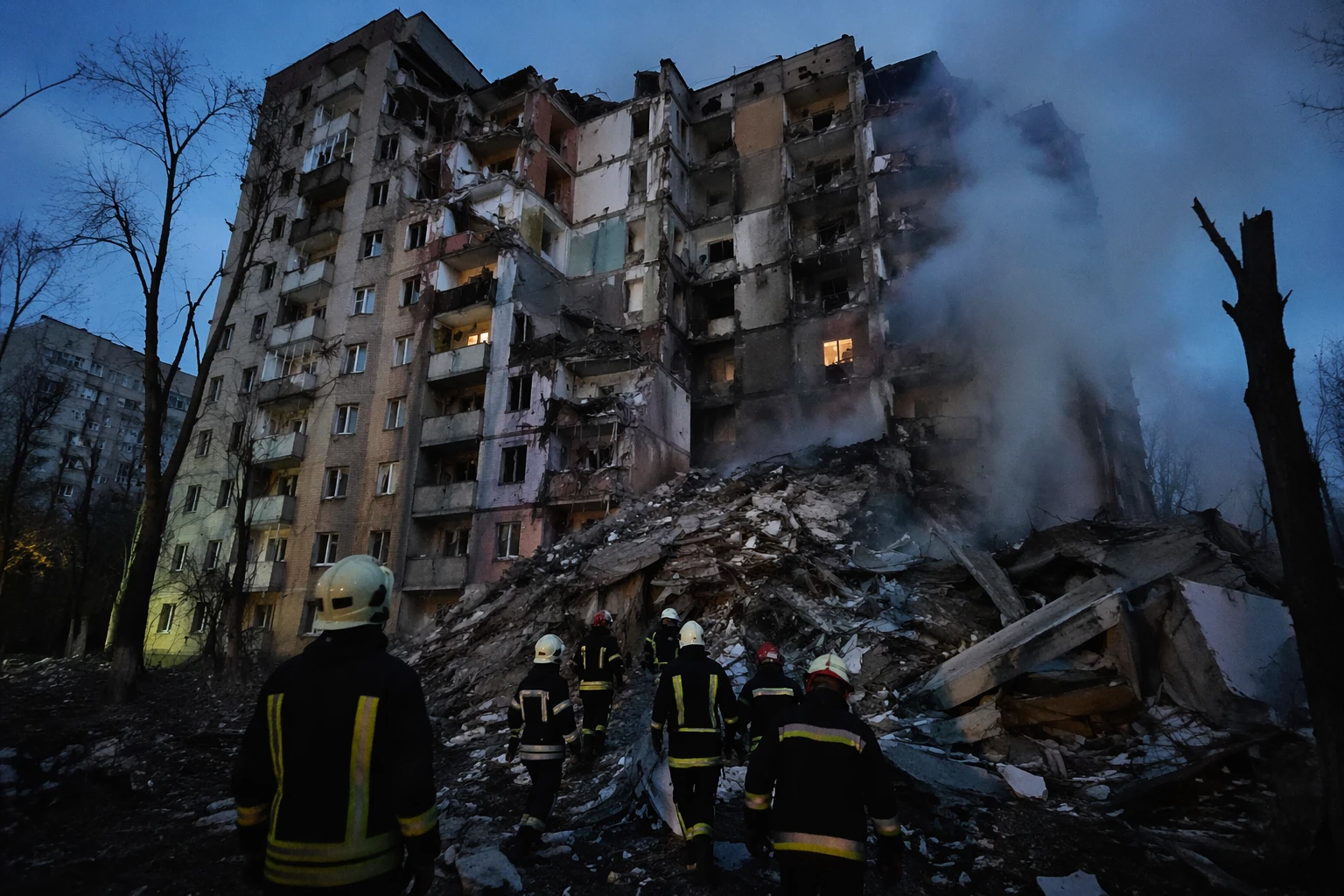
The barrage arrived as Moscow continued a summer campaign of large drone-and-missile strikes on Kyiv. The Institute for the Study of War described the attack as part of a broader series against Kyiv City, and the pattern fits a strategy built around attrition: exhaust Ukrainian air defenses, keep civilians off balance, and force the government to spend political and military capital on the capital’s protection. The strike did not change the front line, but it did deepen the toll on civilians and underscored that Russia can still mass firepower against the city at the center of Ukraine’s political life.
President Volodymyr Zelenskyy visited the site of a struck residential building in Kyiv’s Darnytskyi district on July 2 and honored the dead. His office said he called for stronger pressure on Russia after the attack, which also prompted Poland to scramble fighter jets as the barrage unfolded, a reminder that the war’s air campaign carries spillover risks beyond Ukraine’s borders. For Kyiv, the immediate result was another night of death and destruction; for the broader war, the message was that Moscow is still betting on pressure from the air to shape the political as well as military battlefield.
Sources
- [1]news.google.com
- [2]usnews.com
- [3]understandingwar.org
- [4]cbsnews.com
- [5]president.gov.ua
- [6]cnbc.com