World
Russia says it foiled AI drone attack on bases deep inside country

Russia's Federal Security Service said it had intercepted 24 explosive-laden FPV drones meant for attacks on the Shagol air base in Chelyabinsk region and Ukrainka air base in Amur region, a claim that pushed the war’s drone fight farther into Russia’s rear areas. The agency said the drones were first dropped onto Russian territory by larger Ukrainian fixed-wing drones and balloons, then moved by alleged Ukrainian agents in trailers with false bottoms and household appliances before being prepared in rented garages near the bases. It said the people involved had been detained.
The FSB also said the drones were manufactured in the United States, Britain, Canada and Sweden, carried more than 1 kilogram of explosives each, and used AI navigation to evade Russian jamming. Those labels matter beyond the battlefield because they fold a military claim into Moscow’s broader diplomatic argument that Ukraine’s long-range strikes depend on Western technology and covert supply chains, rather than only on domestic Ukrainian capability. Reuters has noted that Russia has recently hardened its anti-Western rhetoric around the war.
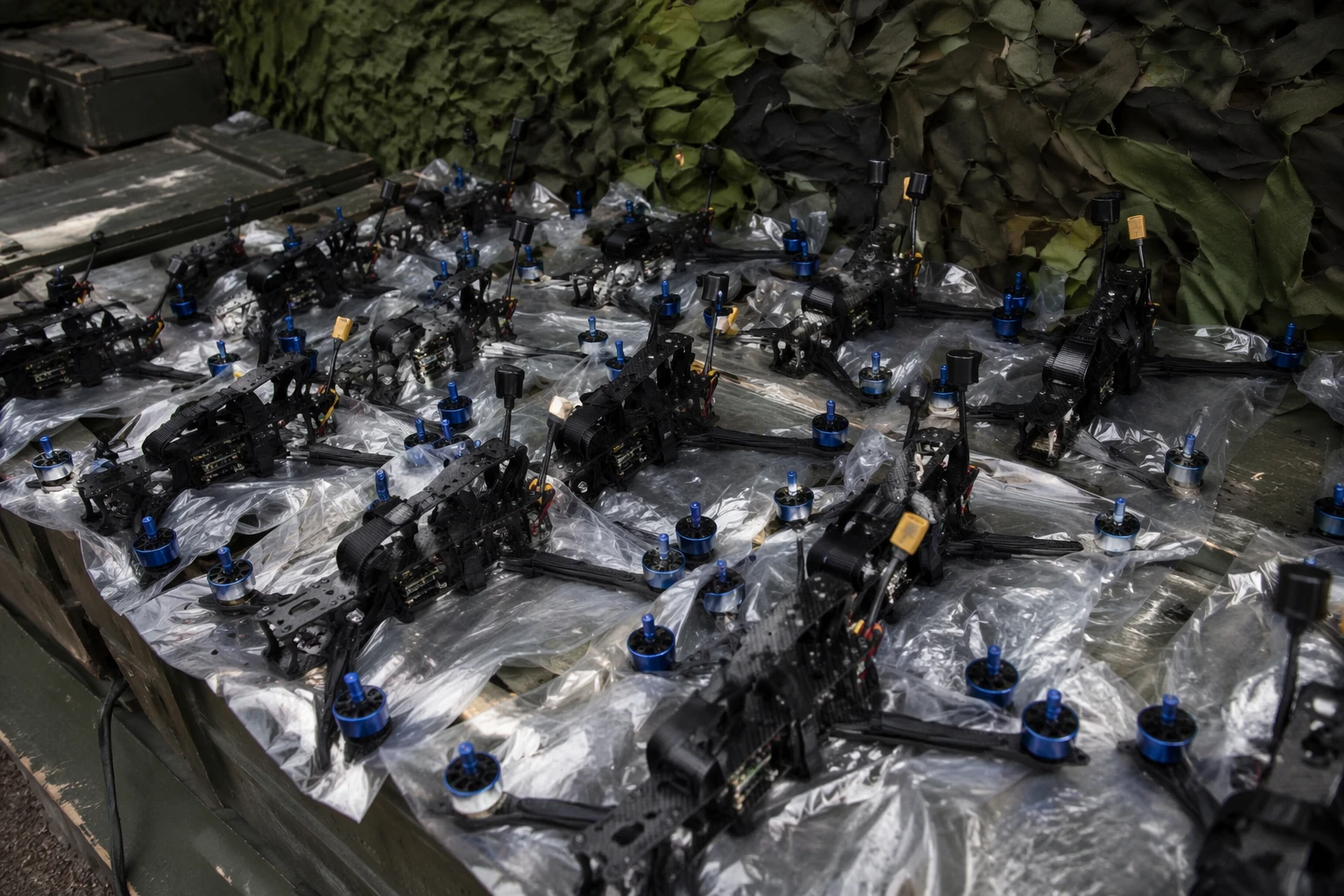
The episode echoes Ukraine’s June 1, 2025 Operation Spiderweb, when the Security Service of Ukraine used covertly moved drones to strike Russian air bases deep inside the country. U.S. officials told Reuters that as many as 20 Russian military aircraft were hit and around 10 were destroyed, while the International Institute for Strategic Studies and the Center for Strategic and International Studies described the operation as a major blow to Russia’s long-range bomber fleet and a warning about the vulnerability of rear-area defenses.


The latest claim lands at a moment when drone production and procurement have become central to both sides’ war planning. Reuters reported on July 12 that Germany was funding 50,000 attack drones for Ukraine, one of the largest known Western-backed drone purchases for Kyiv, underscoring how quickly unmanned systems have moved from battlefield improvisation to industrial-scale war materiel. For Moscow, publicizing a foiled plot against Shagol and Ukrainka serves a security purpose and a narrative one, casting the conflict as an escalating contest over technology, reach and blame.
Sources
- [1]usnews.com
- [2]straitstimes.com
- [3]tass.com
- [4]turkiyetoday.com
- [5]csis.org
- [6]iiss.org
- [7]themoscowtimes.com
- [8]kyivindependent.com
- [9]msn.com