World
Russia’s relentless adaptation shapes war, media, and journalism crackdown
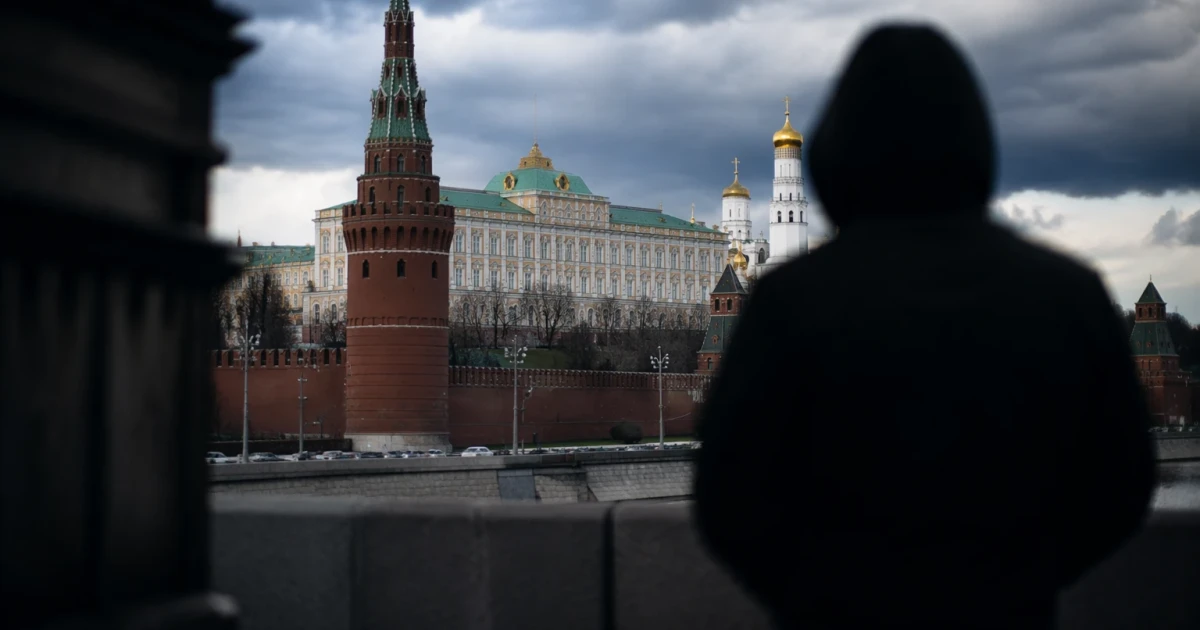
Russia’s economy did not collapse under Western pressure after the full-scale invasion of Ukraine. The state absorbed sanctions, redirected money, tightened domestic control, and built new ties abroad in ways that exposed how much Western analysis underestimated its capacity to adapt. Independent journalism, meanwhile, has been pushed to the margins or into exile.
Adaptation is the core strategy
A December 14, 2022 CSIS analysis cast the Kremlin’s wartime approach as an adaptation game, not a static policy problem. It treated Russia as a system that learns under pressure, changing tactics as restrictions close off old channels. Foreign Affairs later described Moscow’s “Adaptation Advantage” and argued that Russia was outperforming Ukraine in strategic adaptation.
Simple sanctions narratives have fallen short. Western policy often assumed that broad economic pain would quickly translate into strategic weakness, but the Russian state has repeatedly converted pressure into new operating habits. It has used wartime improvisation to preserve the fight, even as the cost has been pushed onto civilians, independent institutions, and the broader economy.
How the war economy absorbed the shock
The economy did take a hit after the full-scale invasion of Ukraine, though many forecasts anticipated something catastrophic. After the invasion, numerous institutes predicted a significant economic slump in Russia in 2022 because of tightened Western sanctions, Roland Götz wrote in Euxeinos. One crucial reason was that the energy sector remained almost completely exempt from sanctions until the end of 2022, which kept foreign currency flowing into Russia and prevented a collapse of the financial system.
That initial cushion was only part of the story. A 2025 CSIS report on the Russian wartime economy identified a combination of technocratic skill, adaptable supply chains, a low debt-to-GDP ratio, critical assistance from China, Iran, and North Korea, and, most importantly, a steady flow of energy revenues. Russia did not simply “hold on”; it re-routed trade, found external partners, and kept cash moving through sectors that mattered most to the war effort.
The cost of that adjustment has been visible inside the country. Götz wrote that the war economy was strengthened at the expense of the civilian economy. Russia maintained military intensity while narrowing space for ordinary consumption, investment, and independent reporting.
Domestic messaging kept the pressure manageable at home
Economic adaptation worked alongside information control. Once Vladimir Putin signed a law that effectively criminalized public opposition to, or independent news reporting about, the war against Ukraine, the state gained a legal tool to deter dissent and shape what could be said in public. That legal environment was reinforced by broader measures against “foreign agents,” “fake news,” and “discreditation” of the Russian army, which were harshened after the invasion.
Moscow did not only seek new trade partners and supply chains; it also narrowed the public sphere so the social costs of war could be narrated on state terms. The Kremlin’s messaging did not eliminate discomfort, but it helped contain it by making criticism riskier, more expensive, and more isolated.
Independent media was pushed out, then pursued abroad
Reporters Without Borders calls the war in Ukraine “the final blow” to Russia’s independent media. The crackdown did not begin with the invasion, but the invasion gave authorities a justification to accelerate and deepen it. Independent outlets inside Russia were pressured out, and many journalists left the country after the law threatening prison terms for contradicting the Kremlin’s narratives on Ukraine.
The International Press Institute says Russia has ramped up pressure on media and journalists in exile through newly adopted laws, extending repression beyond the country’s territory. Exile is no longer a clean break. Journalists who leave can still face legal jeopardy, targeted restrictions, and the practical problems of building a newsroom from abroad.
That transnational squeeze changes the nature of Russian journalism itself. Instead of a single domestic media market, there is now a scattered ecosystem of exiled editors, reporters, and platforms trying to serve audiences while navigating legal threats, funding gaps, and surveillance. The state has adapted to the loss of control at home by trying to limit the reach of criticism wherever it travels.
Why the academic lens matters
The University of Sheffield’s School of Languages, Arts and Societies includes a Russian and Slavonic Studies area, and Dr Ilya Yablokov is listed there as a Lecturer in Digital Journalism and Disinformation.
A 2021 article linked to the University of Sheffield, published in the journal Journalism and titled “A brief history of news making in Russia,” offered a historical overview of the specific trajectory of journalism studies in Russia. Russia’s media system was shaped over time by state power, institutional dependency, and recurring attempts to define who gets to produce public truth.
Sources
- [1]nytimes.com
- [2]csis.org
- [3]eprints.whiterose.ac.uk
- [4]rsf.org
- [5]ipi.media
- [6]sheffield.ac.uk