Politics
Sanders wants public stake in A.I. firms, Trump backs innovation

Nearly everyone in Washington now says the public should share in the wealth created by artificial intelligence. The fight is over the mechanism: Bernie Sanders wants a federally managed fund built from a one-time tax on major A.I. company stock, while Donald Trump is moving the other way, using White House policy to speed innovation and keep U.S. firms ahead.
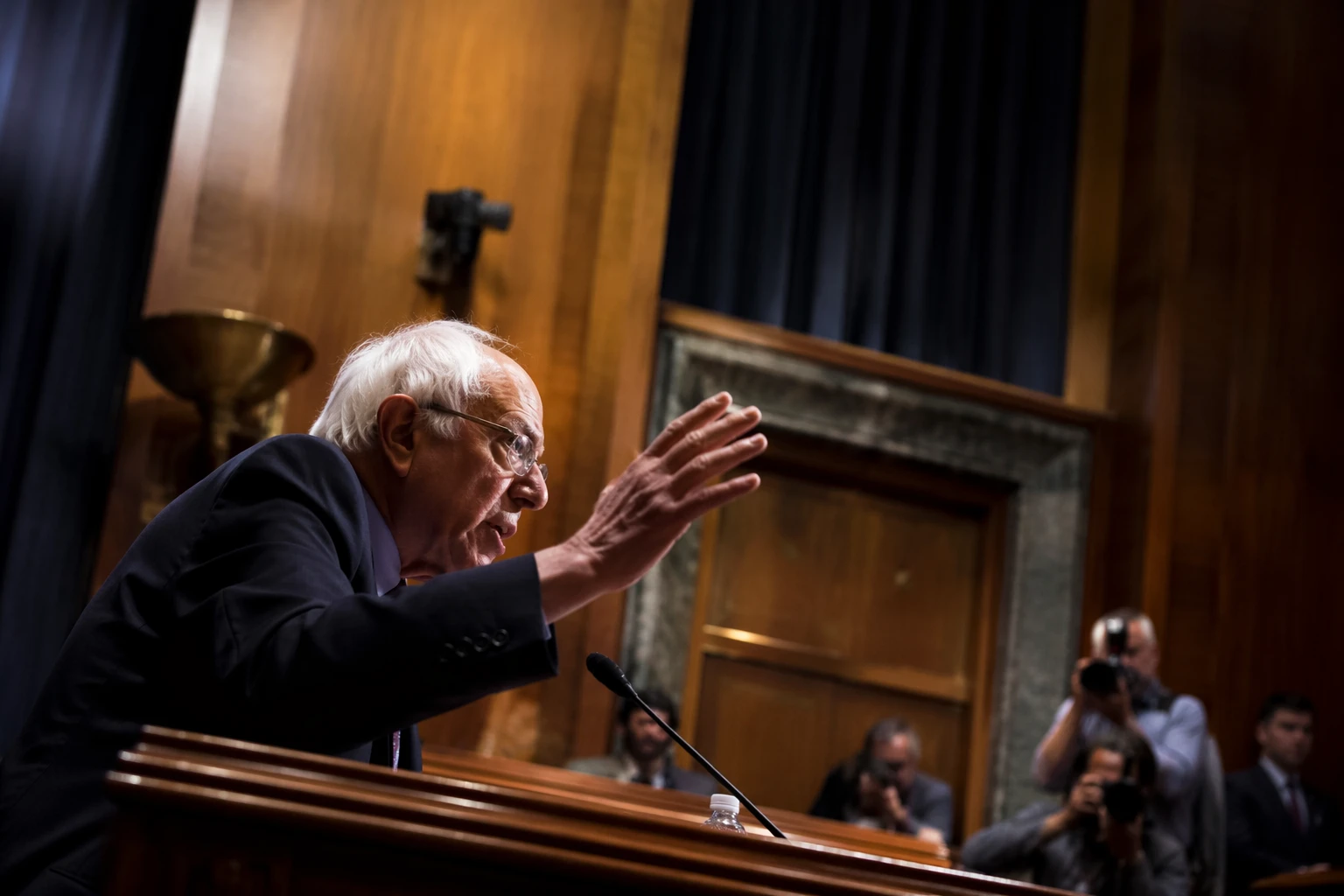
Sanders said he will introduce the American A.I. Sovereign Wealth Fund Act, a plan that would impose a one-time 50 percent tax on the stock of leading A.I. companies, including OpenAI, Anthropic and xAI. The public would get a direct ownership stake in the resulting fund, and later summaries of the proposal said it could also include voting shares and board seats. Sanders has argued that the wealth should flow back to ordinary Americans because A.I. is built on collective human knowledge, not the work of any single company or founder.
He has also tied the proposal to a blunt labor warning. A Senate report he released in October 2025 said A.I. and automation could eliminate nearly 100 million American jobs over the next decade. Sanders has pointed to sovereign wealth funds, including the Alaska Permanent Fund, as a model for turning resource wealth into dividends for residents rather than concentrating it in corporate hands.
Trump’s approach rests on a different theory of public benefit: make the United States the best place to build A.I. In July 2025, the White House released America’s AI Action Plan. In December 2025, it said it was creating a national policy framework for A.I. and pushing back on state laws seen as obstructing innovation. A June 2026 White House fact sheet said Trump signed an executive order to promote advanced A.I. innovation and security.
Even so, the White House has signaled that redistribution is not off the table. On June 10, Trump said A.I. companies may agree to “give back” to the public, and reports said senior administration officials had discussed possible government equity stakes in companies such as OpenAI and Anthropic. That leaves Washington with competing versions of the same question: should the public be paid through taxes, ownership, or looser regulation that aims to expand growth first and sort out the gains later.

The companies themselves have begun offering their own answers. In April 2026, OpenAI published a policy blueprint that floated a public wealth fund, robot taxes and a four-day workweek. Anthropic announced a $200 million investment on June 11, 2026 to study A.I.’s impact on jobs and the economy, and chief executive Dario Amodei has discussed universal capital accounts as a way to spread gains more broadly. With OpenAI filing confidentially for a U.S. IPO in June 2026, the scale of the stakes is only getting larger, and so is the political pressure to decide who gets paid when A.I. does.
Sources
- [1]nytimes.com
- [2]sanders.senate.gov
- [3]whitehouse.gov
- [4]reuters.com
- [5]techcrunch.com
- [6]techxplore.com