Science
Satellite Megaconstellations Pose Challenges for Space Astronomy
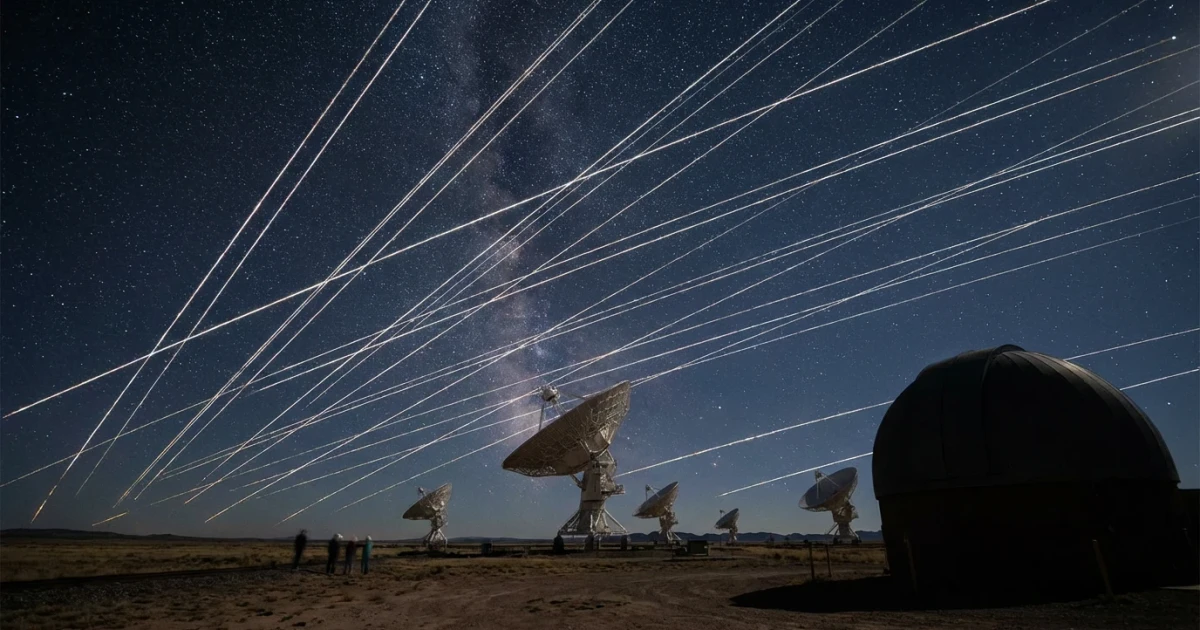
Recent studies published in both Spaceflight Now and Nature are sounding the alarm on the growing impact of satellite megaconstellations on space-based astronomy. As the number of satellites in low Earth orbit (LEO) rapidly increases, experts warn that the very future of astronomical research from space could be at stake.
Megaconstellations and Their Rapid Expansion
Satellite megaconstellations—large groups of satellites launched and operated in coordinated orbits—are multiplying quickly. Companies such as SpaceX and OneWeb have already launched thousands of satellites, with plans for tens of thousands more. According to the CelesTrak satellite catalog, the total number of active satellites has increased dramatically in recent years, with many new satellites forming part of these expanding networks.
- SpaceX’s Starlink alone accounts for over 5,000 active satellites, with plans to expand to more than 40,000.
- Other operators, including Amazon’s Project Kuiper and OneWeb, have additional megaconstellations in the pipeline.
Impact on Space-Based Telescopes
While much of the public attention has focused on the effects of satellite trails on ground-based astronomy, these new research findings reveal that even space-based telescopes are not immune to interference. Spaceflight Now reports that satellites can reflect sunlight or emit radio frequencies that disrupt sensitive astronomical instruments onboard telescopes such as the Hubble Space Telescope and future observatories.
Nature’s analysis highlights several ways in which megaconstellations threaten space-based astronomy:
- Optical contamination from sunlight reflected by satellite surfaces can create streaks across telescope images, reducing data quality.
- Radio frequency interference from satellite communications can overwhelm the faint cosmic signals astronomers seek to detect.
- The sheer number of satellites increases the chance that any given observation will be interrupted.
According to a recent scientific preprint, the probability that a space telescope’s field of view will be crossed by a satellite has risen sharply, with some simulations predicting that a significant fraction of exposures could be affected in the coming decade.
Risks for Future Astronomy Missions
Both sources underscore that the risks are likely to intensify as more satellites are launched. The Nature study warns that upcoming missions—including wide-field space telescopes designed to study dark energy or search for exoplanets—could face unprecedented interference.
Spaceflight Now notes that mitigation strategies for ground-based telescopes, such as scheduling around satellite passes or removing streaks in software, are harder to apply in space. Space telescopes often operate under stricter constraints, and their delicate instruments are more susceptible to subtle contamination.
Efforts to Address the Challenge
International organizations are taking notice. The IAU Centre for the Protection of the Dark and Quiet Sky is coordinating research and policy discussions about reducing satellite interference with space-based and ground-based astronomy. Meanwhile, the European Space Agency is evaluating technical solutions, such as changing satellite materials or operational procedures to minimize brightness and radio emissions.
However, both the Nature and Spaceflight Now analyses emphasize that no mitigation strategy is yet fully effective. They recommend stronger coordination between satellite operators, astronomers, and regulators to ensure that the night sky—and the universe beyond—remains accessible to scientific discovery.
Looking Ahead
As satellite megaconstellations continue to grow, astronomers are urging vigilance and proactive measures. With billions invested in current and planned space telescopes, protecting the integrity of astronomical data is a priority for the scientific community. Further research, policy development, and dialogue between all stakeholders will be vital to balance the benefits of global connectivity with the needs of space science.