Science
Satellite Snaps Rare Image of ISS During Spacewalk
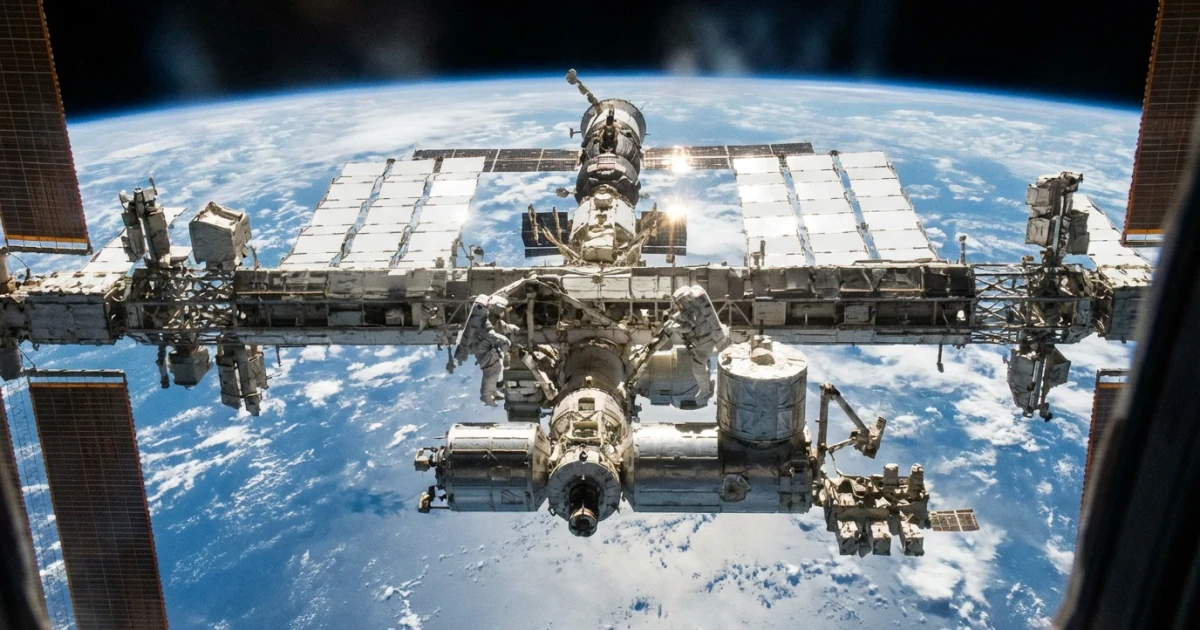
For the first time in recent memory, a satellite has captured a striking image of the International Space Station (ISS) while astronauts were performing a spacewalk, providing space enthusiasts and researchers with a rare perspective on human activity in low Earth orbit. The image, highlighted by PetaPixel, showcases both the intricate structure of the ISS and the presence of astronauts working outside the station.
Unusual Glimpse of Spacewalk from Orbit
Typically, photographs of astronauts during extravehicular activities (EVAs) are captured by cameras aboard the ISS itself or from helmet cameras worn by the crew. In this instance, however, an external satellite managed to snap an image at precisely the right moment, showing both the station and the astronauts in action.
- The ISS orbits Earth at an altitude of about 400 kilometers (250 miles), traveling at over 28,000 kilometers per hour (17,500 miles per hour).
- Spacewalks, or EVAs, are crucial for ISS maintenance, scientific repairs, and upgrades. According to the NASA Spacewalks Database, there have been more than 250 spacewalks outside the ISS since its construction began in 1998.
Technical Feat of Satellite Photography
Capturing the ISS in orbit is itself a challenging task, due to the station's high velocity and changing position relative to Earth. Capturing astronauts outside the station, who are mere specks compared to the size of the solar arrays and modules, is even rarer. This image required precise timing and alignment, marking a significant achievement for satellite-based observation.
The image allows for detailed analysis of the ISS structure and ongoing activities. For mission planners and engineers, such photographs offer external validation of the station’s condition, especially during complex operations like spacewalks.
Why These Images Matter
External images of the ISS during EVAs are valuable for several reasons:
- Public engagement: Striking visuals help the public connect with the realities of human spaceflight and the scale of ongoing work in orbit.
- Engineering insight: External perspectives can reveal details not visible from internal cameras, aiding in station maintenance and research planning.
- Educational value: Such images serve as powerful tools for educators explaining the complexities of space exploration and international cooperation aboard the ISS, which is jointly operated by NASA, Roscosmos, ESA, JAXA, and CSA, as outlined by the European Space Agency.
The ISS: A Platform for Science and Discovery
Since its launch in 1998, the ISS has served as a unique laboratory for science in microgravity, hosting thousands of experiments across disciplines. The NASA ISS Research Experiments Database details the wide range of studies conducted, from biological sciences to materials research and Earth observation.
Spacewalks are essential to this ongoing mission, enabling upgrades to the station’s hardware and research facilities. Each EVA is meticulously planned, with astronaut safety and mission objectives as top priorities.
Looking Ahead
This satellite image stands as a testament to the intersection of technology, exploration, and international cooperation. As the ISS continues to support scientific research and international collaboration, such unique photographs help document the human presence in space and inspire future explorers.
For those interested in following the ISS in real time, live location and trajectory data are available. For a deeper dive into the station’s history, construction, and ongoing research, NASA and the European Space Agency provide comprehensive official records.
As technology improves, more moments like this may be captured, offering new windows into life and work aboard humanity's outpost in space.