Politics
SAVE Act Sparks Debate Over Voter ID Laws in US
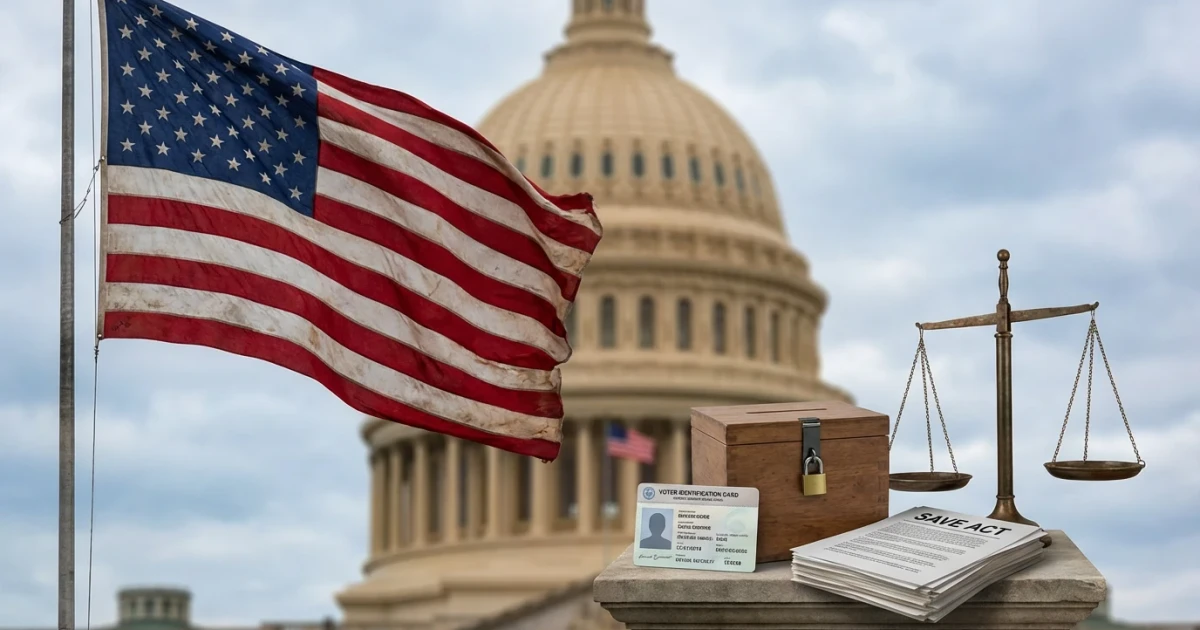
A new bill known as the SAVE Act, championed by former President Donald Trump and his allies, has emerged as a focal point in the ongoing debate over voter identification laws in the United States. The proposal, officially titled the Safeguard American Voter Eligibility Act, seeks to introduce stricter federal voter ID requirements, raising questions about its potential implications for future elections and voter access nationwide.
What Is the SAVE Act?
The SAVE Act—which stands for Safeguard American Voter Eligibility—would require all voters in federal elections to present proof of US citizenship. The bill, promoted by Republican lawmakers and endorsed by Trump, aims to standardize voter identification requirements across states and prevent non-citizens from participating in federal elections. Supporters argue that this is necessary to strengthen the integrity of the US electoral system.
Current Voter ID Laws and Context
Currently, voter ID requirements vary widely across the country, with some states mandating photo identification while others accept a broad range of documents or require no ID at all. According to the National Conference of State Legislatures, more than 30 states have some form of voter ID law, but only a handful require proof of citizenship beyond a sworn declaration during voter registration.
- Some states, like Arizona and Kansas, have attempted to implement proof-of-citizenship requirements, but these have faced legal challenges and mixed outcomes in the courts.
- Most states rely on driver’s licenses, state-issued IDs, or other documents that do not necessarily establish citizenship.
Concerns Over Voter Fraud
Supporters of the SAVE Act claim it addresses vulnerabilities in the system. However, extensive research, including findings by the Brennan Center for Justice, indicates that instances of non-citizens voting in US elections are extremely rare. Studies show that allegations of widespread voter fraud remain largely unsubstantiated, with only isolated cases documented over multiple election cycles.
Potential Impact on Voter Access
Critics of the SAVE Act argue that requiring documentary proof of citizenship could create significant barriers for eligible voters. Many Americans—particularly the elderly, low-income individuals, and naturalized citizens—may not have immediate access to a passport or birth certificate, which are commonly accepted as proof of citizenship. According to Pew Research Center data, millions of eligible voters lack these documents, and obtaining them can be costly and time-consuming.
- The Congressional Research Service notes that similar requirements in the past have led to confusion and, in some cases, prevented eligible citizens from casting ballots.
- Civil rights groups warn that the law could disproportionately affect minority communities and those living in rural areas.
Political and Legal Outlook
The SAVE Act’s introduction comes amid heightened partisan debate over election integrity and voting rights. While Trump and his supporters argue that the act is essential for restoring public trust in the electoral system, opponents frame it as a form of voter suppression. Legal experts anticipate that, if enacted, the law will face immediate court challenges, especially on the grounds that it may conflict with existing federal protections under the Voting Rights Act.
Looking Ahead
The future of the SAVE Act remains uncertain. While its backers hope to advance the legislation in Congress, strong opposition and potential legal hurdles could stall or reshape the bill’s final form. As the nation heads toward the next major election cycle, the broader discussion over voter ID laws and access to the ballot box is likely to intensify, reflecting deeper divisions over how best to balance election security with inclusive participation.