Technology
Scientists build first synthetic cell with a full life cycle
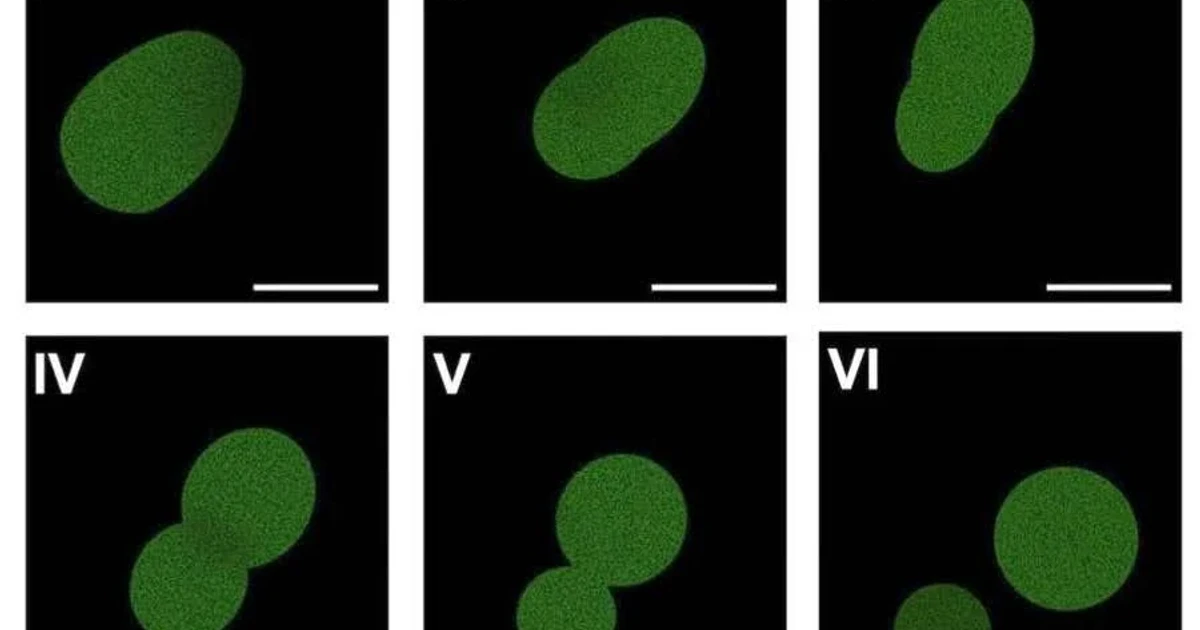
University of Minnesota scientists said they had built SpudCell, a synthetic cell assembled entirely from non-living chemical components and capable of carrying out a complete life cycle. The work, led by associate professors Kate Adamala and Aaron Engelhart at the College of Biological Sciences, marks a step researchers have pursued for years: getting a cell-like system not only to function, but to reproduce.
SpudCell can perform selection, genome replication, growth, resource acquisition through feeding, and genetically encoded division, according to the university. One account of the system says it uses a lipid membrane and carries about 90,000 base pairs of genetic information spread across 36 purified enzymes and seven DNA plasmids. The university has said division without a cytoskeleton had been a key bottleneck in synthetic-cell research.
The result does not amount to a natural organism pulled from biology. It is a lab-built system designed from the ground up, and that distinction matters. The point of the work is that scientists can now combine the basic functions needed for a life cycle in a synthetic platform, rather than making isolated cell-like parts that stop short of self-reproduction.
That is why the achievement has drawn attention beyond Minnesota. A 2024 viewpoint in Nature Reviews Molecular Cell Biology said synthetic cells could revolutionize biology, medicine and biotechnology. A 2021 perspective in Nature Communications said a well-integrated synthetic cell cycle would be a major step toward an autonomous synthetic cell. The questions now shift from whether such a system is possible to how far it can be pushed safely and responsibly.
Those concerns are concrete. A self-reproducing synthetic cell raises biosafety questions about containment in the lab, because a system built to grow and divide needs strict control over where it can persist. It also raises regulatory questions about what standards should govern future versions as the technology moves from proof-of-concept toward more capable designs. And it raises misuse concerns, because the same engineering logic that supports medical and industrial applications could also be adapted for harmful purposes if access, oversight and publication norms do not keep pace.
Adamala has spent years in the Build-a-Cell Research Coordination Network, an international collaboration involving researchers from 11 countries that received a $1.2 million National Science Foundation grant. That work helped frame the broader ambition behind SpudCell: not just making synthetic components, but building a system that behaves like a cell across an entire cycle.
Scientists are now debating what the result means for synthetic biology and for the definition of life. For the field, the milestone is less about science fiction than about a hard technical threshold: a cell-like system that can feed, grow, copy itself and divide, all in one integrated design.
Sources
- [1]news.google.com
- [2]twin-cities.umn.edu
- [3]cbs.umn.edu
- [4]experts.umn.edu
- [5]nature.com
- [6]nytimes.com
- [7]sciencealert.com
- [8]mprnews.org