Science
Scientists Connect Carbon-13 Spike to Oxygen Surge in Ancient Earth
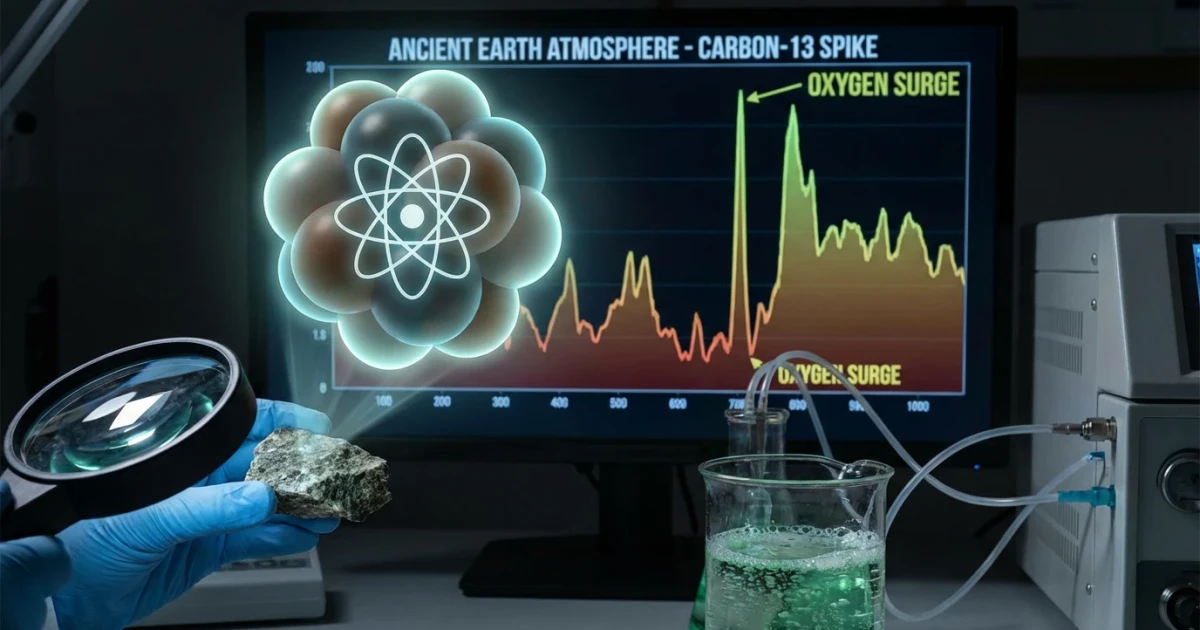
A newly developed model sheds light on the relationship between a dramatic carbon-13 isotope increase and the Great Oxidation Event (GOE), a transformative period that fundamentally changed Earth's atmosphere roughly 2.45 billion years ago. The study, reported by Phys.org, provides a crucial link between geochemical signals preserved in ancient rocks and the surge of atmospheric oxygen that paved the way for complex life on Earth.
Carbon Isotopes as Ancient Climate Clues
Earth’s history is chronicled in its rocks, with carbon isotopes acting as key markers for scientists tracing past environmental changes. One such marker—an anomalous spike in the heavier carbon isotope, carbon-13 (13C)—has long been detected in sediments dating to the Archean-Proterozoic transition. However, the processes behind this carbon-13 enrichment, and its timing in relation to the Great Oxidation Event, have remained topics of debate.
New Model Unveils the Carbon-Oxygen Connection
The research highlighted by Phys.org introduces a novel approach to simulating ancient Earth’s geochemical cycles. According to the report, the model demonstrates that the observed carbon-13 spike aligns closely with the timing of the Great Oxidation Event. This event marked the first significant accumulation of free oxygen in the atmosphere, fundamentally altering planetary conditions and setting the stage for aerobic life.
- The carbon isotope record shows a pronounced increase in 13C relative to 12C, coinciding with the GOE.
- The model suggests that changes in microbial activity and organic carbon burial drove this isotope anomaly.
- These processes, in turn, are linked to the ramp-up of oxygen-producing photosynthesis.
Implications for Earth’s Early Atmosphere
The results provide a more comprehensive explanation for the timing and cause of the isotope spike. The enrichment of carbon-13 signals a shift in how carbon was cycled through the biosphere and stored in sediments, likely triggered by the emergence of oxygenic photosynthetic microbes. This shift not only increased oxygen production but also altered the balance of greenhouse gases, influencing planetary climate and habitability.
Key Takeaways from the Study
- The carbon-13 anomaly is directly associated with the onset of large-scale atmospheric oxygenation.
- Model results help reconcile previous uncertainties in the geologic record’s timing of oxygen rise.
- This work highlights the interconnectedness of biological innovation and global geochemical change.
Looking Forward: Tracing Life’s Early Footsteps
While the new model offers compelling evidence of a direct link between the carbon-13 spike and the Great Oxidation Event, scientists emphasize that further field studies and improved modeling will continue to refine our understanding of this critical juncture in Earth’s history. The findings underscore how advances in geochemical analysis and computational methods are helping to unravel the ancient interplay between life and the environment.
The carbon-13 spike stands as a powerful signal of a world in transition—from a largely anoxic planet to one increasingly hospitable to complex organisms. As researchers continue to probe ancient rocks and refine their models, the story of Earth’s oxygenation becomes ever more detailed, offering vital clues to the evolution of our planet and the life it sustains.