Science
Scientists create first ticking nuclear clocks, opening new timekeeping era
Two independent physics teams have built the first working nuclear clocks, using thorium-229 to lock lasers onto a nuclear transition that had long sat beyond experimental reach. The result is still a laboratory demonstration, not a field-ready instrument.
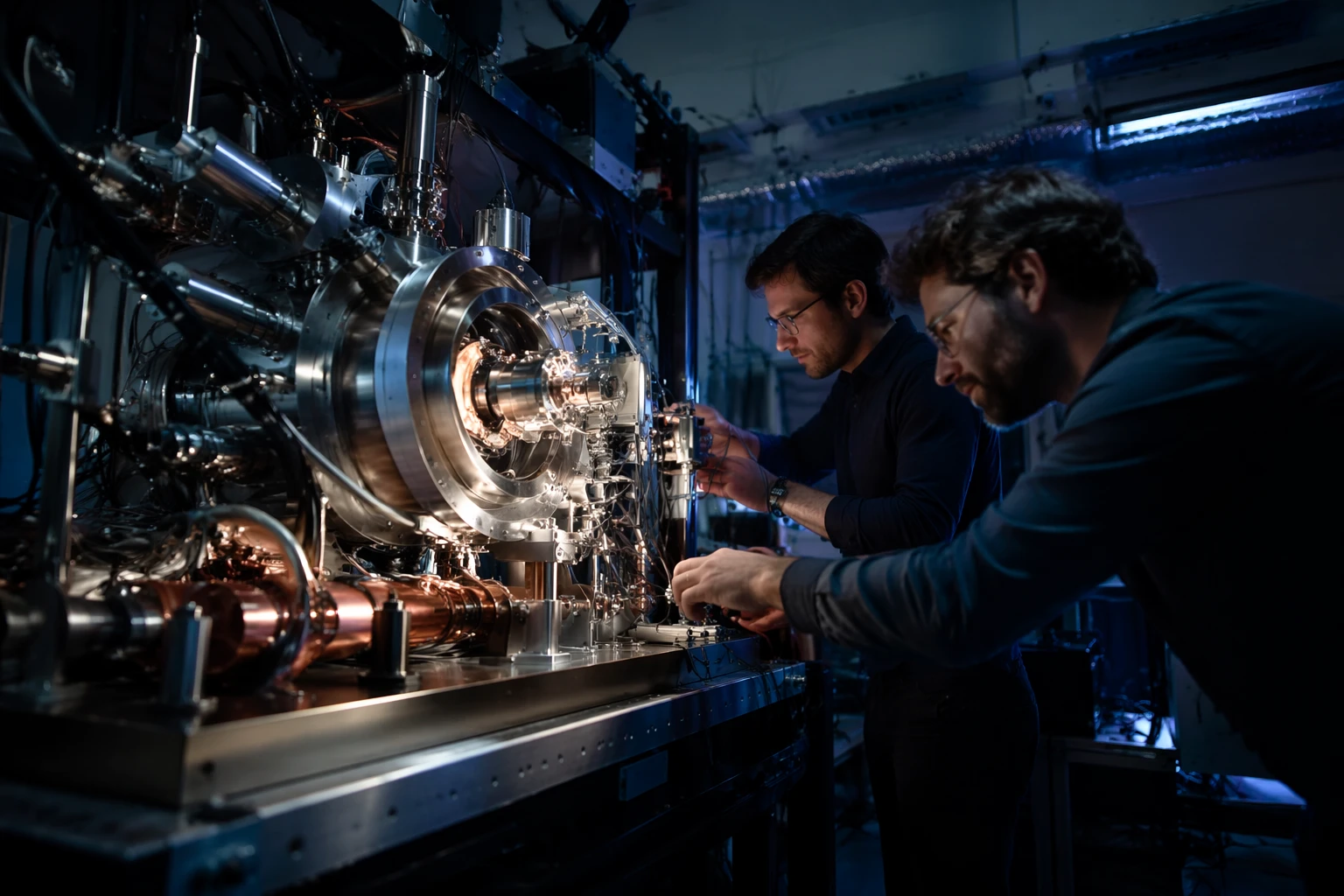
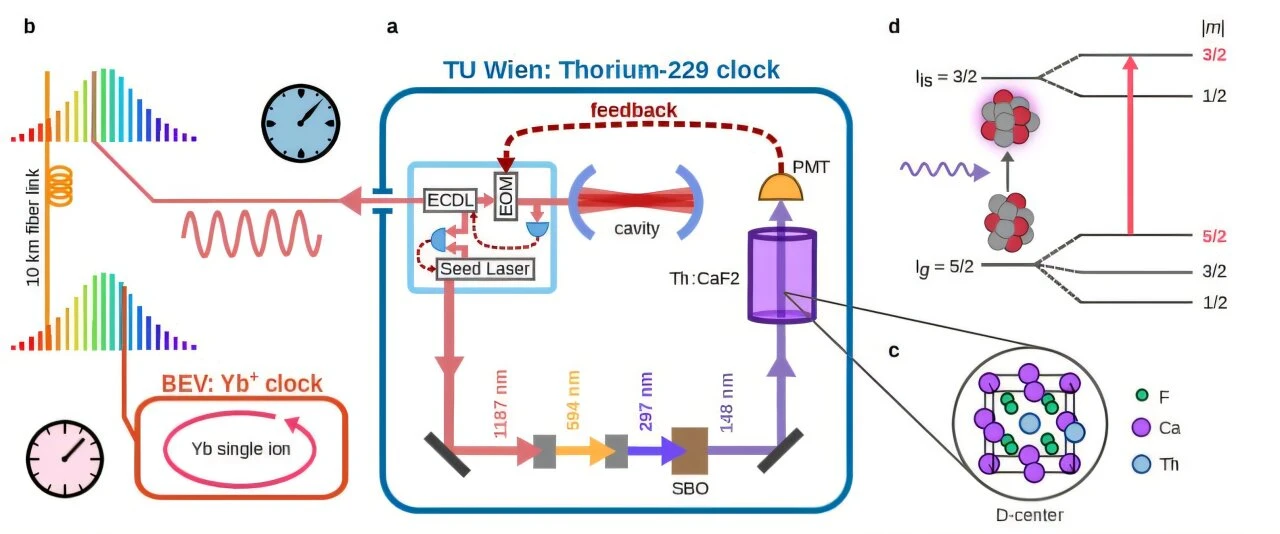
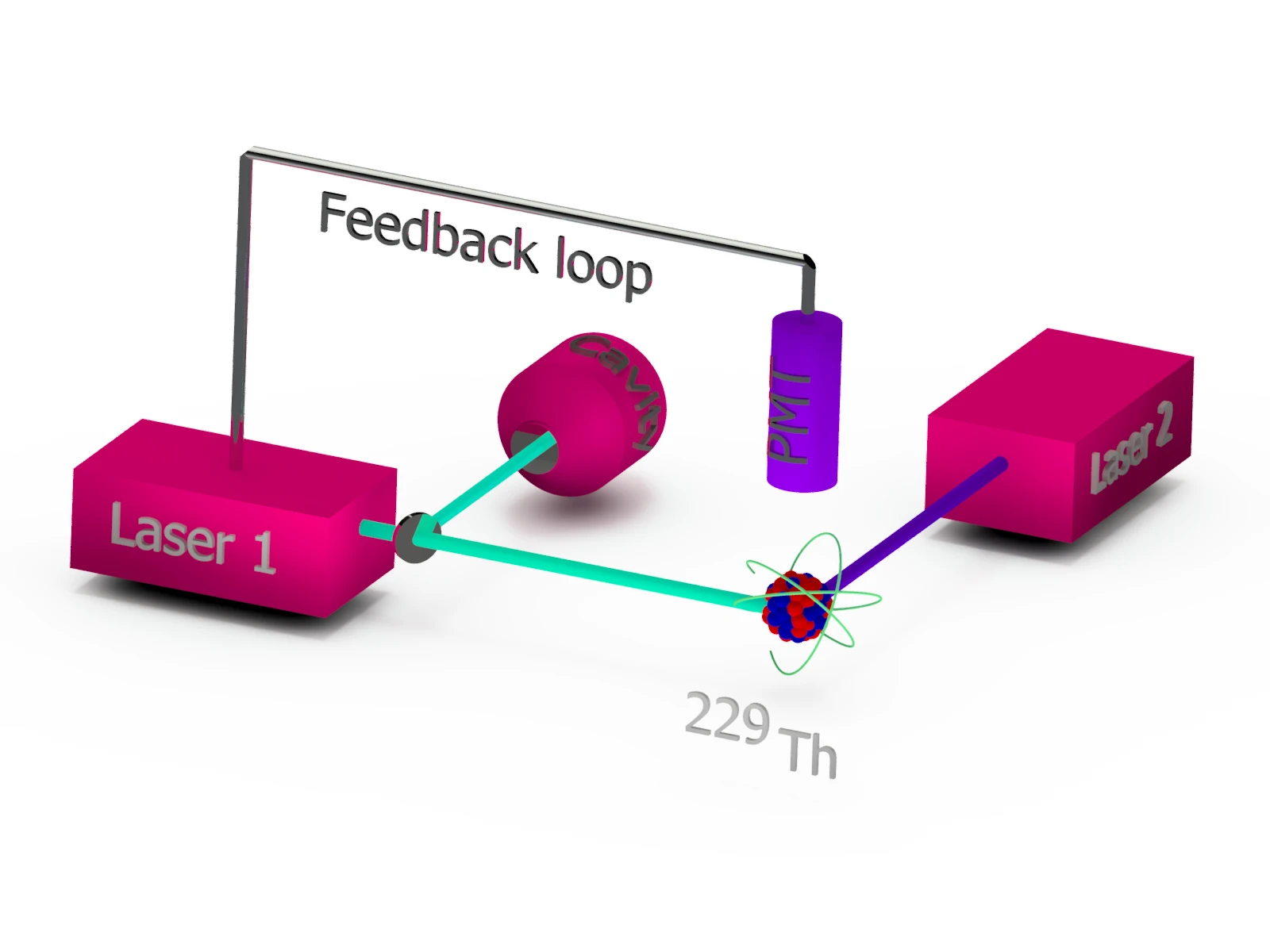
The European group, led by Luca Toscani De Col, stabilized a continuous-wave laser to a 148 nm nuclear transition with rapid feedback and continuous absorption spectroscopy. Its clock uses thorium-229 nuclei embedded in a millimeter-sized calcium fluoride crystal at room temperature, and the team measured a fractional-frequency instability scaling of 3 × 10^-12 divided by the square root of averaging time, approaching 10^-15 over one day of continuous operation. A second team led by Beichen Huang at Tsinghua University stabilized a separate device to a resolved nuclear transition in a solid-state host with a continuous-wave narrow-linewidth 148.4 nm vacuum-ultraviolet laser, using fast frequency discrimination based on phototube photocurrent readout of transmitted VUV power.
The isotope at the center of both efforts, thorium-229, has been the leading candidate for a nuclear clock because its nuclear transition sits at unusually low energy and can be driven with lasers. Nuclei are much less vulnerable than electrons to stray electromagnetic disturbances. The underlying idea has circulated since the 1970s, but progress has depended on pinning down the thorium-229 isomer transition energy closely enough to make the system usable, a technical bottleneck that only narrowed over the past decade.
Thorium-229 clocks could improve searches for dark matter, test whether the fine-structure constant changes over time and probe other effects that sit at the edge of current measurement. For geophysics and navigation, a clock with this kind of stability could help compare tiny differences in gravitational fields and improve synchronization across distributed instruments. Atomic clocks still define the second, and any nuclear clock must first prove that it can be stabilized, read out and reproduced reliably against a mature standard.
In 2024 and early 2026, work focused on the reproducibility and stability of thorium-doped calcium-fluoride crystals, and a January 28, 2026 paper tracked the clock transition’s reproducibility over nearly a year of measurements.
Sources
- [1]nature.com
- [2]arxiv.org
- [3]colorado.edu
- [4]unsw.edu.au