Science
Scientists create the world’s first nuclear clocks, opening new physics tests
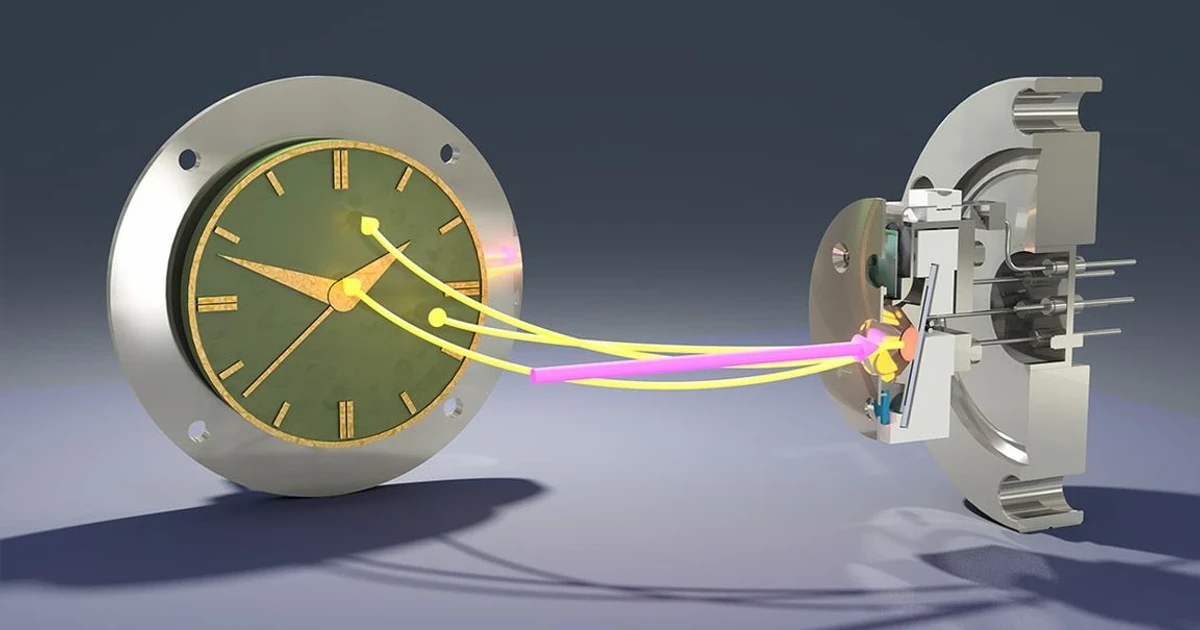
Two research teams have built the first nuclear clocks, turning a decades-old physics idea into a working instrument that already measures instability near 10^-15 over a full day. The leap matters well beyond the lab: clocks this precise could sharpen GPS, deepen deep-space navigation, improve communications timing and give physicists a new tool for testing whether nature’s constants ever change.
The advance rests on thorium-229, the leading isotope for nuclear-clock work because its nuclear transition sits at an unusually low energy. Unlike atomic clocks, which track changes in electrons around an atom, nuclear clocks use shifts in the nucleus itself. That makes them attractive because nuclear energy levels are exceptionally stable, so even tiny deviations could reveal new physics that today’s best instruments miss. Earlier work in 2024 had already pushed the field forward with direct laser spectroscopy of the thorium-229 isomeric transition, and that progress set the stage for the latest result.
The two teams named in the work were Beichen Huang and colleagues at Tsinghua University, and Luca Toscani De Col and colleagues at the Vienna Center for Quantum Science and Technology in Austria. In the Austrian team’s paper, submitted on 3 June 2026 and revised on 5 June 2026, the researchers stabilized a continuous-wave laser to the 148 nm nuclear transition in thorium-229. Their setup used thorium-229 nuclei embedded in a millimeter-sized, room-temperature calcium fluoride crystal, and they reported a fractional frequency instability approaching 10^-15 after one day of continuous operation.
That precision is not just a technical milestone. The Austrian team also used the clock to look for ultralight dark matter, searching for periodic fluctuations and slow drifts in the nuclear transition energy. They reported that the clock’s constraints rivaled the best atomic clocks for photon coupling, and improved earlier measurements for couplings to the strong force and quarks. In practice, that means nuclear clocks could become sensitive enough to spot subtle effects from particles or forces that have never been directly seen.
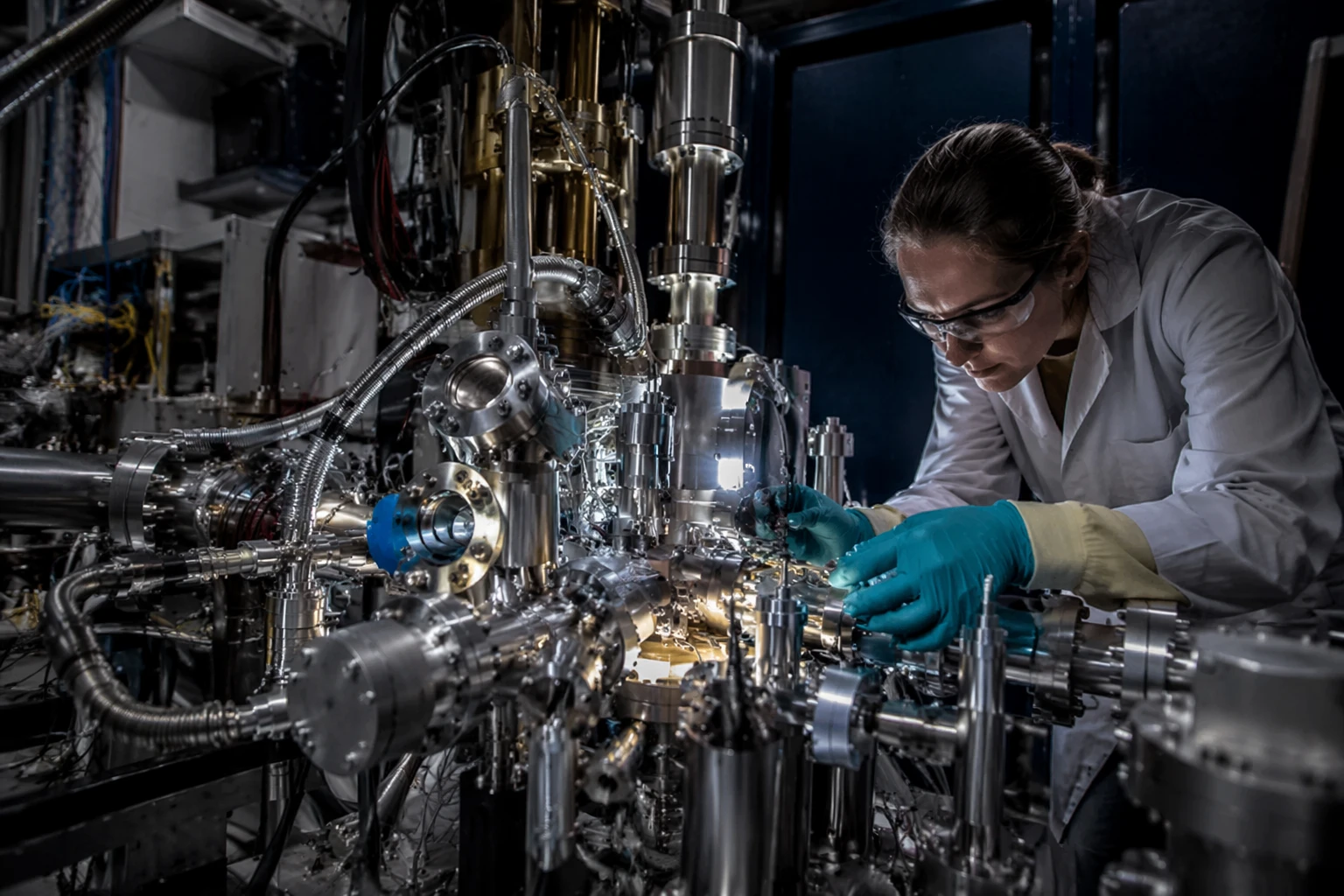
The societal stakes are broad. Timing underpins navigation systems, telecommunications networks, geodesy, earthquake and volcano monitoring, and the timing links needed for deep-space exploration. A clock that can hold steadier over longer periods could tighten those measurements and make them more reliable in places where precision matters most, from satellites to remote monitoring stations.
The field is still early, but the trajectory is clear. In December 2025, the University of Manchester described a simpler method using a thin film of thorium oxide on a stainless-steel disc, demonstrated in an ordinary lab and aimed at practical nuclear-clock technology. With independent teams now reaching the milestone from different directions, nuclear timekeeping has moved from a long-shot concept to a new platform for both measurement and discovery.
Sources
- [1]nature.com
- [2]arxiv.org
- [3]manchester.ac.uk
- [4]unsw.edu.au
- [5]nist.gov
- [6]phys.org
- [7]sciencenews.org
- [8]colorado.edu