Science
Scientists Debate if Consciousness Is Fundamental
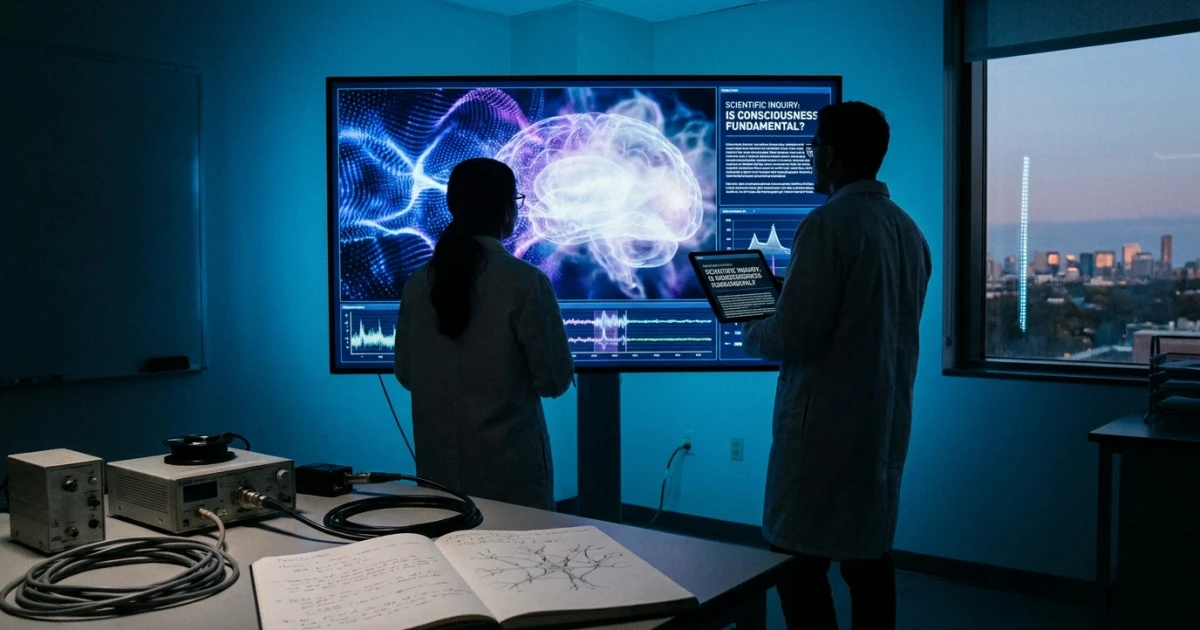
Recent scientific discussion has reignited the age-old question: Is consciousness merely a byproduct of the brain, or could it be a fundamental feature of reality itself? The topic, propelled by insights from renowned neuroscientists and new research, has captured attention across scientific and philosophical communities, challenging traditional assumptions about the nature of awareness.
Emerging Views: Consciousness Beyond the Brain
Space Daily reports that one of the most credentialed neuroscientists alive is now arguing that mainstream science may have misunderstood consciousness. Rather than seeing it as something the brain generates, this perspective suggests consciousness could be a property of the universe—akin to gravity or electromagnetism—rather than a product of neural activity. This idea, sometimes referred to as panpsychism, posits that consciousness might permeate all matter to varying degrees.
- Panpsychism treats consciousness as an intrinsic aspect of reality.
- Mainstream neuroscience has traditionally viewed consciousness as emerging from complex brain functions.
- Recent theoretical and empirical work is challenging this conventional view.
Integrated Information Theory and Experimental Evidence
Supporting the debate, research such as the Integrated Information Theory (IIT) provides mathematical models that attempt to quantify consciousness. IIT proposes that consciousness arises wherever information is integrated in a system—a concept that could extend beyond biological brains.
Empirical tests, as detailed in Nature Scientific Reports, have begun probing whether these theories can be measured and validated in the lab. While most experiments focus on neural correlates, some researchers are exploring whether consciousness can be identified in non-biological systems.
Scientific and Philosophical Implications
The suggestion that consciousness is fundamental raises profound questions about the nature of reality. According to a review of scientific literature, such theories connect consciousness to fundamental physics, potentially integrating it with quantum mechanics or other physical laws. This approach could reshape how scientists interpret phenomena like subjective experience and awareness.
However, mainstream neuroscience continues to emphasize the role of the brain, citing decades of experimental data linking consciousness to neural activity. As outlined in a research article on consciousness and the brain, evidence supports the idea that consciousness correlates with specific patterns of brain function.
Points of Agreement and Disagreement
- Many researchers agree consciousness is a challenge for science and philosophy.
- There is debate over whether consciousness is emergent or fundamental.
- Some neuroscientists argue for a brain-based model, while others advocate for panpsychism or IIT.
Looking Ahead: The Future of Consciousness Research
As theories evolve, the scientific community continues to debate whether consciousness can be explained solely by brain activity or whether it must be considered a basic feature of the cosmos. The answer could impact not only neuroscience, but also physics, philosophy, and technology. Ongoing research, including comparative studies of major theories of consciousness, promises to refine our understanding and may eventually resolve this fundamental mystery.
While the notion that consciousness is as basic as gravity remains controversial, it demonstrates the vibrancy and openness of current scientific inquiry. Whether these ideas gain widespread acceptance or spark further debate, they underscore humanity's enduring quest to comprehend the true nature of mind and reality.